The Pulse
Siemens demonstrates AI-designed grippers and plans production cell
Siemens and AGIBOT are demonstrating an AI workflow that adapts robotic gripper designs to a user’s task. Siemens is also developing an additive manufacturing cell with EOS and AM Solutions.
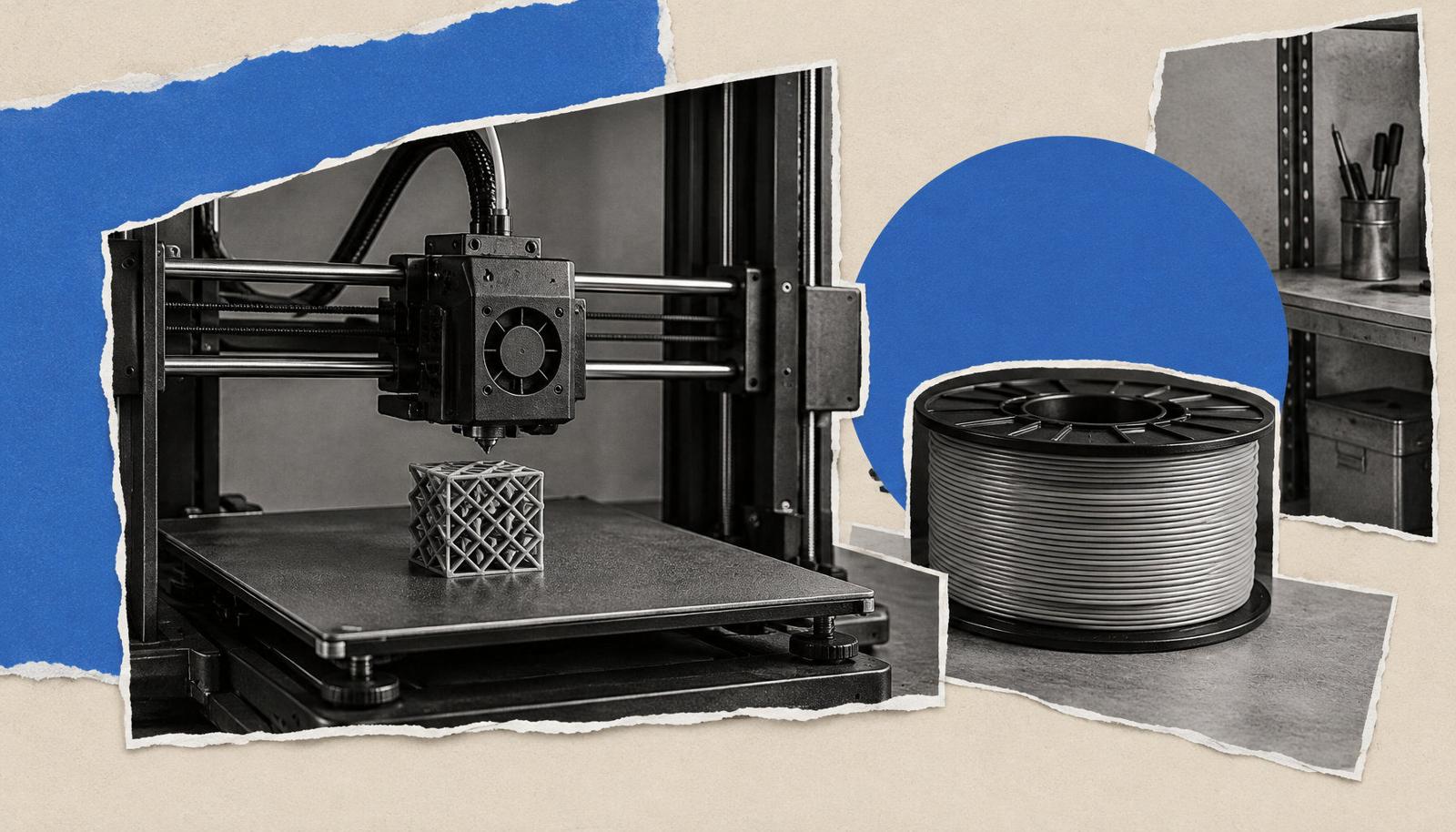
Siemens and AGIBOT are demonstrating an AI workflow that turns a description of an object and a task into a tailored robotic gripper design prepared for additive manufacturing. The demonstration is part of a broader effort to connect engineering to a planned production cell, Siemens said in a November 16 press release.
The company is developing the production environment with EOS and AM Solutions at its Electronics Factory in Erlangen. The cell is intended to bring additive manufacturing, automation, software and post-processing into an integrated process chain.
Designing from a task
The gripper demonstration uses an agentic AI workflow rather than requiring a user to adapt the design manually at each step. The user starts by describing the object the gripper should handle and the task it needs to perform.
The AI workflow selects a gripper type, adapts its geometry in Siemens’ Designcenter software, simulates the design and validates the robot interface and handling. It then prepares the data for additive manufacturing.
Through MCP integration, the agent can access functions in the engineering software and orchestrate the work steps. Siemens says the approach could make complex engineering workflows accessible to more users by reducing the need to interact directly with each tool and process step.
The resulting design can be virtually validated and prepared for additive manufacturing before production begins. Siemens will present the workflow for the humanoid robotic gripper at Formnext 2026 in Frankfurt.
A cell for production
The planned production cell is meant to extend the approach beyond engineering. Its goal is to accommodate different components and production requirements while creating conditions for repeatable, scalable processes.
Post-processing is designed to be part of the cell from the outset. David Soldan, head of AM Solutions – 3D Post Processing Technology, said the partners want to demonstrate how additive manufacturing and automated post-processing can be combined into an integrated industrial process.
Karsten Heuser, vice president of additive manufacturing at Siemens, described production that can respond flexibly to a variety of designs as the next step. Agentic workflows can coordinate engineering tasks around specific requirements, he said, while additive manufacturing can turn individual designs into physical components.
Connecting the data
Siemens calls its approach an end-to-end digital thread: connected software and data spanning design, simulation, manufacturing preparation, production and operations. The company says industrial AI can access that data and help connect the steps, while quality, traceability, security and human responsibility remain requirements for industrial deployment.
The company has also enhanced its AM I Navigator with industrial AI. It is intended to help companies identify and prioritize potential AI applications in additive manufacturing, including in design, engineering and production.
Based on the results, companies can define pilot projects and develop a roadmap for scaling their use of industrial AI.
Sources
Related stories
- HANGCHA demonstrates LINGTRA autonomous forklifts to dealers
- OpenAI folds its robotics team into research and Applied, Fortune reports
- Agile Robots raises $500 million at $8.5 billion valuation
- Procon deploys camera-equipped robot at Port Canaveral terminal
- Robust AI puts collaborative Carter robots to work alongside staff