The Pulse
Robust AI puts collaborative Carter robots to work alongside staff
Robust AI’s Carter mobile robots are working in warehouses and factories, where employees can steer them or send them to move goods. The company says it had deployed more than 100 Carter robots by August.
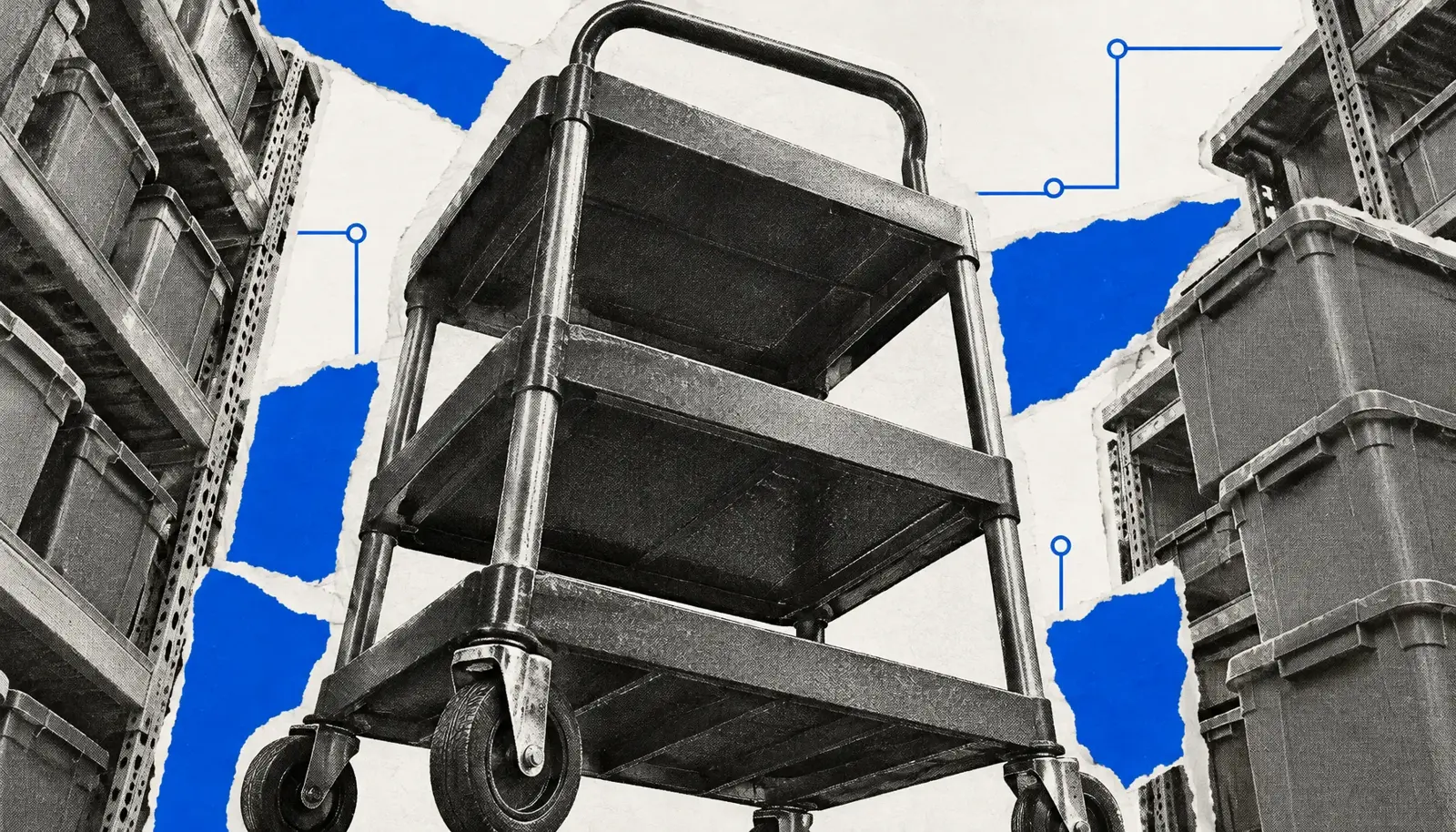
Robust AI’s Carter mobile robots are working alongside employees in logistics warehouses and factories, helping with shelf picking and stocking and moving items between locations, MIT News reports. Workers can take hold of a Carter to steer it, or direct it using gestures or its touchscreen.
The startup said in August that it had deployed more than 100 Carter robots. The company was founded by Anthony Jules and MIT Professor Emeritus Rodney Brooks, who set out to build machines that work with people in changing workplaces.
A cart that workers can steer
Carter resembles a wheeled utility cart and combines an AI-powered vision system with a force-sensitive handlebar, according to MIT News. Its holonomic wheels allow it to move in any direction, and a person can push or pull it with one hand.
Robust AI lists a 360-degree camera field of view, whole-robot force sensing, a touchscreen and a built-in barcode scanner among Carter’s features. The company lists Carter’s payload capacity as 100 kg (220 lbs) and its operating time as 18 hours.
MIT News reports that one workflow has a robot guide employees to locations where they retrieve items; another has it follow workers to loading locations. Another task involves moving goods between points in a warehouse or factory after a person loads the robot.
Deployment in stages
In July, Robust AI and ecommerce fulfillment provider ShipLab announced a phased deployment at ShipLab’s Vista, California, facility. The initial go-live was planned for July 2026.
The partnership starts with a pilot intended to automate tote transport between fulfillment and packing stations. Expansion to a full fleet serving a broader set of picking applications is conditional on successful validation, and payments are deferred at each phase until the companies jointly confirm performance targets.
Robust AI said its customers also included DHL Supply Chain, O’Neill Logistics and Saddle Creek Logistics Services in its August announcement. That announcement identified warehouse operators and third-party logistics firms as users of the robot.
From software to hardware
Jules and Brooks founded Robust AI in 2019. The two had met when Jules was a graduate student at MIT’s Computer Science and Artificial Intelligence Laboratory, according to MIT News; Brooks was an MIT faculty member from 1984 until 2010.
Brooks initially discussed starting a robotics software company with Jules, MIT News reports. During the Covid-19 pandemic, the founders shifted toward robots intended to disinfect surfaces, before changing direction again and choosing logistics and manufacturing as their initial target industries.
Jules is now Robust AI’s chief innovation officer, while Brooks is its chief technology officer. Marin Tchakarov took over as CEO in August.
Designing around workers
MIT News also describes a peer-reviewed hospital study found by Leila Takayama, Robust AI’s vice president of human robot interaction. It says researchers found that many hospital robots used for tasks such as gathering dishes and transporting equipment had been turned off and left against walls.
Brooks told MIT News that robots had stopped in hallways as nurses rushed patients on gurneys, leaving the nurses unable to get around them. “The robots were getting in the way of nurses’ primary tasks,” he said.