The Pulse
DeepMind says AI agents found faster quantum algorithms
Google DeepMind says teams of Gemini 4 agents found ways to reduce the resources needed for several quantum algorithms. The results were checked with mathematical proofs, though running the scientific simulations would still require more resources than early error-corrected quantum computers are likely to offer.
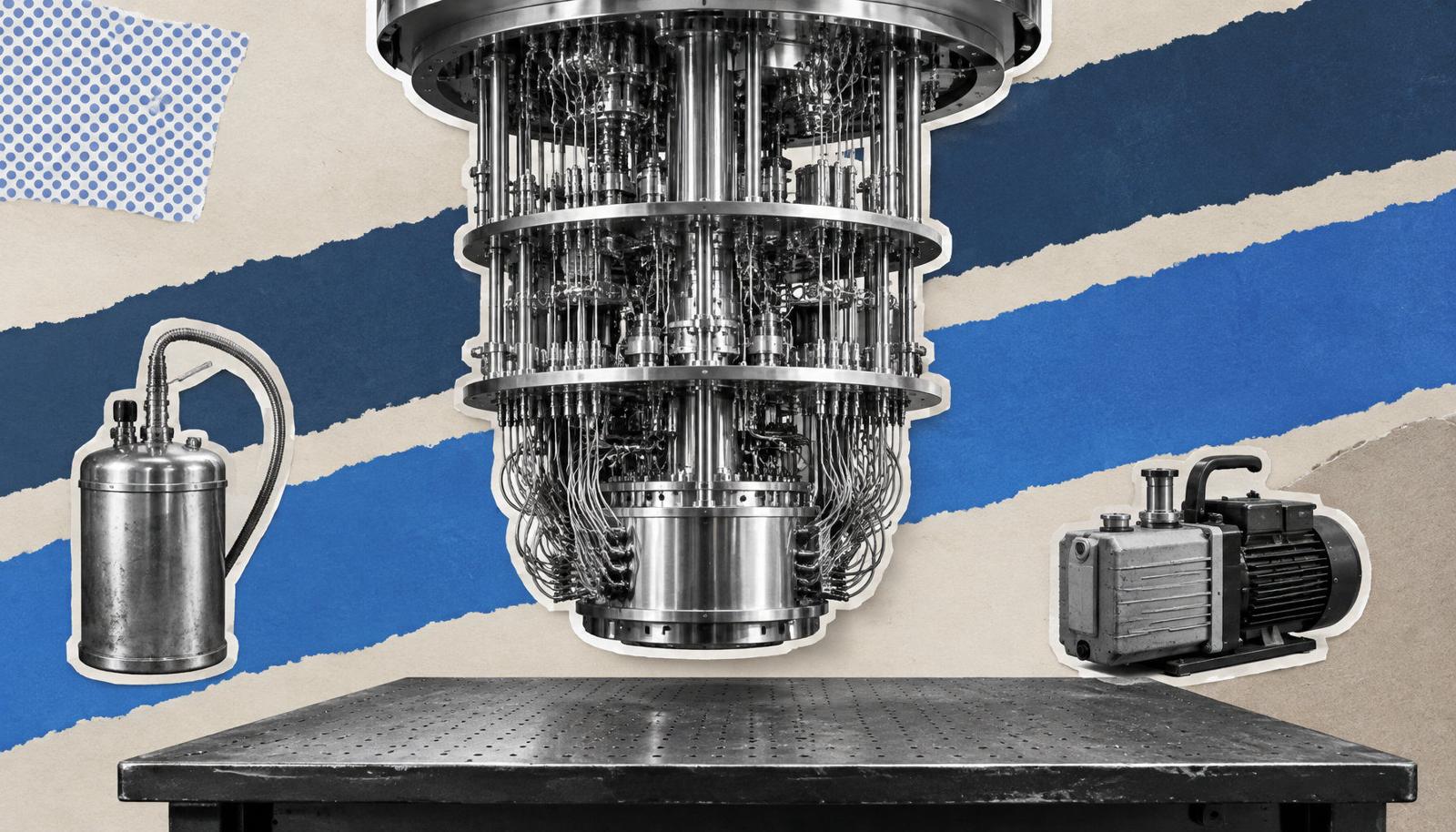
Teams of AI agents have found ways to reduce the resources needed for quantum algorithms, with mathematical proofs used to check their work, Google DeepMind says. For a fusion-related calculation, the company reports an 11.8-fold reduction in a computing-cost measure combining qubits and operations.
The work was a collaboration between Google DeepMind and Google Quantum AI, using teams of Gemini 4 agents and the Lean theorem prover. Its research paper, a preprint on arXiv, was first submitted on November 6 and last revised on November 16.
Proofs instead of hardware tests
The researchers targeted quantum circuits: instructions that tell a quantum computer how to carry out an algorithm. Resource-intensive circuits cannot be tested on classical computers or today’s small quantum processors, so the teams used Lean to prove their results mathematically.
DeepMind says running these algorithms in scientific simulations would still demand more computational resources than the first error-corrected quantum computers are likely to provide.
Researchers gave separate agent teams problems to work on independently. Ideas were checked in Lean before being added to a shared notebook. The teams met at a virtual conference every four hours to exchange and debate ideas.
The researchers built a quantum-program library in Lean and wrote specifications stating what a program should do and how its cost should be measured. The agents then supplied candidate programs and proofs. According to the preprint, the library supports proofs of expected and worst-case resource costs, including qubit requirements and gate counts; an independent verifier audited proofs against a fixed specification.
Fusion and molecular simulations
DeepMind says the fusion circuit reduced the memory requirement from 5,650 to 4,338 error-corrected qubits. The calculation concerns inertial confinement fusion, a method that uses lasers to compress hydrogen fuel until ignition.
The agents also worked on simulations relevant to photochemistry and drug metabolism. For a common light-sensitive molecule, they made the quantum simulation eight times cheaper, the company says, by simplifying how the algorithm tracks particle positions and electric forces.
For Cytochrome P450, an enzyme that breaks down most human medicines and is important in drug design, the reported improvement was 2.5-fold. The agents replaced memory lookups, reducing the required memory from 481 to 333 qubits.
Search and arithmetic
The agents found a 2.57-fold speedup for a particular implementation of Grover’s algorithm, which searches an unsorted list, according to DeepMind. They also found a 290-fold speedup for arcsin, a routine used by many quantum algorithms to load numbers into quantum states.
The preprint says the arcsin result combined classical and formal search. Its authors report improvements against prior baselines across parallel search, quantum arithmetic and scientific simulations.
DeepMind is releasing its Lean library, problem specifications and verified solutions on GitHub. Researchers set the problems and supervised the agents’ progress; the company says the same approach could also be used in other areas of quantum-computing research.
Sources
- Original source · Blog post Google DeepMind “Finding faster quantum algorithms with agents and formal verification” deepmind.google
Other pages read
- arXiv “Discovering formally verified quantum programs with AI” arxiv.org
Companies in this story
Related stories
- Energy Department backs Harvard-led $12 million project on AI-designed quantum error correction
- Mercedes-Benz to deploy AI diagnostic agents at Alabama plant
- AWS lets AI agents bill Marketplace purchases to cloud accounts
- Danaher and Microsoft plan AI agents for laboratory instruments
- Stitch brings AI agents into its banking operating system