The Pulse
Danaher and Microsoft plan AI agents for laboratory instruments
Danaher and Microsoft are developing a shared platform for AI agents to help control scientific instruments and interpret results. The first commercial applications are due to reach Danaher customers in 2026, with additional agent-enabled instruments planned for 2027.
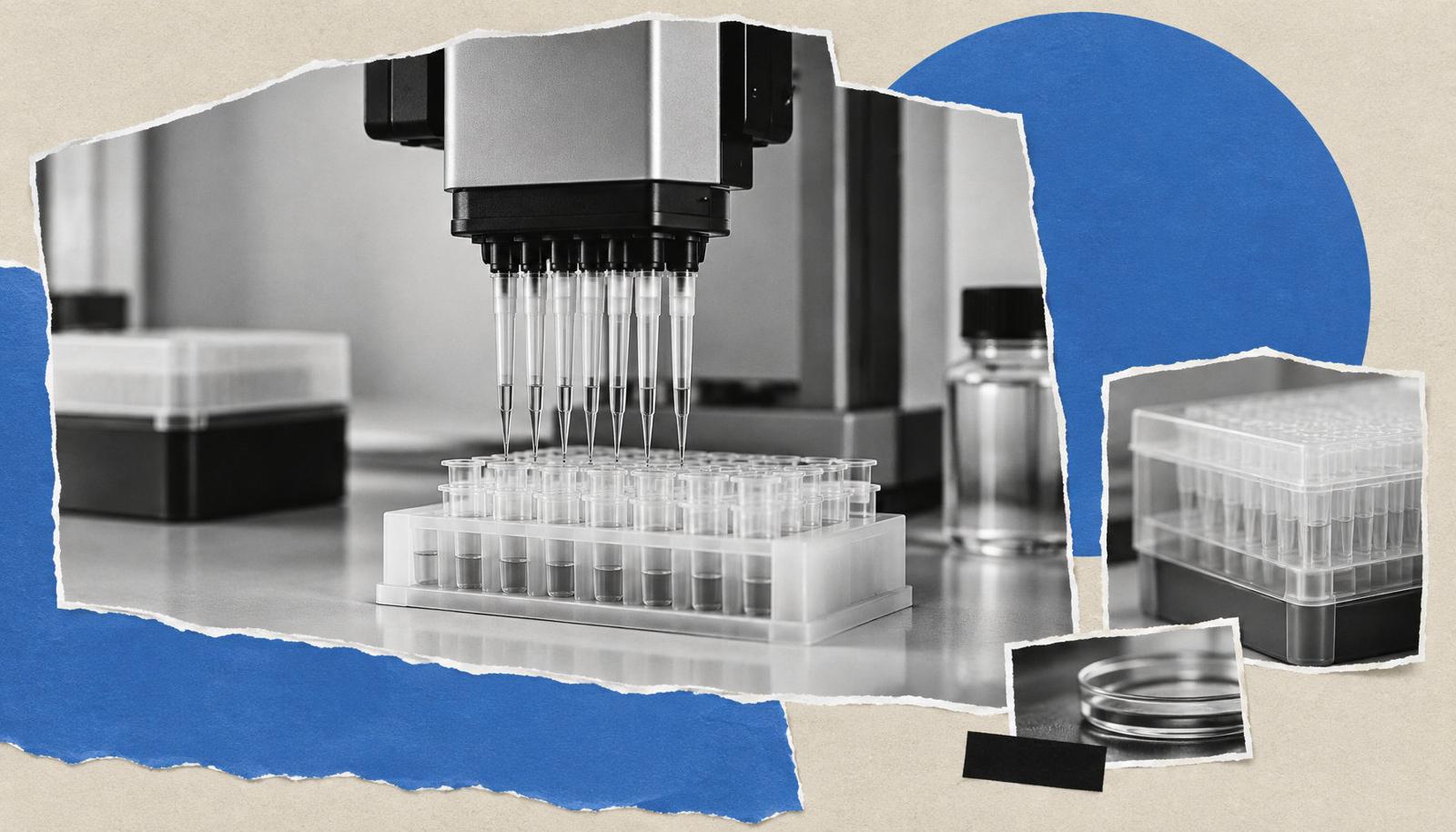
Danaher and Microsoft are developing a shared platform for AI agents to help control scientific instruments and interpret laboratory results. The first commercial applications are due to reach Danaher customers in 2026, according to a Nov. 20 company release.
The companies are still developing the platform, with additional agent-enabled instruments from Danaher businesses planned for 2027. Among the first applications is MetaXpress Acquire AI Assistant, a product-support tool for Molecular Devices' high-content cellular imaging systems.
A shared instrument platform
The platform uses Microsoft Azure for cloud infrastructure and Microsoft Foundry to power agents intended to interpret results and guide instrument control. Its developers intend it to support reuse across technologies and specialized products while remaining open to agents and digital tools in laboratories that use equipment from multiple vendors.
The instruments are being designed to help translate scientific questions into experimental plans, instrument settings and methods. They are also intended to control hardware within defined safety boundaries and under user oversight, while guiding experiment execution and troubleshooting.
Other intended functions include interpreting results and identifying quality issues in real time. The agents are also meant to recommend corrective actions and subsequent experiments for scientists to review.
Early microscope test
Danaher says preliminary internal testing found that novice scientists using an AI assistant for an experiment on a Leica microscope took up to 83% less time and up to 68% fewer steps than a novice working without the assistant. The company also says the assisted experiment produced high-quality data and was completed in a time comparable to an expert.
The partnership is intended to connect instrument-level intelligence with data, laboratory workflows and the physical execution of experiments. As instruments become more connected, Danaher believes experimental results can help scientists determine what to do next, with scientific oversight.
A wider lab project
In October, Danaher announced plans for an AI-powered autonomous laboratory to help researchers develop custom antibodies and other molecular tools. Expected to operate at scale in early 2027, the lab will combine AI, robotics and technologies from several of its businesses in a connected workflow.
Based at Danaher company Abcam, the lab uses AI to help create affinity reagents, including antibodies, and then builds and tests each design. Results are fed back into the model to improve subsequent designs.
Its workflow brings together technologies from Beckman Coulter Life Sciences, Cytiva, Genedata, Integrated DNA Technologies and Molecular Devices. Device orchestration and robotic automation were developed in collaboration with Automata.
Danaher said the lab is designed to deliver discovery of affinity reagents up to eight times faster. The company also said it is designed for up to a tenfold increase in annual reagent generation, from tens to hundreds of reagents per year as the lab scales.
Sources
- Original source · Press release Danaher · Danaher Collaborates with Microsoft to Make Scientific Inst… investors.danaher.com
Other pages read
- Danaher · Danaher Accelerates Life Sciences Research with New AI powe… investors.danaher.com
Related stories
- Microsoft introduces enterprise policy controls for AI agents
- Malicious Microsoft Agent Framework releases removed from PyPI
- Microsoft urges tighter security controls as frontier AI advances
- Microsoft makes Copilot Home generally available as Autopilot rolls out
- Microsoft widens access to Nvidia Vera Rubin systems on Azure and adds Nemotron 3.5 models to Foundry