The Pulse
CAS’s Maxwell Scores 91.9 on Meta-World Robotics Benchmark
The Chinese Academy of Sciences’ Maxwell model recorded a 91.9 average success rate across four difficulty levels on Meta-World’s 50-task robotics benchmark. The Institute of Artificial Intelligence for Industries says the 1-billion-paramet
AI.info Team · Written with AI ·
A 91.9 average across four difficulty levels
Maxwell, an embodied AI model developed by the Chinese Academy of Sciences’ Institute of Artificial Intelligence for Industries, recorded a 91.90 average success rate across four difficulty levels on Meta-World, the institute said in an announcement dated September 14. The result puts the model at the top of the benchmark comparison reported by the institute. The South China Morning Post covered the result on October 1, describing the score as the highest recorded on the simulation benchmark.
The institute also said Maxwell completed 2,305 of 2,500 tested trajectories. Those figures produce a pooled success rate of 92.2%, while 91.90% is the institute’s stated average across four difficulty tiers; the two percentages use different calculations. In the hardest tier, Maxwell succeeded on 287 of 300 trajectories, a 95.67% success rate.
Fifty simulated manipulation tasks
Meta-World’s MT50 evaluation covers 50 robotic manipulation environments. The benchmark includes tasks such as grasping, carrying, opening doors and operating drawers, testing a model across varied actions rather than a single repeated maneuver. Its original project describes MT50 as an evaluation of learning all 50 environments.
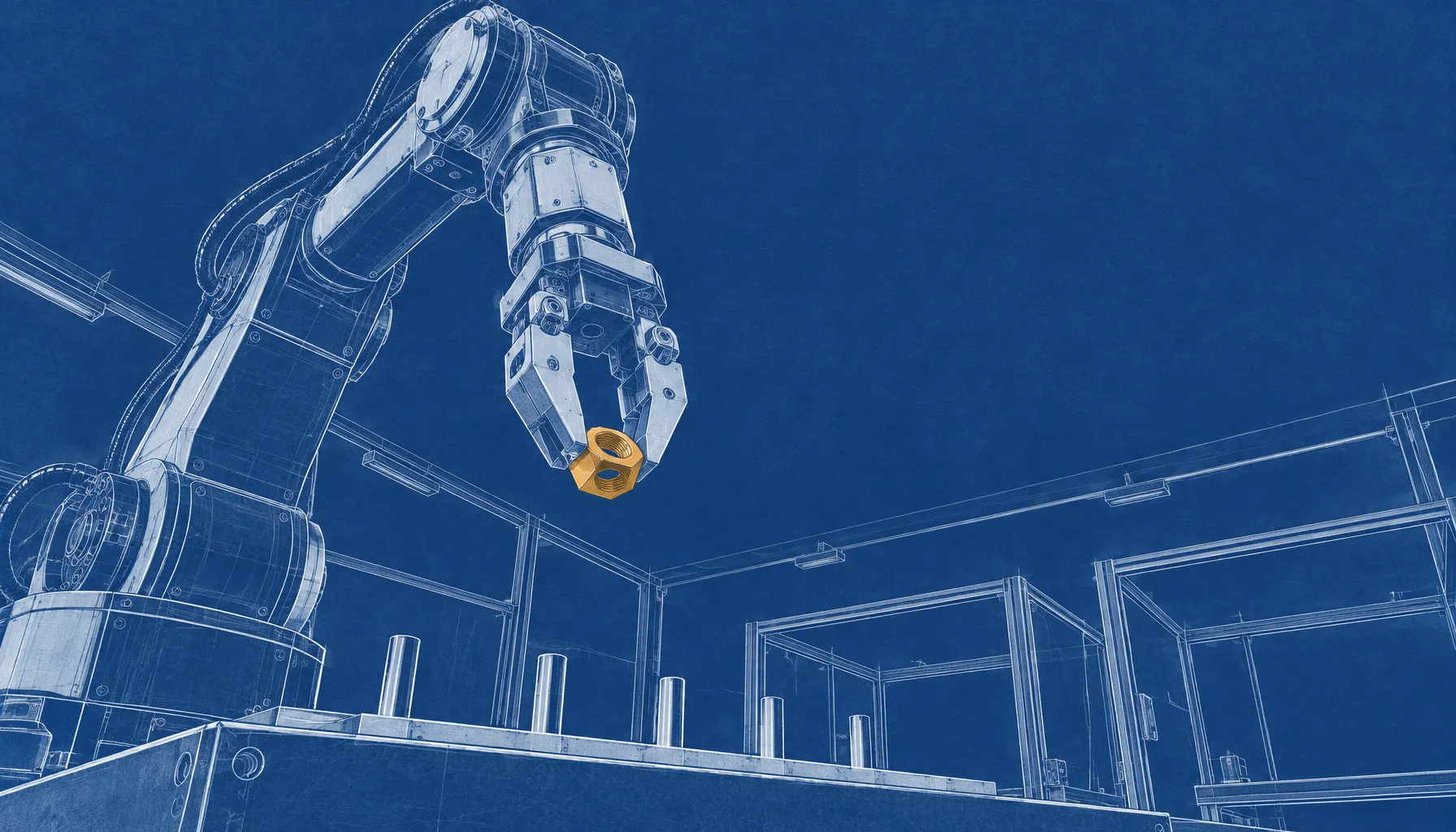
The institute’s account says Maxwell’s tests covered all 50 tasks. Demonstrations included moving a nut onto a target peg, pulling open a cabinet door or drawer, and transferring objects between containers. These results come from simulation: the reported benchmark score does not establish how the model performs on a physical robot in a workplace or home.
How Maxwell compares with other submissions
The SCMP reported that July submissions to the comparison included FabriVLA, developed by Shenzhen-based Youibot, with a score of 90, and SUREFlow, developed by researchers at South Korea’s Kyungpook National University, with 88.3. The report also listed submissions from Physical Intelligence, Google DeepMind, Alibaba, Meituan, Carnegie Mellon University, MIT, the University of Cambridge and the Toyota Research Institute. Alibaba owns the SCMP.
Those comparisons place Maxwell among research efforts from universities, technology companies and robotics-focused teams. But a score on a shared simulation benchmark measures performance under that evaluation’s conditions; it does not by itself show that models transfer equally well to real-world settings or that the teams used identical training methods.
A small model, with deployment still to prove
The institute puts Maxwell’s size at 1 billion parameters and says it supports inference on a single graphics card. It describes the model as designed with edge deployment in mind, a potentially useful property for robot systems that cannot depend on large remote computing resources. The announcement does not establish that Maxwell has been deployed on edge hardware or validated through the reported tasks on a physical robot.
The benchmark result is therefore a concrete simulation achievement, not yet evidence of broad real-world operating ability. The next practical test is whether Maxwell can carry its task performance beyond the 50 simulated environments and into physical robots, where sensor noise, contact, and changes in objects and surroundings can affect every movement.