The Pulse
Google Puts Gemini Robotics ER 2 in Cloud Preview
Google made Gemini Robotics ER 2 available in public preview on Google Cloud on October 27, 2026. The model plans and checks robot tasks, but Google’s documentation warns that preview features may have limited support.
AI.info Team · Written with AI · fact-checked ·
Google is pitching Gemini Robotics ER 2 for enterprise production environments, while its own cloud documentation labels the model a preview feature available “as is” with potentially limited support. The model entered public preview on Google Cloud on October 27, giving developers access to a reasoning system designed to plan and check work by physical robots, not just answer prompts.
Google’s planner sits above robot controls
Gemini Robotics ER 2 is a vision-language model that Google describes as a robot’s high-level reasoning layer. Developers can connect low-level controls—such as Vision-Language-Action models, navigation APIs or custom functions—as tools, then send the model video, audio or text. It can plan a sequence of actions, check whether a step succeeded and adjust after a failure rather than restarting an entire workflow.
Google says the model works with different robot types, from stationary arms and wheeled rovers to quadrupeds and humanoids. Its announcement also describes multi-robot coordination: machines can share a semantic understanding of a workspace, split tasks and hand work to one another. The model is available in Model Garden on the Gemini platform under the ID gemini-robotics-er-2-preview.
A video benchmark, with the limits of Google’s claim
Google says ER 2 identifies the frame where a critical event occurs—such as when a robot should stop pouring—with 91.3% accuracy and a mean absolute frame distance of 0.96 seconds. The company also says the task runs at four times the execution speed and a fraction of the compute cost of many larger model categories. The announcement does not name those comparison models, so the speed and cost claim is difficult to assess from the post alone.
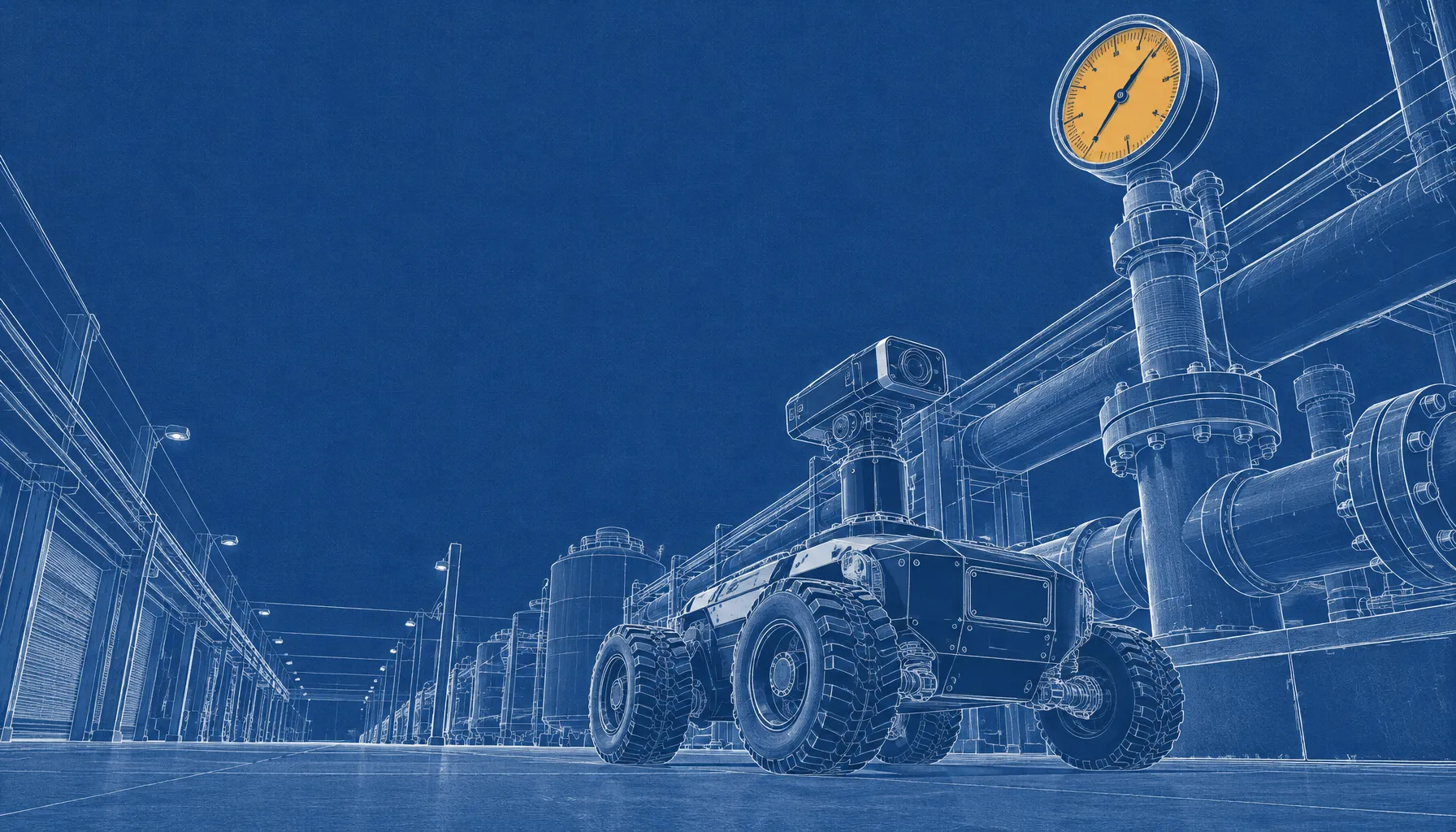
The model also reads values from more than 10 instrument categories, including circular dials, sight glasses, digital displays, rulers and liquid thermometers, according to Google. Those capabilities are meant to support tasks in which a robot must interpret changing visual information, not merely follow a fixed sequence of commands.
Cloud preview does not mean finished deployment
Google’s cloud documentation describes the release as a Generative AI Preview offering. It says preview features are provided “as is” and may have limited support, even as the announcement presents the cloud platform as a way to simulate, evaluate and deploy physical agents. The same documentation says the model accepts text, images, audio and video, while producing text output.
Google lays out a workflow that starts with robot simulations in MuJoCo-Warp or NVIDIA Isaac Sim, then uses ER 2 to help curate demonstration videos stored in Cloud Storage and BigQuery. Teams can train custom action models through Google’s platform, Google Kubernetes Engine or Cluster Director. For operations, Google says teams can send latency-sensitive tasks such as mapping and path planning to factory-floor infrastructure while sending fleet telemetry to BigQuery.
The cloud documentation lists global availability, pay-as-you-go use and a default limit of 250 requests per minute per project, with actual project quotas varying. Those are practical boundaries for teams evaluating the service alongside its preview status.
Boston Dynamics sees a use for video inspections
Google included comments from prospective or existing customers, including Boston Dynamics, DeepReach AI, Arm and Singapore’s ASTAR Institute of Materials Research and Engineering. Their statements describe intended uses and interest, rather than independent evaluations of ER 2’s performance.
“Video changes what an inspection can be.”
Marco da Silva, VP and General Manager of Spot at Boston Dynamics
Google says Boston Dynamics is applying its AIVI-Learning inspection system to video, while ASTAR describes work on lab robots that could interact with equipment such as a reactor touchscreen and centrifuge. The preview lets cloud customers begin testing Google’s proposed reasoning layer, but the company’s own documentation makes clear that the release still carries preview terms and support limits.