The Pulse
MIT’s InstructMesh Lets Users Repair AI-Generated 3D Models
MIT researchers introduce InstructMesh, a tool for editing AI-generated 3D models before fabrication. In tests, novices identified and repaired flaws in recreated Thingiverse designs about 90 percent of the time, with an expert reviewing th
AI.info Team · Written with AI ·
“With manipulation happening in the latent space of the generative model, InstructMesh supports natural language description of issues, and creates interpretive changes in the geometry for the user to evaluate and approve,”
Faraz Faruqi, lead author of the project’s paper
From plausible shape to printable object
MIT researchers introduced InstructMesh on October 1, 2026, as a way to repair AI-generated 3D models before making them. The tool lets users select a region of a design and refine it with written instructions or slider controls, rather than requiring them to work directly in specialist modeling software.
The problem is practical: a generated object can look right on screen while failing at its intended job. MIT gives the example of a mug whose shape would not hold coffee. InstructMesh is designed to help users spot and correct such fabrication-related flaws, while leaving them in control of which changes to accept.
TRELLIS generates; GPT-4 helps direct edits
The system combines Microsoft’s TRELLIS, which generates 3D models from text and image prompts, with GPT-4. Rather than editing only the finished mesh, InstructMesh works with the generator’s intermediate representation, the researchers say. The paper describes targeted operations including opening or sealing voids and changing local thickness.
That setup supports two ways to refine a selected area: describe the problem in natural language or adjust a slider. MIT reports that users used sliders for more precise changes, such as enlarging or extending part of a model, while prompts let them express broader ideas.
Nearly four in five test models had flaws
To test whether newcomers could use the tool, the team had TRELLIS recreate popular 3D-printable designs from Thingiverse. Nearly 80 percent of the generated models had structural flaws, according to MIT’s account. That result applies to this set of recreated designs, not to AI-generated 3D models generally.
Novices then identified and repaired the problems around 90 percent of the time, with an expert reviewing their work. The test suggests that users without modeling experience could make useful corrections in this task; it does not establish that InstructMesh automatically verifies every design or guarantees a successful print.
Mugs, braces and a shrimp-shaped robot
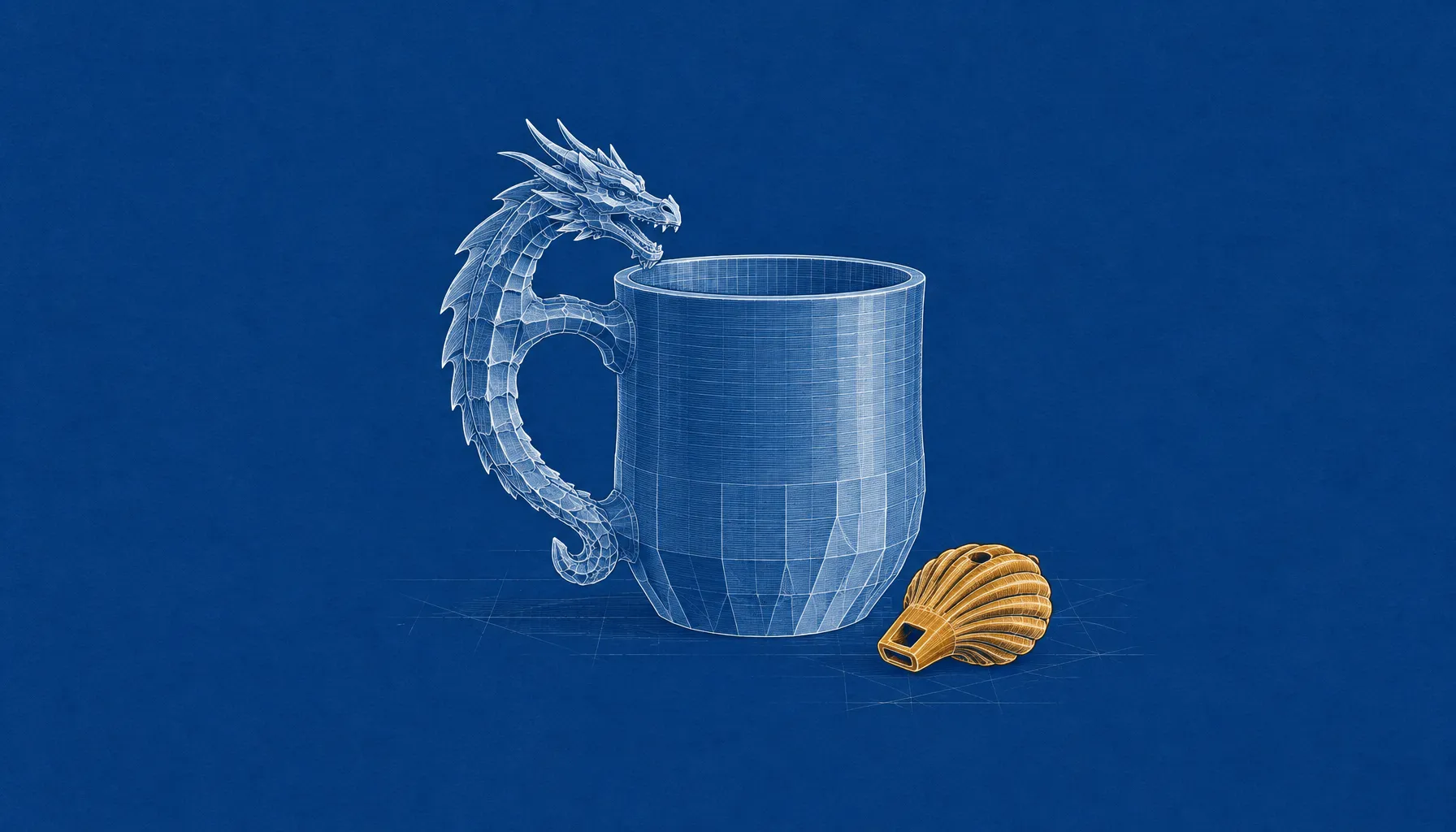
The researchers used the system to create objects including a dragon-themed mug, a shell-like whistle and glasses with butterfly-wing details. They also made a knee brace designed to resemble denim and a small “bristle bot” whose shrimp-like housing conceals a motor.
MIT says users also created items such as phone stands and vases, and that the resulting objects worked as intended. The team describes physics simulation and material recommendations as possible future additions, not current InstructMesh features. Researchers from MIT, Google and Northeastern University developed the project, which they plan to present at the ACM Symposium on User Interface Software and Technology in November 2026.