The Pulse
Meshy says print-preparation tool reduced defects in 3D test
A Meshy-funded test compared physical prints from five AI 3D-generation workflows using 25 challenging prompts. The company's preparation feature reduced prints with major missing features or holes, though two still had those defects.
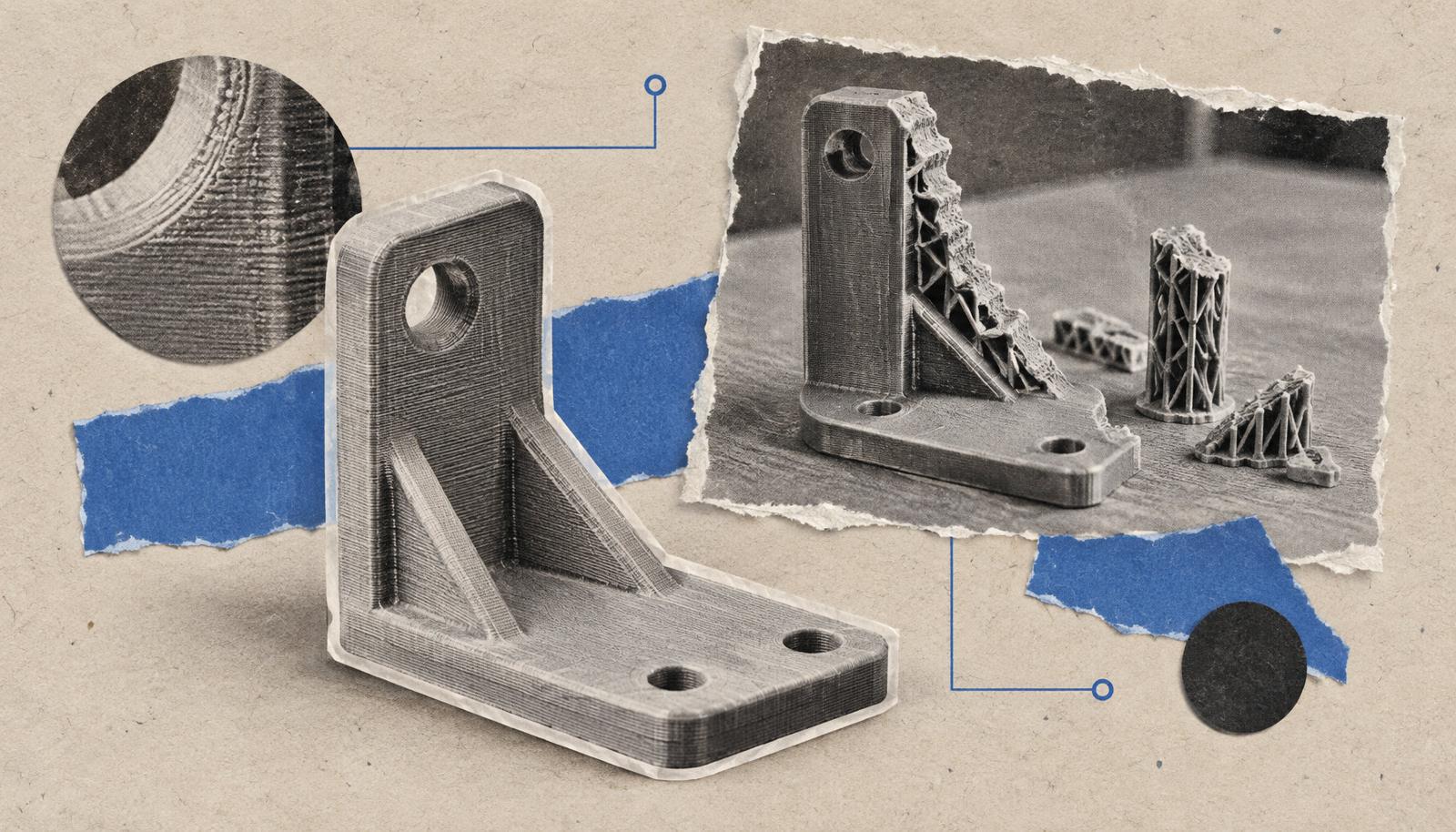
A print-preparation feature reduced the share of AI-generated objects with major missing features or holes from 11 of 25 prints to two of 25 in a Meshy-funded test, the company reported. The physical benchmark compared models made with Meshy 7 alone and with its Make Printable feature, alongside three other AI 3D generators.
Meshy commissioned and funded the study and supplied six Bambu Lab A1 printers and consumables to the University of Massachusetts Amherst's Advanced Digital Design and Fabrication facility, known as ADDFab. The facility's participation was not an endorsement of Meshy products or an audit of its software.
From prompts to printed parts
The lab prepared and printed 125 parts using the same 25 prompts across five workflows. The printers used the same settings and filament, and the identity of each generating engine was concealed during file preparation, printing and grading.
Three experienced 3D-printing users scored each part against a five-criterion rubric covering layer shift, support-removal damage, stringing, drooping and missing features. Lab staff removed supports before grading.
A print was counted as having major missing features or holes if any of the three graders found a missing element larger than 3 mm or a hole larger than 1 mm. Prints without that flag could still have smaller defects.
How the workflows compared
In the comparison, 23 of 25 prints from Meshy 7 with Make Printable, or 92%, had no major missing features or holes, according to the company's results. The corresponding figures for the three unnamed competing generators were 21 of 25, or 84%; 15 of 25, or 60%; and 14 of 25, or 56%.
The mean defect score for the prepared Meshy prints was 1.99 out of 15, with lower scores indicating fewer defects. The competitors scored 2.25, 3.40 and 3.48. Meshy said its paired-score analysis distinguished the prepared workflow from the latter two competitors on average defect scores, but not from the first.
Seventeen volunteers also ranked the anonymous prints. The company reported that the prepared Meshy models had the best average rank for print quality and satisfaction with the prompt, with modest differences from the nearest alternatives.
Limits of the test
The prompts were deliberately chosen to challenge the reproduction of delicate features, with priority given to prompts for which competing models were predicted to be too thin to print. The results describe that challenge set rather than performance across all prompts.
Two prepared prints, a six-legged insect and a long-finned tropical fish, still had major missing features or holes. Meshy said its software check had found almost no thin regions in either model.
The physical test covered FDM printing only, using the same settings and filament across workflows. The results do not establish performance for SLA or SLS printing, or for every print size.
Geometry checks and preparation
In a separate software assessment, Meshy generated models from 100 prompts and checked about 1,000 outputs per workflow for problems including holes, broken surfaces and thin walls. The share with complete, connected surfaces rose from 33.4% for raw Meshy 7 output to 98.8% after Make Printable, averaged across the prompts, the company reported. That surface check measured detected openings and invalid connections, not physical print success.
Make Printable is available as part of Print Check in Meshy.ai. It repairs mesh defects and reinforces selected thin features for a chosen print size and process, and can be used on uploaded models as well as those generated in Meshy.
Sources
Related stories
- Study finds swearing in a minority of AI models' benchmark runs
- KeyBanc finds faster growth but weaker margins at AI-first firms
- Researcher says six Chinese AI models carry Blackwell chip traces
- Anthropic Finds Small Models Near AI-Worm Self-Replication
- Google brings Gemini 4 Hydrogen to Search users worldwide