The Pulse
Architect Labs says its AI systems designed the Frostbite CPU
Architect Labs says its AI systems designed Frostbite, a general-purpose CPU with a new instruction set based on interaction nets. The company reports a performance-per-watt advantage over a conventional CPU core across 25 workloads, using pre-silicon results.
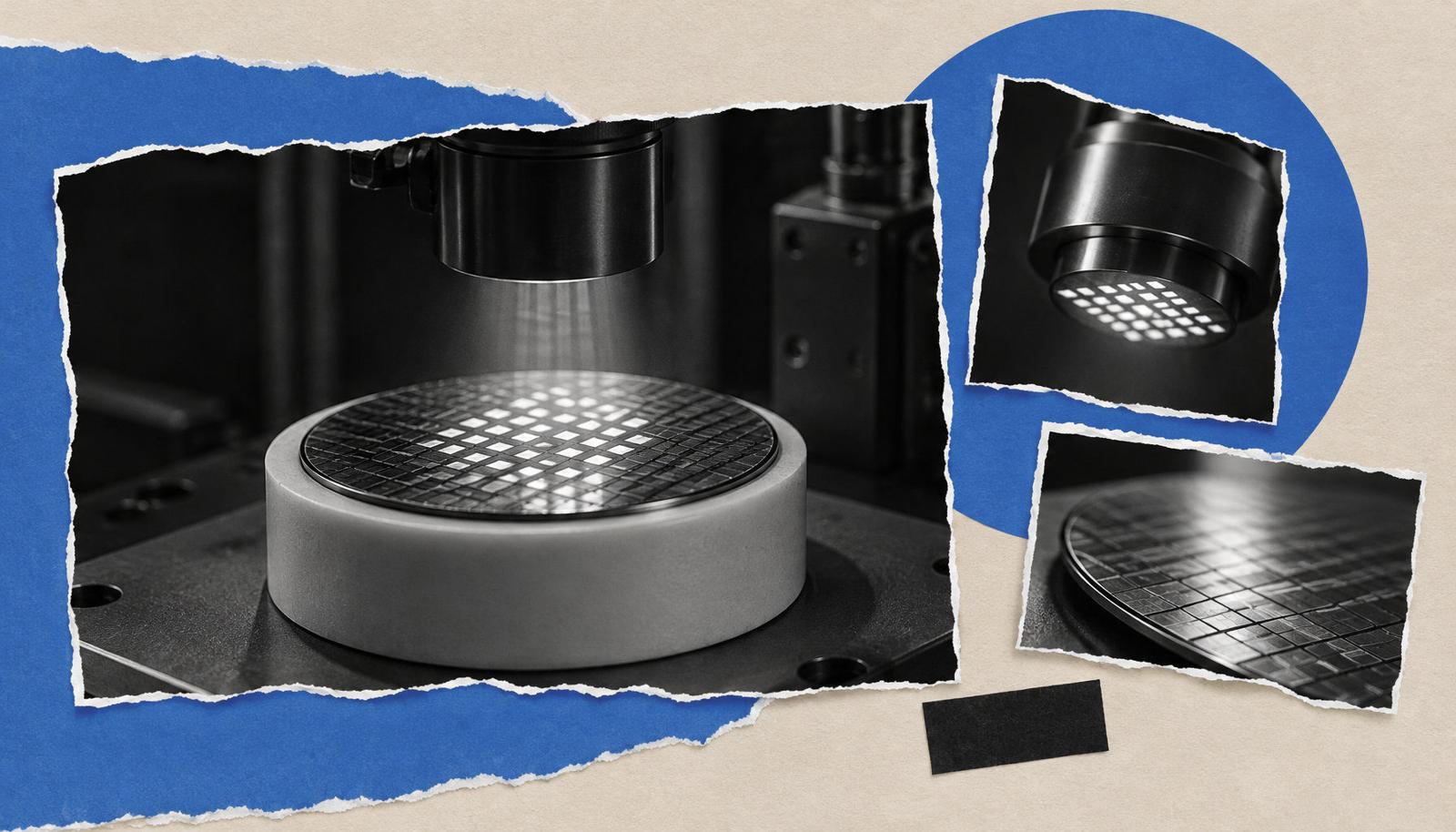
Architect Labs says its AI systems designed and verified a general-purpose CPU architecture, from its new instruction set and compiler through to a final chip layout. In a November 18 research post, the company reported that the design, called Frostbite, achieved 4.59 times the performance per watt of a silicon-proven, dual-issue, in-order CPU core across 25 workloads, including 15 held out until final evaluation. The company made that comparison between one Frostbite quad, a two-by-two group of tiles, and one such core, which it says have similar area.
Notebookcheck reports that the results come from pre-silicon simulations rather than a physical processor. Architect Labs describes the power figures used in its development process as pre-silicon numbers.
A different way to run programs
Frostbite is built around interaction nets, in which a program is represented as a graph of nodes and computation proceeds by rewriting connected pairs. Each rewrite affects a small, local part of the graph, and each value is used once.
Architect Labs says the approach exposes parallel work directly from the program and allows data to be kept in small local memories near where it is used. The company contrasts that with conventional CPU hardware, which must identify dependencies between instructions at runtime and maintain consistency across caches.
The company says it began the design process without architectural priors, using groups of AI agents to explore possible approaches. It selected workloads intended to test different kinds of program behavior, including independent tasks, sequential chains, branching and recursion.
From exploration to a design
Agents reviewed research papers and existing benchmarks and built Python models to compare architectural ideas before selecting a concept. Their initial output was a 141-page document describing a proposed programming model, runtime and high-level chip blocks.
That document was a starting point rather than the final architecture. It was later deleted after the first register-transfer-level design was generated, because many of its numbers and estimates were far from what was physically possible, the company says.
The workload set included search tasks used to guide design and separate evaluation tasks held out for the final test. The held-out group included a Kalman filter, principal component analysis, finite element analysis, an LU solve and LZ4 decompression.
Checking the hardware model
After choosing an architecture candidate, the team built a software model of the chip called Arcmodel in an in-house specification language, ASL. The language supports machine-checkable translations and refinements among the system model, register-transfer-level design and verification tools.
The language also translates to Lean, which the company uses for theorem proving when checking AI outputs. By the end of development, the Frostbite specification had been lowered to more than 800,000 lines of Lean, according to the post.
The company says its AI systems repeatedly adjusted the instruction set, software model, design and verification together against a shared formal contract. It credits that common specification with preventing classes of bugs and instances of reward hacking during work by large agent groups.
Architect Labs says the software model initially lacked physical awareness, and its power and performance estimates diverged from the register-transfer-level design by almost 250% in the worst case. An automated pipeline then recalibrated the model against that design, repeating the process until the two agreed within 5%.
Sources
- Original source · Blog post Architect Labs architectlabs.com
Other pages read
- Notebookcheck notebookcheck.net
Related stories
- Bain says retail market share does not guarantee AI shopping visibility
- ToolPulse researchers reconstruct AI agent workflows via cache traces
- TuringSpace test finds spatial action gaps in leading AI models
- Vals AI starts public tracker of misaligned model behavior
- OpenAI says agents completed 46% of delegated two-to-four-hour tasks