The Pulse
TuringSpace test finds spatial action gaps in leading AI models
A new benchmark tests AI models on interactive spatial puzzles that require clicks and drags. Researchers report that the strongest model tested solved 74.1% of tasks, compared with 94.1% for humans.
The strongest AI model tested on a new set of interactive spatial puzzles solved 74.1% of tasks, compared with 94.1% for humans, researchers report. The TuringSpace benchmark challenges models to understand scenes and act on them through clicks and drags, rather than answer questions alone.
In a preprint submitted to arXiv on November 19, the researchers describe a synthetic web environment built around 125 CAPTCHA-style tasks. Their experiments also found that training a smaller model on examples generated by the environment improved its performance on the test.
Puzzles that require action
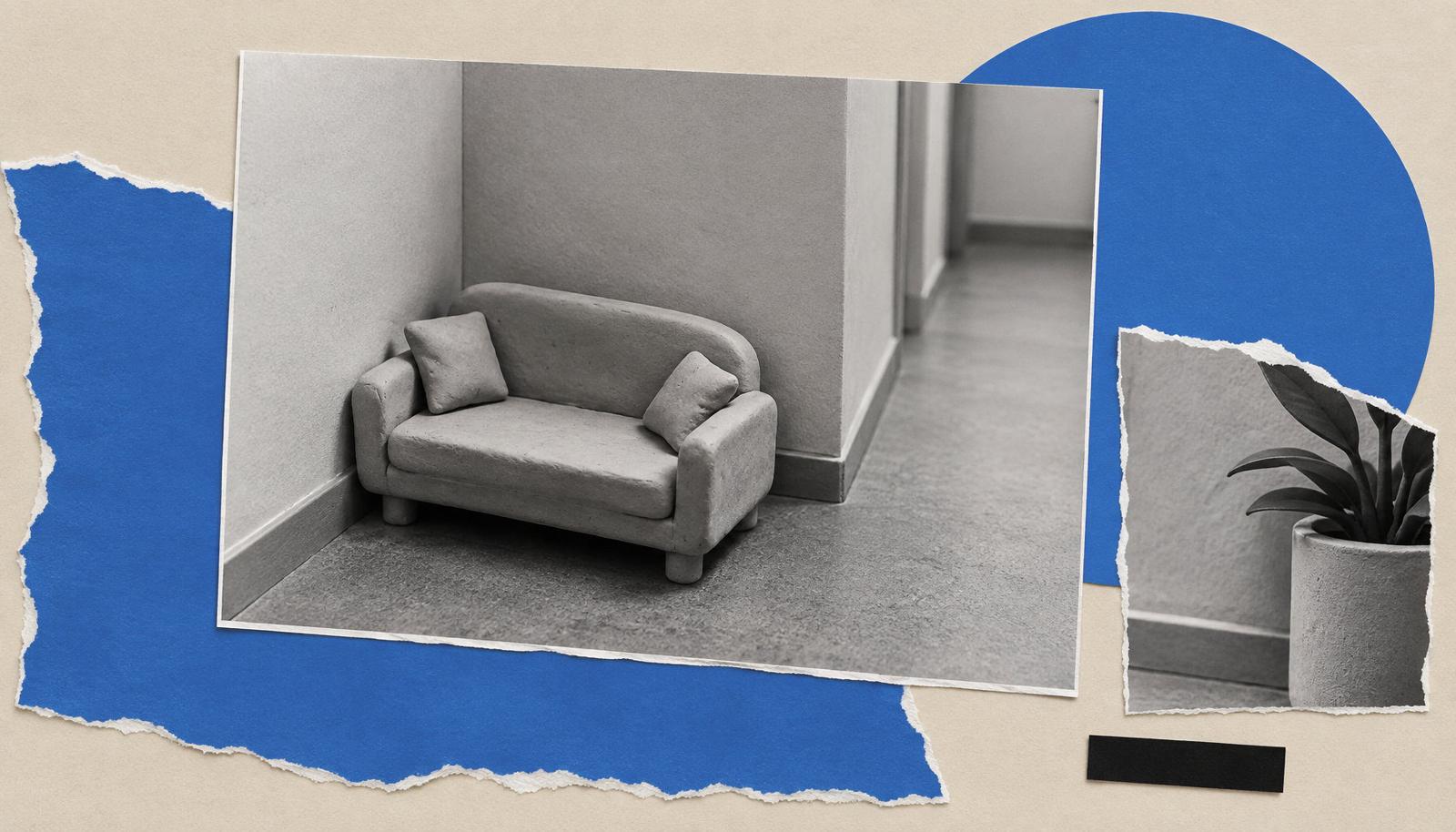
TuringSpace-Bench puts models in a browser, where they read screenshots and use the mouse and keyboard to solve spatial puzzles. The researchers describe a task in which a player moves a sofa around a corridor corner, adjusting its position and rotation when it becomes blocked.
The benchmark contains 25 tasks in each of five spatial-ability categories, and human players validated the tasks. Each task is a program that can generate fresh instances from random seeds and check their final state.
The paper contrasts this approach with spatial tests that use multiple-choice questions or symbolic commands. Its authors argue that a sequence of actions can show how a model understands a scene and responds to feedback after a move.
Where models struggled
The best open-weight model in the evaluation, Kimi K3, failed 68.0% of tasks, according to the preprint. The paper also reports that no specialized computer-use agent solved more than 3.5% of them. The model results are reported as average pass@1 over three seeds.
The authors report that the strongest models’ failures mostly came from misreading the screen, including when it showed feedback from their own actions. They also found that open-weight models’ reasoning rarely corrected an early mistaken belief and instead sometimes hallucinated evidence to defend it.
Training on generated tasks
The same task programs form a training environment called TuringSpace-Gym. Replaying a program’s computed solution produces a trajectory pairing each action with its visual outcome, giving the researchers examples to use for fine-tuning.
To test whether the interaction data could teach spatial abilities, the team fine-tuned Qwen3.5-9B on 55,000 verified trajectories generated by the gym. The authors report that its success rate on TuringSpace-Bench rose from 1.6% to 33.1%, exceeding the result for Kimi K3.
The resulting model, called TuringSpace-9B, also improved on other CAPTCHA, spatial-understanding and robotic-pointing benchmarks, the researchers report. It improved on all seven out-of-distribution benchmarks in their evaluation, including a 9.9-point gain on VSI-Bench, which uses real-world indoor videos.
The authors say the results suggest that spatial skills learned through screen actions can transfer to real-world scenes. They plan to release TuringSpace for further study.
Sources
- Original source · Preprint TuringSpace: Grounding Spatial Intelligence in Action with Interactive CAPTCHAs arXiv:2611.25387
Related stories
- LlamaIndex proposes severity-based scoring for document parsing
- Aikido finds reachable secrets in 13 of 50 AI security incidents
- ToolPulse researchers reconstruct AI agent workflows via cache traces
- Vals AI starts public tracker of misaligned model behavior
- OpenAI says agents completed 46% of delegated two-to-four-hour tasks