The Pulse
Science Corp. Implants PRIMA in Its First Stargardt Patient
Science Corporation says its PRIMA retinal implant was placed in its first patient with Stargardt disease in May, during a trial at Sydney Eye Hospital. The patient saw a letter in one rehabilitation session and read a word in the next, whi
AI.info Team · Written with AI ·
Science Corporation’s first patient with Stargardt disease read a word with its PRIMA retinal implant during rehabilitation, CEO Max Hodak said on October 13. The early result comes with a sharp limit: the current implant gives the patient a small, black-and-white patch of vision, not a broad view of the world. Hodak announced the milestone during an onstage interview at TechCrunch Disrupt.
A word, not a full field of vision
The patient received the implant in May as part of an ongoing trial at Sydney Eye Hospital in Australia. At the first rehabilitation session, he saw a letter; at the second, he read a word, according to Hodak’s account. Those steps mark an early test of PRIMA in Stargardt disease, not evidence that the implant restores ordinary sight.
Stargardt is an inherited eye disease that gradually damages the light-sensing cells in the outer retina and causes a growing blind spot at the center of vision. The inner retina, which passes visual signals to the brain, may remain intact. TechCrunch puts the number of people worldwide who have lost vision from the disease at about 150,000.
How PRIMA delivers an image
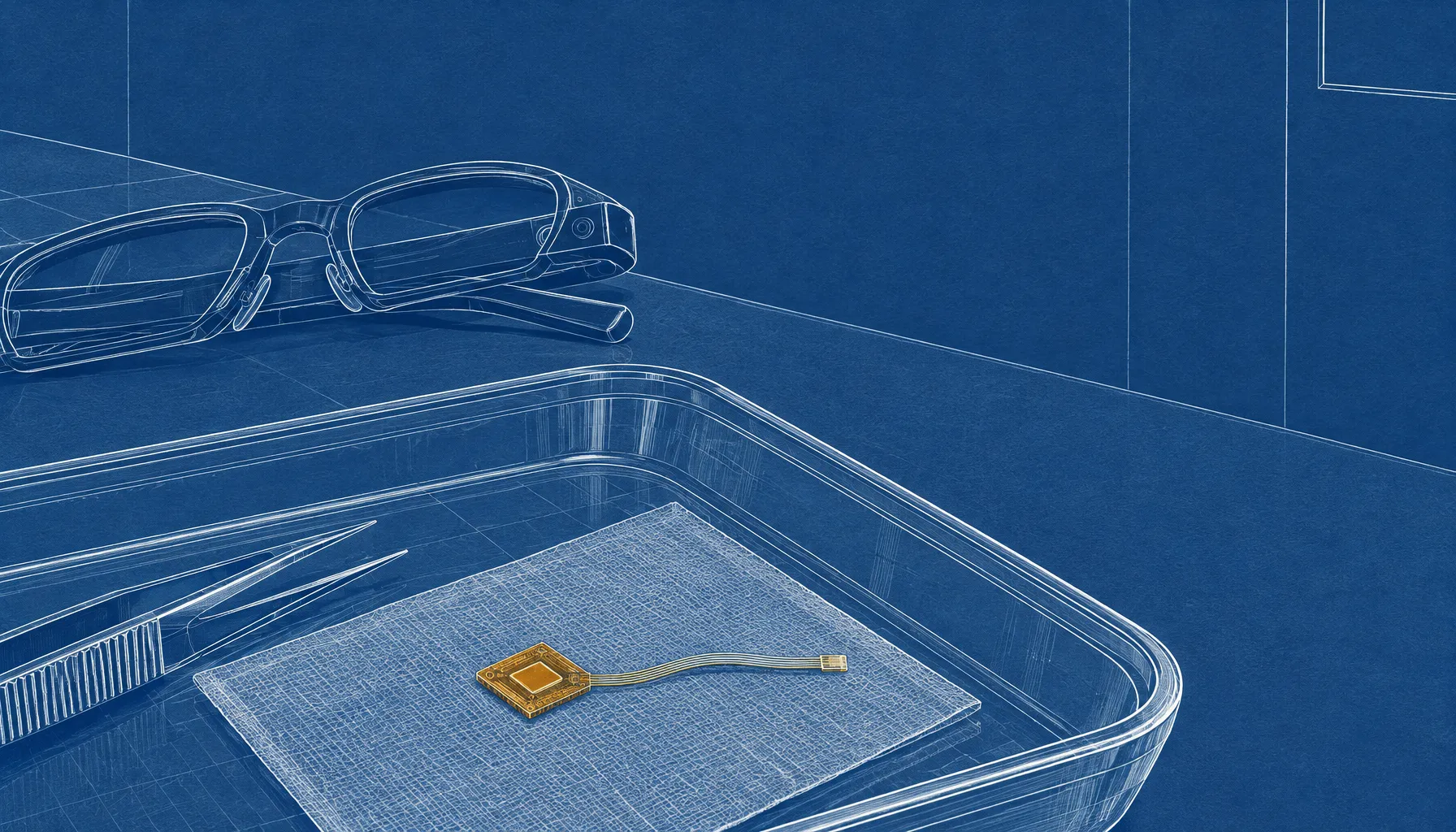
PRIMA places a small chip at the back of the eye, where photoreceptors have degenerated. Patients wear glasses equipped with a camera; the glasses transmit an image to the implant, which acts as a set of artificial photoreceptors. The procedure takes about an hour, TechCrunch reported.
Hodak described the current device as a two-millimeter-by-two-millimeter implant and compared the resulting view to looking through a straw. “It is not a big field of view color vision,” he said. He described the image as a sharp, high-contrast patch in central vision, allowing the patient to see a few letters at a time.
A proven use, and a new trial
Science Corporation says PRIMA is commercially available in Europe for geographic atrophy, an advanced form of age-related macular degeneration. The Stargardt trial extends the device’s use to an inherited condition that the company’s account describes as currently incurable. Results from one patient’s first rehabilitation sessions do not establish how well the implant will work for other people with Stargardt disease.
The distinction matters because the implant replaces some of the retina’s light-sensing function; it does not repair the underlying genetic disease. Its potential use depends on the inner retina and the pathway carrying signals to the brain being able to respond to the implant’s stimulation.
Hodak’s next step is a larger implant
Hodak said Science Corporation is developing a next-generation device for human use within the next year. Making the implant larger could expand the visual field, but he said the curvature of the eye presents a design challenge and that smaller electrodes would be needed for finer detail. He projected that the company could get closer to natural visual acuity over five years, a goal rather than a demonstrated result.
For now, the concrete measure from the Stargardt trial is modest and specific: the first patient saw a letter, then read a word, using a small monochrome patch generated by a retinal chip and camera glasses.