The Pulse
RoboParty Opens RP1’s Hardware and Software Stack
RoboParty launched its RP1 humanoid platform on October 15, 2026, publishing design files, software and robot-learning resources across linked repositories. The project’s README says demonstrations are still coming soon and directs contribu
AI.info Team · Written with AI ·
RoboParty says RP1 gives developers “full control” of a humanoid robot, but one part of its public project page is still marked “Coming soon.” The company launched the platform on October 15, 2026, with repositories spanning hardware, firmware and robot-learning tools; its README also shows that demonstrations have not yet arrived. That contrast sets the terms of the release: a broad technical opening, with parts of the developer-facing package still in progress.
From CAD files to motion training
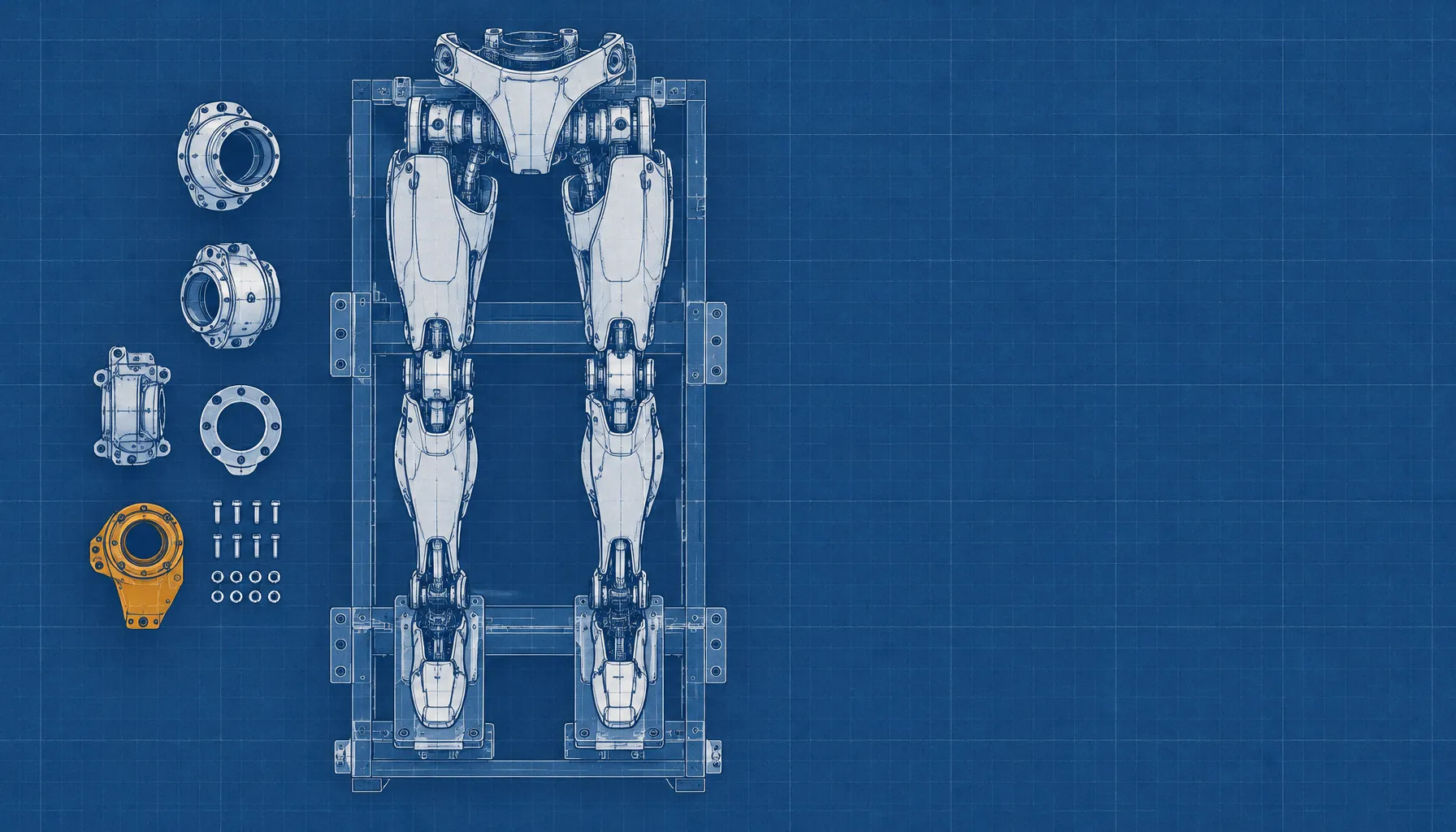
The RP1 repository guide groups the project into hardware, software and learning resources. Its hardware list includes mechanical source files, electronics, testing and assembly procedures, alongside joint modules and hand-integration materials. The software repositories cover a deployment SDK, robot descriptions and firmware; training projects include locomotion, motion imitation and behavior models.
That range matters because an open robot can mean different things: software that sends commands to a fixed machine, or access to the parts that shape how it moves. RoboParty says RP1 is designed for the latter, connecting mechanical and electrical designs with device drivers, robot models and training workflows. Researchers could, in principle, inspect or change multiple layers rather than treating the robot as a sealed platform.
The top-level repository is an index, not the place to submit changes. RoboParty directs contributors to file issues and pull requests in the relevant sub-repository, and says each one carries its own release contents, supported configurations and setup instructions. The README lists supported robot configurations with 24, 28, 30 and 42 degrees of freedom.
The “coming soon” caveat
RP1’s repository lists several motion-learning projects, including AMP and BeyondMimic, but its demo section is labeled “Coming soon.” That distinction separates code and project listings from a ready-to-run showcase: the README points readers to other repositories for the details, supported setups and installation steps. It does not establish that every listed configuration or workflow is equally ready for use.
RoboParty’s launch announcement describes a standard RP1 with 24 actuated degrees of freedom and an RP1 Pro with 30, excluding dexterous hands. The company’s product page lists a 100-millimeter actuator model with peak torque of 160 newton-meters and claims up to three hours of operation; it cautions that performance and runtime vary with load, terrain, battery condition and software configuration. Those are company specifications, not independent test results.
RoboParty’s bet on shared hardware
The launch announcement positions RP1 as a research platform for testing algorithms on physical hardware. RoboParty says it supports walking, recovery from disturbances and falls, and human-motion tracking, while its toolchain links data collection, simulation training and deployment on the robot. The release presents those capabilities as a starting point for developing higher-level policies, rather than as proof that the robot can perform a particular task autonomously.
“With RP1, we want to open up more than code. We want to give researchers the opportunity to truly understand, modify and continuously advance robotic capabilities.”
Yi Huang, founder of RoboParty
RoboParty’s earlier RPO project, launched in January 2026, had collected more than 2,600 GitHub stars by the time of the RP1 announcement, according to the company. RP1 extends that effort with in-house ROMOMO joint modules and a larger catalog of hardware and software repositories. For developers evaluating the release, the concrete next step is to check the individual repository for the specific robot configuration, setup instructions and available materials they intend to use.