The Pulse
Intel pitches D270 GPU for HPC with financial and AI benchmark claims
Intel says its D270 inference GPU can also handle high-performance computing workloads that need double-precision arithmetic. The company published financial and AI benchmark comparisons based on pre-production silicon.
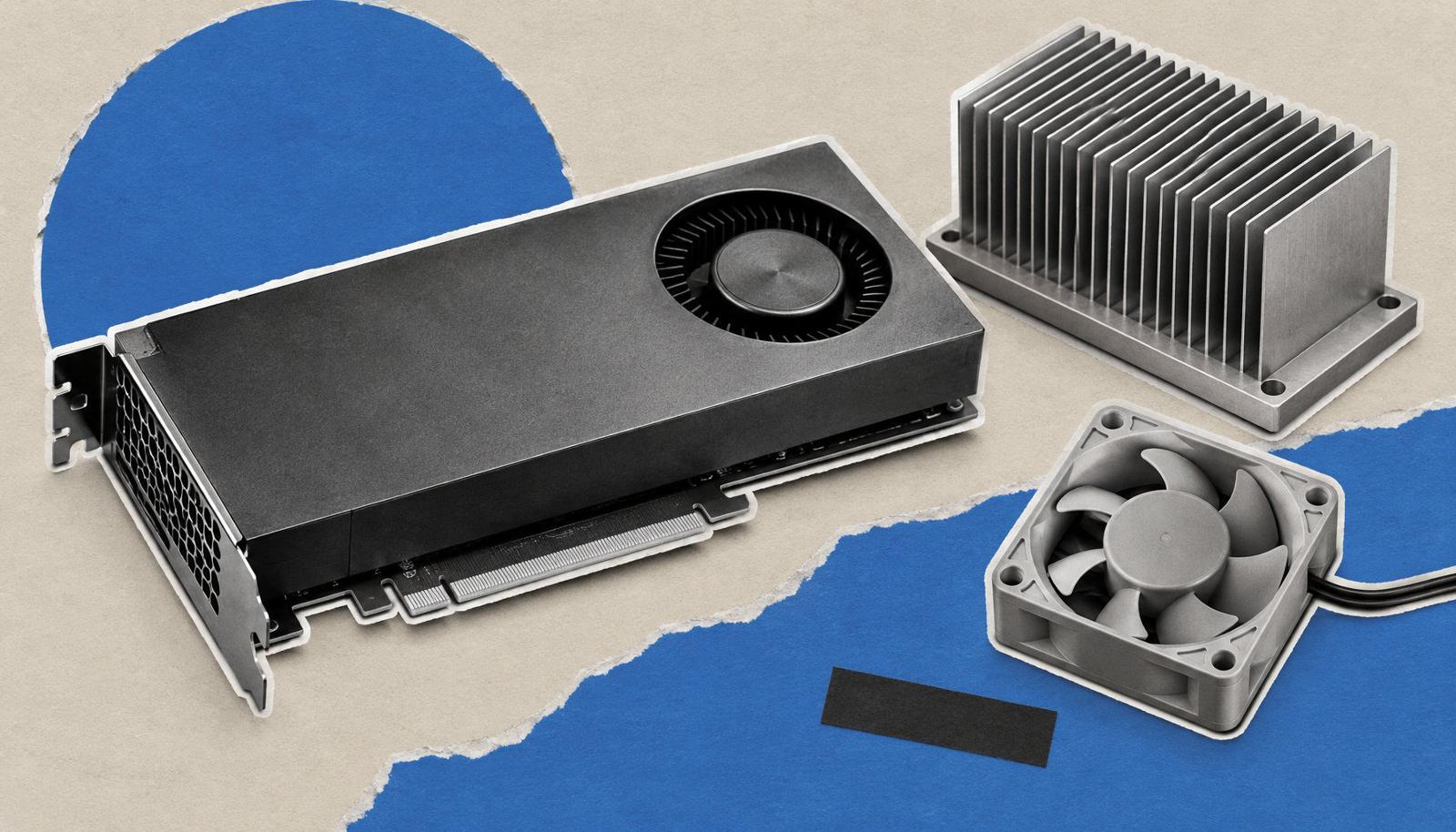
Intel is pitching its D270 data-center GPU, designed for AI inference, for high-performance computing as well, citing double-precision support and new benchmark comparisons against an Nvidia card. In a November 16 post, the company said the results were obtained with pre-production silicon.
The D270, formerly code-named Crescent Island, is intended for workloads that can combine simulation and AI inference. Intel's examples include financial modeling and seismic imaging.
Precision and memory
The GPU supports native double-precision FP64 computation as well as lower-precision FP4 to FP8 operations for inference. It uses Intel's Xe 3P architecture, with 32 Xe cores and 256 Xe Matrix Extensions engines.
Each core delivers 64 FP64 fused multiply-add operations, according to Intel. The company says double-precision arithmetic helps scientific, engineering and financial simulations preserve numerical fidelity and avoid accumulating rounding errors.
Intel's own card carries 160 GB of LPDDR5X memory with 1.5 TB/s of bandwidth. Partner-designed configurations can scale up to 480 GB; the card uses a 350-watt, air-cooled PCIe 5.0 form factor.
Financial and AI tests
Intel reports that the D270 achieved up to 5.9 times the application throughput of Nvidia's RTX PRO 6000 Blackwell Server Edition in options-pricing tests. The comparison used Intel's SYCL implementation against the better of Nvidia CUDA and SYCL implementations on the Nvidia GPU.
The company also reported throughput ratios of 5.6 times for European Black-Scholes, 4.6 times for a binomial workload and 1.92 times for American Black-Scholes. Intel lists the D270 at 350 watts and the Nvidia card at 600 watts.
For Drex 2.0, Intel claims up to 29% lower latency than the Nvidia card. For Qwen 3 30B-A3B, it reports 1.12 times the throughput against the same competitor.
Those AI figures also came from pre-production silicon, and Intel cautions that results may vary. In the Qwen test, the company specified FP8 precision, VLLM, input and output sequence lengths of 1k each, and concurrency from 1 through 32.
Inference across processors
Intel plans to demonstrate a system with SambaNova at SC26 in Chicago that splits inference work across different processors. Under the design, the D270 handles the compute-intensive prefill stage, which processes prompts and other context.
SambaNova SN50 Reconfigurable Dataflow Units handle the memory-bound decode stage, while Intel Xeon 6 and Xeon 6+ processors orchestrate the workflow, host communications and tool execution. Intel says the companies are building the system for providers seeking to expand supply for AI token demand using common software stacks.
Seismic software port
Intel is also demonstrating a seismic modeling workload at the event. The company says the work used FP32 computation and cache-aware stencil optimizations to reuse data while keeping large wavefield arrays on the card.
For the Veridien seismic demonstration, Intel says developers used the open SYCL programming model to build on an existing HIP/CUDA workload, without modifying host-side code. The company says the mini-application was ported in less than a month and that its numerical accuracy and performance were validated.
It says 90% of the kernels performed well without Intel-specific optimizations, while complex kernels reached up to 70% of theoretical peak performance on the first, unoptimized port. Intel is positioning its software stack to support both numerical simulation and AI workloads.