The Pulse
GPT-6 Astra Helps Decode an 1809 Cipher Letter to Marmont
Carter Church says GPT-6 Astra helped decipher a coded March 1809 letter to General Auguste de Marmont, sent from Eugène’s viceroyal headquarters on Napoleon’s instruction. The proposed reading matches Napoleon’s earlier order, while five r
AI.info Team · Written with AI ·
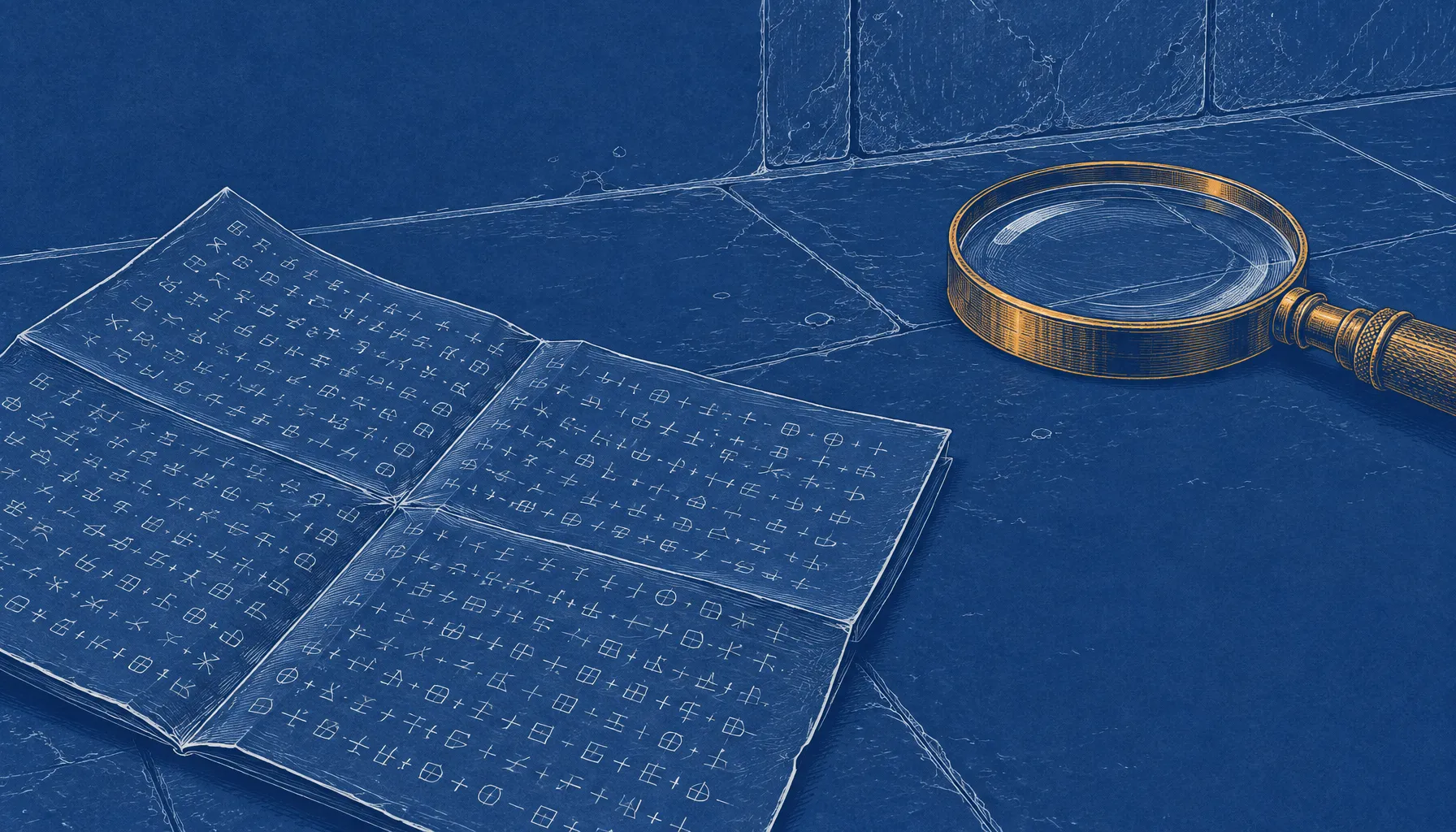
On September 30, Carter Church announced that GPT-6 Astra had helped decipher a military letter that had remained unread for 217 years. The coded message, sent in 1809 to French general Auguste de Marmont, lists troop positions across Europe on Napoleon’s orders. Church’s account describes a six-hour model-assisted effort that began with a scan of the document and produced a proposed key, transcription and translation.
The result is more than a fluent rendering of old handwriting: Church published the key and verification materials so others can inspect how the signs map to the text. But the decoding is not complete in every detail. His write-up lists five readings that stay open, though he says none would change what the letter says, and historians say the letter’s close match to a surviving order gives the proposed reading an unusual check.
A scan, a partial key and 1,300 cipher units
The letter survives as a plate reproduced in a 1969 French army journal. It contains 1,300 cipher units and 155 distinct signs, according to Church. Its homophonic system assigns multiple signs to common letters, making simple frequency counting less useful than it would be for a code in which each letter has one fixed substitute.
A partial table compiled by cryptology historian Daniel Tant supplied 33 known letter values, covering 435 of the 1,300 units. Church says Astra found the table during web research and connected it to the letter, despite a catalog title that names Eugène de Beauharnais and “Grammont”—possibly a mistaken reference to Marmont. The remaining signs required further analysis.
Church’s description separates the work into transcription, key recovery and checks against the original image. It says the model processed the scan, reconciled handwritten variants and used a solver based on French letter patterns to test candidate readings. The proposed assignments were checked against each occurrence of a sign; a rerun that removed Napoleonic texts and Marmont’s memoirs from the language material produced the same reading, Church writes.
Napoleon’s order gives the reading a check
The translated letter reports the locations and strengths of French and allied forces, including 40,000 Bavarians near Munich and Passau, 30,000 Poles on the Vistula and 80,000 French troops at Bayreuth. It also tells Marmont not to be intimidated by “a few troops or a gathering of rabble,” and describes Austrian positions and preparations.
Those details can be compared with Napoleon’s March 16, 1809, instruction to Eugène to send Marmont the positions of the armies in cipher. Church’s write-up says the recovered letter lists the same seven forces in the same sequence, with the same figures. That correspondence supports the reading, though it does not mean every word has been independently confirmed.
Church told Live Science, You simply cannot automate accountability. The qualification matters: his page says some signs rest on thin evidence and lists five readings that remain open, rather than presenting every word as settled.
The message confirms more than it reveals
Michael Rowe, a researcher in European history at King’s College London, told Live Science that Napoleon’s surviving correspondence gives historians grounds to be fairly confident in the translation. He also cautioned that much of the ciphered letter repeats information in the earlier order. “The cipher version just repeated a large segment of what's in that [original] letter,” Rowe said, adding that the result does not disclose a major new piece of information.
The proposed solution does add details absent from Napoleon’s instruction, including assessments of Austrian positions and the military situation. Historian Zack White told Live Science that the text raises questions about Napoleon’s view of the campaign and the numbers he claimed were available to fight. The translation also carries forward a passage in which Napoleon’s published order breaks off mid-sentence; Church notes that the coded letter supplies a possible ending, but says it cannot establish Napoleon’s exact wording.
Church has made the key, transcription and scripts available in a solution package, including files intended to reproduce the reading offline. The package gives other researchers concrete material to test: 1,300 decoded units, a comparison with the March 16 order, and five readings still awaiting a firmer choice.