The Pulse
Google Sets Next Week’s First Orbital Test for Suncatcher AI Chips
Google plans to send Tensor Processing Units into orbit next week on a prototype satellite for Project Suncatcher. The mission will test the chips against launch stress, radiation and heat-management challenges, not run an orbital data cent
AI.info Team ·
Google says it will send Tensor Processing Units (TPUs) into orbit next week; the company’s first Project Suncatcher mission is a hardware test, not a working space data center. The distinction matters: Google is investigating whether orbital computing could eventually support large AI workloads, while experts cited by Reuters say commercial deployment remains years away amid launch costs and engineering hurdles.
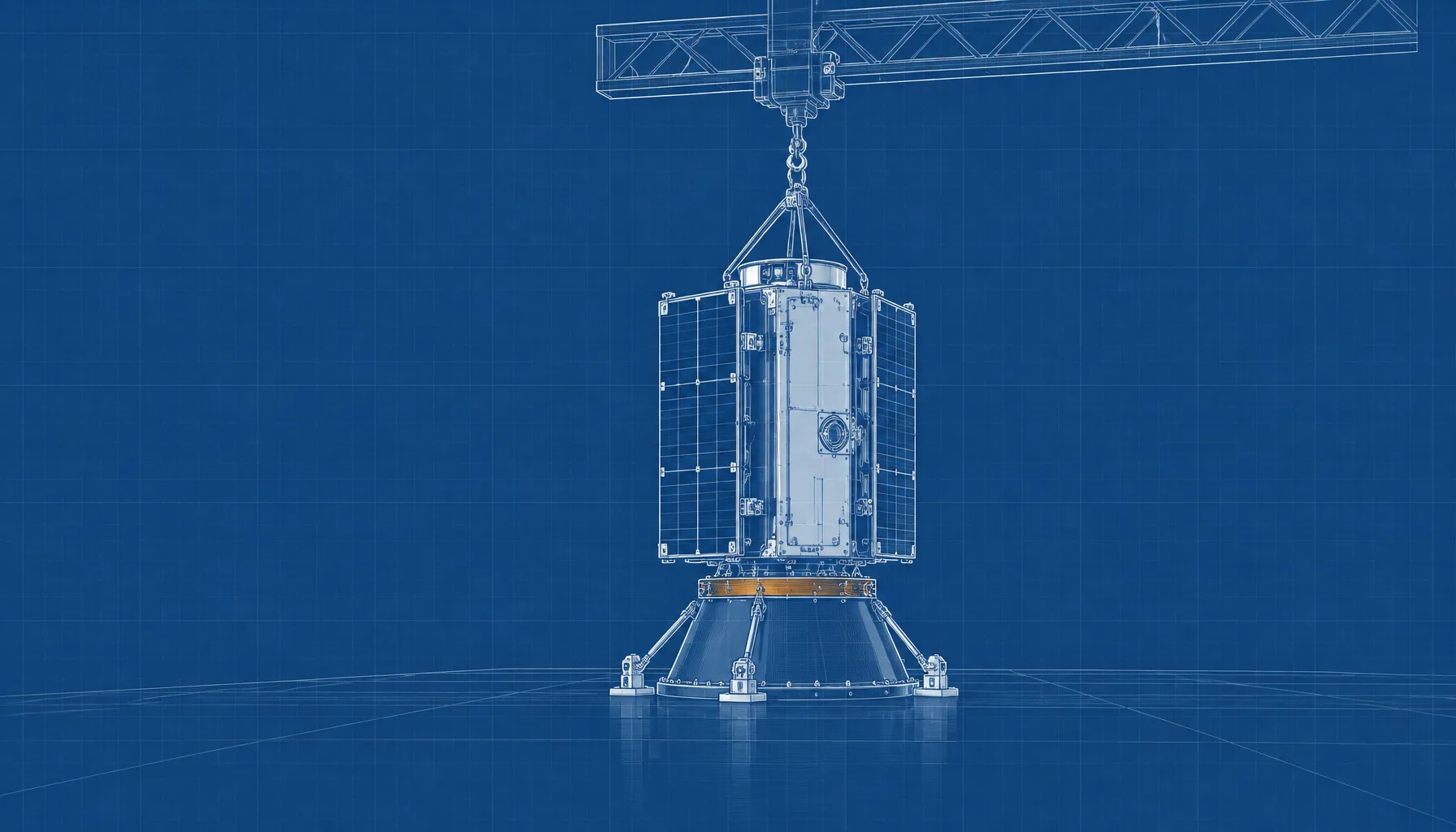
In a post published September 24, Google said its prototype satellite would fly on SpaceX’s upcoming Transporter-18 rideshare mission, developed in partnership with Planet. The test will measure how the chips handle the physical stresses of spaceflight, radiation and temperature extremes. Google says the mission is intended to collect data and identify potential failure points, rather than demonstrate an operational computing service in orbit.
From ground tests to Transporter-18
The satellite flight follows laboratory work on the hardware. Google says engineers tested its Trillium TPUs under AI workloads in a proton-beam facility at the University of California, Davis, to study radiation effects such as bit flips. The company says initial tests showed the chips could survive a total ionizing dose greater than the dose expected during a five-year space mission, but adds that only an orbital test can show how the hardware behaves in the actual environment.
Launch itself presents a separate mechanical challenge. Google describes a rocket trip to low Earth orbit as lasting about 10 minutes, with the spacecraft exposed to vibration and sustained acceleration of up to 10 times the force of gravity. Individual components, including the TPUs, can experience forces of up to 50 to 100 g, according to the company. Google says it shook the satellite along all three axes in ground tests and that the hardware held up.
Cooling may be harder than surviving radiation
Once in orbit, the chips must shed heat without the airflow used in conventional data centers. Google says it is testing heat pipes and radiators, which move heat away from the processors and release it from the spacecraft. Engineers have tested the cooling system in a thermal-vacuum chamber, but the upcoming flight will provide the first in-orbit data on how that design performs.
“Tests like this rarely go as planned, so we were pleasantly surprised that the hardware held up to the force,” Travis Beals, Google’s senior director of Paradigms of Intelligence, wrote in the company’s post. The remark reflects the limited aim of this flight: check whether key hardware survives, then use what fails or works to shape later missions.
Laser links wait for the next milestone
Google’s longer-term concept calls for satellites carrying TPUs to operate in clusters and communicate through laser links. The links would need to sustain high bandwidth between satellites flying close together, a different task from connecting spacecraft across long distances. Google says it plans to put two satellites in orbit in 2027 to test those connections.
In a 2025 announcement, Google described a partnership with Planet to launch two prototype satellites by early 2027. The September update adds an earlier flight focused on hardware survival, while keeping the two-satellite laser-link test as a later milestone. Neither mission establishes that large-scale AI computing in orbit is commercially practical; the first will test chips and cooling, and the next will examine whether satellites can maintain the links a cluster would need.