The Pulse
Google Launches Four TPUs Into Orbit for Suncatcher Test
Google launched a Planet Labs-built satellite carrying four Tensor Processing Units on a SpaceX Falcon 9 on October 1. The Project Suncatcher mission will test whether the chips can operate in orbit, where radiation, heat management and lim
AI.info Team · Written with AI ·
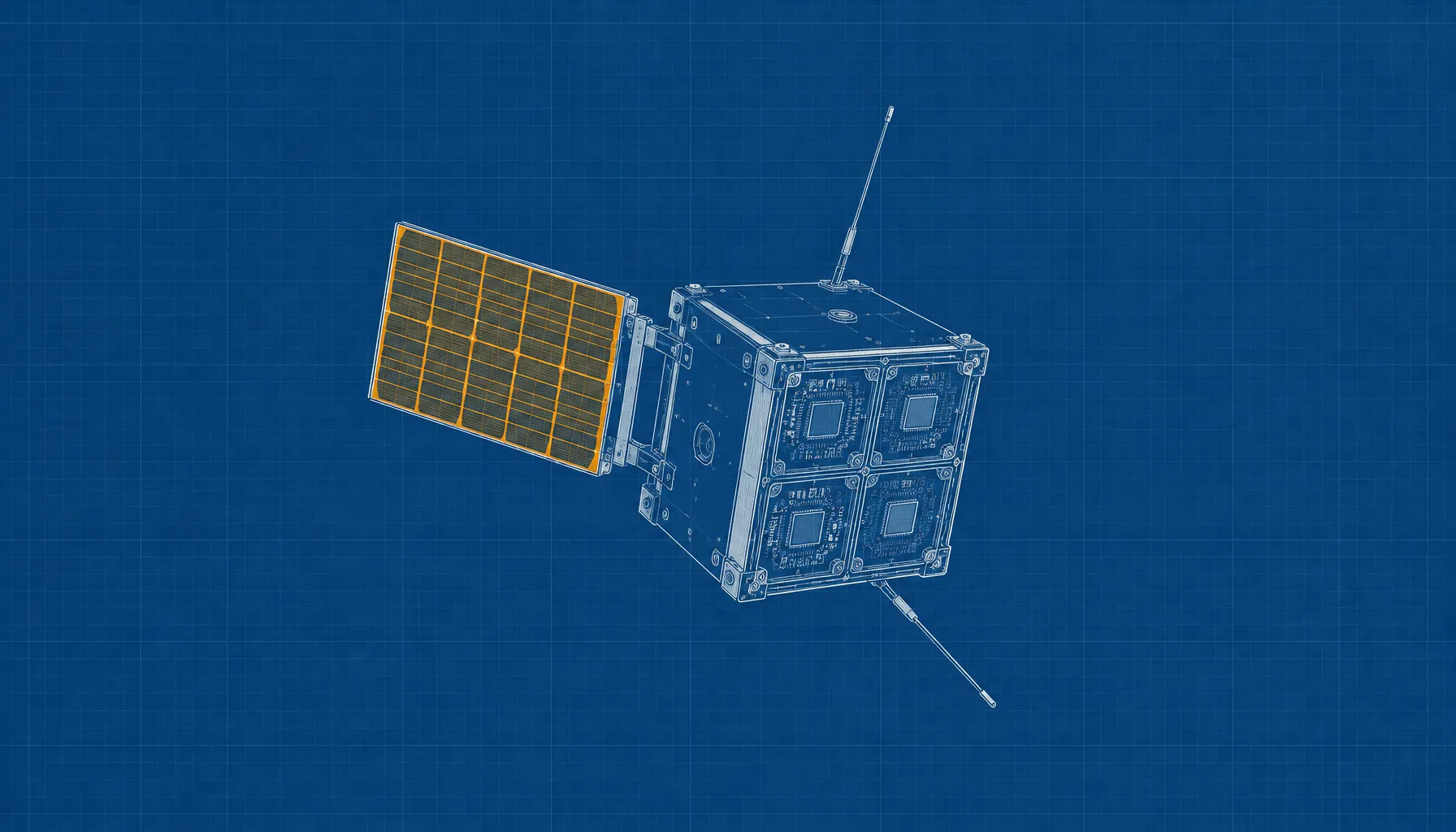
Four Google Tensor Processing Units are now in orbit, but they are not powering a space data center. Launched October 1 aboard a SpaceX Falcon 9 from California, the Planet Labs-built spacecraft begins a limited test of whether Google’s AI chips can withstand the conditions of space. The mission is the first hardware flight for Project Suncatcher, Google’s long-term research effort into orbital computing.
Four chips, a narrow test
The satellite carries four TPUs, Google’s custom accelerators for AI workloads. EL PAÍS reports that the prototype’s computing capacity is comparable to one of the thousands of processing units used in large data centers. The immediate question is whether the chips can keep operating amid radiation, temperature extremes and the stresses of launch—not whether the spacecraft can deliver an AI service at data-center scale.
Google says the mission is designed to gather in-orbit data on how its TPUs handle physical stress, radiation and thermal conditions. The company’s earlier ground tests included shaking the satellite to mimic launch vibrations and exposing chips to a proton beam at UC Davis while running AI workloads. “Tests like this rarely go as planned, so we were pleasantly surprised that the hardware held up to the force,” Google’s Travis Beals writes of the vibration testing.
EL PAÍS reports that the satellite is expected to operate for about a year. Its solar panels will track the Sun, but the available power is modest: the spacecraft will run simple operations and communicate with Google’s Gemini AI on the ground in sessions of about 15 minutes. Those limits make this a hardware trial, not a miniature version of a terrestrial data center.
Space offers sunlight, but not easy cooling
Google’s case for orbital computing begins with energy. Satellites in certain low Earth orbits can receive near-constant sunlight; the company says solar panels there could generate up to eight times as much power over a year as panels at mid-latitudes on Earth. That theoretical advantage does not remove the engineering problem of getting useful computing power onto a satellite and keeping its components at safe temperatures.
In a vacuum, heat cannot escape through moving air. Google says its proposed approach uses heat pipes and radiators, and that it has tested the system in a thermal-vacuum chamber. The orbital flight is meant to show how that equipment works outside a simulated environment, where the satellite’s limited power and cooling capacity constrain how long the chips can run.
Suncatcher’s bigger plan depends on links and launch costs
Google’s longer-term concept is a network of solar-powered satellites that communicate with one another using lasers. A research paper by Google authors presents an illustrative cluster of 81 satellites flying in close formation; it is a proposed system design, not the configuration launched this week. Google says a planned 2027 mission with two satellites will test the short-range, high-bandwidth optical links needed for that approach.
The economics remain unresolved. Google’s paper examines whether launch costs could fall toward $200 per kilogram by the mid-2030s, while stressing that its analysis is not an economic feasibility study. Building a network would also mean tackling radiation-related chip errors, heat rejection, reliable communications and the replacement of processors that age faster than a satellite fleet can be refreshed.
Google frames orbital computing as a possible complement to ground-based data centers, not a replacement. The first satellite can offer evidence about whether TPUs survive and perform in orbit; it cannot establish that a large constellation is affordable or useful for routine AI workloads. The next concrete test is whether two spacecraft can maintain the laser connection Google plans to try in 2027.