The Pulse
AMD closes Taalas deal to add inference silicon to its accelerator roadmap
AMD has completed its acquisition of Taalas, a Toronto-based developer of specialized AI inference chips. AMD plans to incorporate the company’s technology into its accelerator roadmap and develop system-level solutions alongside Instinct GPUs.
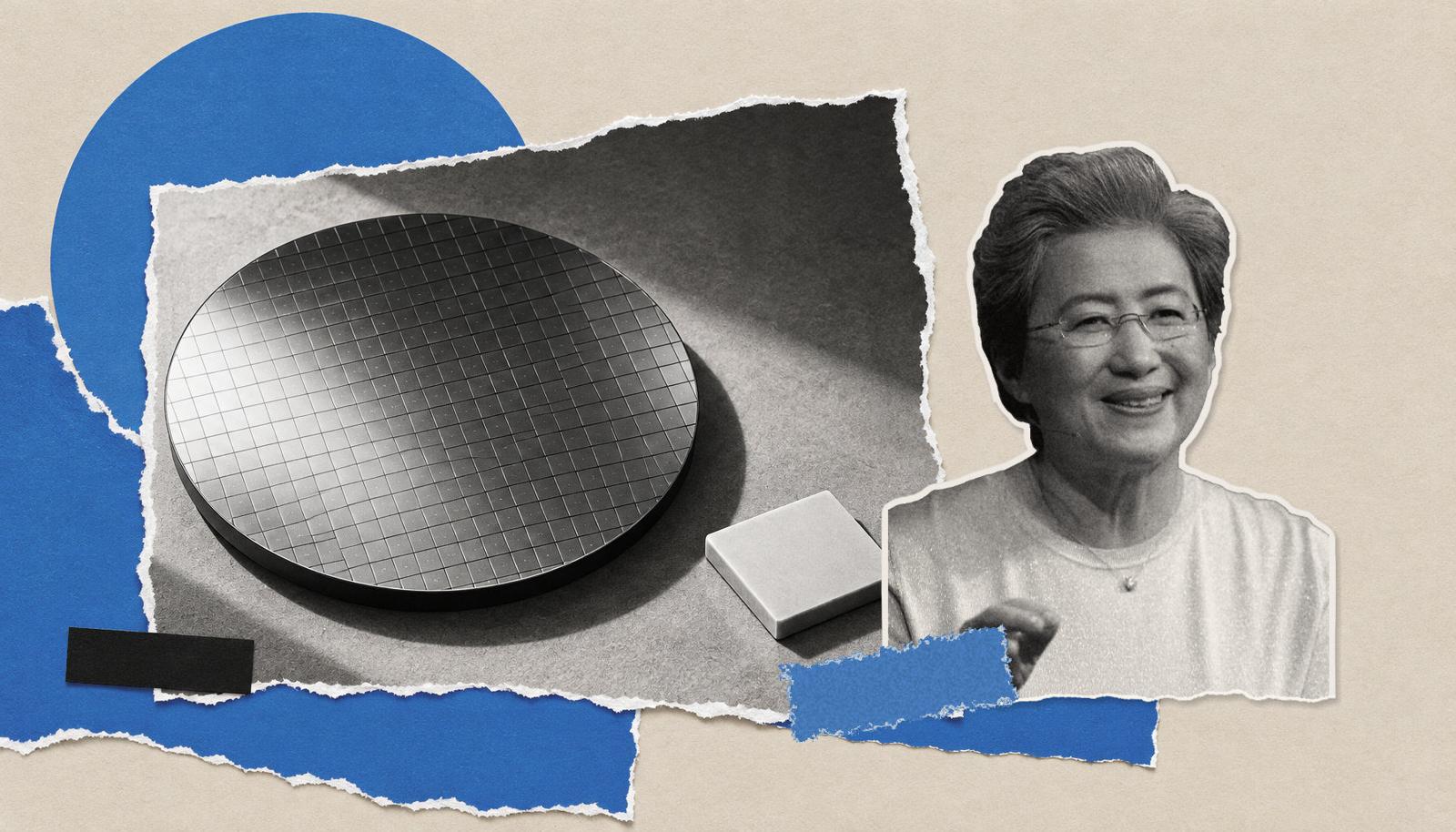
AMD has completed its acquisition of Taalas, bringing a specialist in AI inference chips into its business as it plans new accelerator and system-level products. The deal adds a Toronto-based company founded in 2023 and expands AMD’s engineering presence in Canada, according to AMD’s announcement.
Source newsroom.amd.com
The companies reached a definitive agreement on the acquisition in August. Taalas designs specialized silicon for inference, the process of running AI models.
Where the technology fits
AMD plans to integrate Taalas technology into its accelerator roadmap and develop system-level solutions alongside its Instinct GPUs. The planned systems would sit within a portfolio that also includes EPYC CPUs, ROCm software and the Helios rackscale solution.
Vamsi Boppana, senior vice president of AMD’s Artificial Intelligence Group, said customers need computing options suited to different workloads. “With Taalas now part of AMD, we’re expanding our ability to deliver differentiated inference performance and efficiency, while strengthening our full-stack AI platform,” he said.
Hardware built around models
Taalas co-founder and CEO Ljubisa Bajic described the company’s approach in the original deal announcement as building hardware around an AI model. In a February post, he said Taalas had developed a platform for transforming AI models into custom silicon.
Its first product, HC1, was hard-wired with the Llama 3.1 8B model. Taalas said the product was available as both a chatbot demonstration and an inference API service, which it described as a beta release.
The company claimed the silicon implementation achieved 17,000 tokens per second per user and was nearly 10 times faster than what it called the current state of the art. Its published comparison specified the Llama 3.1 8B model and an input sequence length of 1k/1k, with performance data drawn from several sources.
The post also said the implementation combined 3-bit and 6-bit parameters, introducing some quality degradation relative to GPU benchmarks. Although the model was largely hard-wired, it retained a configurable context window and supported fine-tuning through low-rank adapters, Taalas said.
Design and product plans
Taalas said its architecture combines storage and computation on a single chip and tailors silicon to individual models. In the earlier acquisition announcement, AMD claimed that Taalas technology reduces computing and memory bottlenecks associated with general-purpose architectures.
The first silicon platform used a custom 3-bit base data type, Bajic wrote, while the second-generation platform adopted standard 4-bit floating-point formats. He said the newer platform addressed limitations in the first design while maintaining speed and efficiency.
In February, Taalas described a planned mid-sized reasoning language model based on its first-generation HC1 platform, followed by a frontier language model using its second-generation HC2 platform. The company said it expected the reasoning model in its labs in spring and planned deployment of HC2 for winter.
Bajic said the first product was brought out by a team of 24, with $30 million spent out of more than $200 million raised. The acquisition builds on AMD’s existing presence in Canada, where Taalas’s engineering team is based.
Sources
Companies in this story
Related stories
- AMD reports faster inference glue kernels using AITER config pins
- Cerebras puts split AI inference into production with AMD GPUs
- AMD adds MI450X accelerator and reports MI455X inference results
- AMD reports token-cache reuse in coding-agent benchmark
- vLLM details opt-in FlyDSL MonoKernels for faster decode on AMD GPUs