The Pulse
Watney Raises $80 Million to Put Robots Inside Data Centers
Watney has raised $80 million in Series A funding to expand robots that perform physical maintenance inside data centers. The San Francisco startup says its systems have logged hundreds of thousands of customer-site hours with reliability a
AI.info Team ·
99.99% reliability is Watney’s pitch to data-center operators
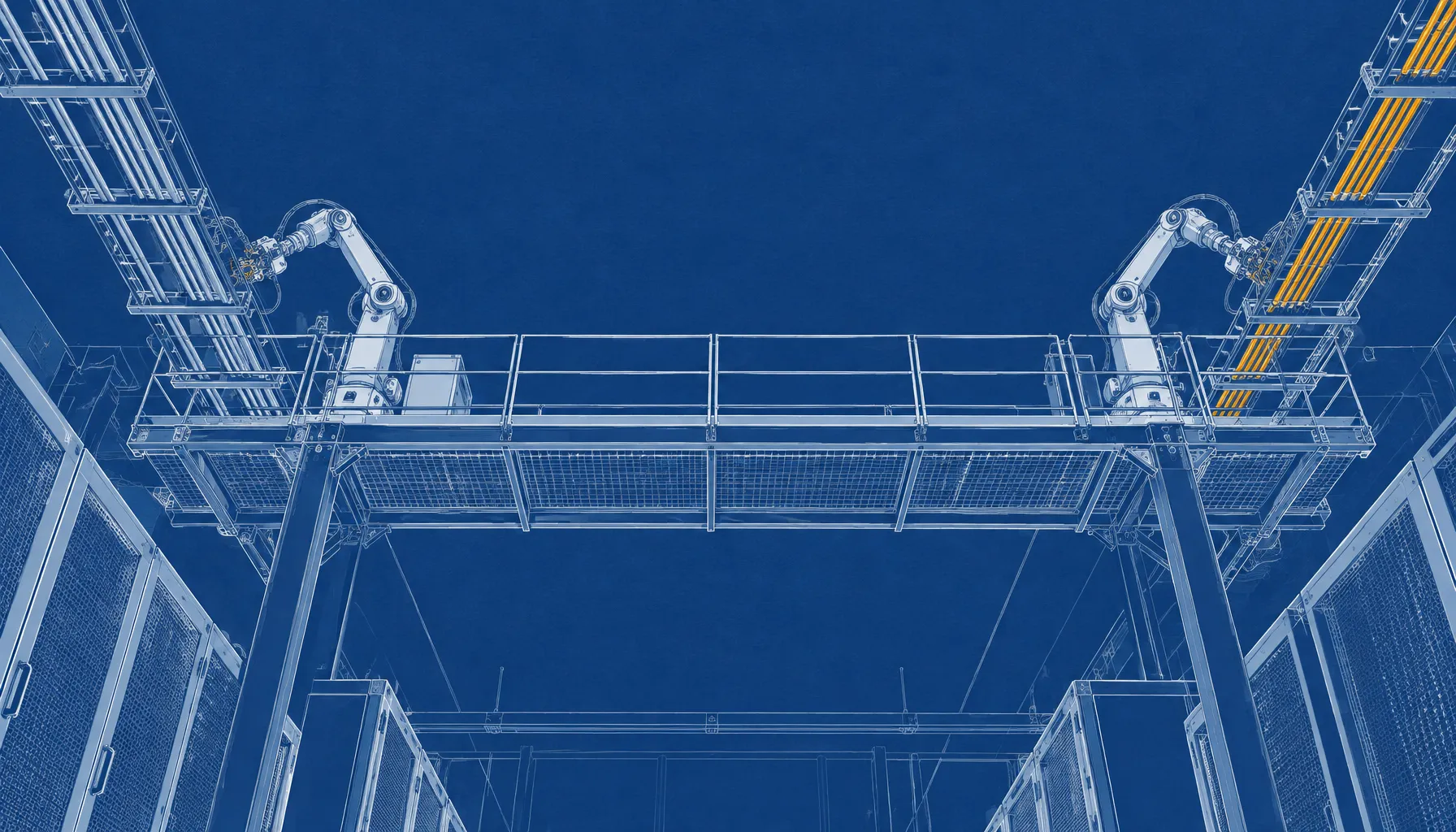
Watney says its robots have operated for hundreds of thousands of hours inside customer facilities while maintaining reliability above 99.99%. The San Francisco startup is now putting $80 million behind a larger fleet designed to handle physical work in data centers and other compute facilities.
The Series A, announced by Watney on September 17, is co-led by the Valor Atreides AI Fund and Hummingbird Ventures. Conviction, Abstract, A*, and Grant Gordon also participated, bringing Watney’s total funding to more than $100 million.
The company does not identify its customers in the announcement. It says it has served the largest hyperscalers since 2025 through an end-to-end deployment model, with robots running continuously across the United States.
Watney targets cable swaps and server maintenance
Watney’s systems are built for work that normally requires technicians to enter active data-center environments. Dealroom describes the company’s use cases as cable swaps and server restarts, while Watney says its approach is not to copy human motions or existing human workflows.
That distinction matters because data-center operators are building facilities with increasingly dense and complex hardware. Physical maintenance can involve tightly packed cabling, repeated equipment access, and work that must continue around the clock as operators add capacity.
Watney says its robots are intended to provide an advantage through precision, reliability, or scale. The company claims its systems have helped customers build data centers faster and support larger facilities with more ambitious architectures, although it does not publish customer-specific performance figures or deployment counts.
A $21 million seed round preceded the Series A
Watney was founded in San Francisco in 2023 by Ryan Gannon and Sean Cheong. According to Dealroom’s funding report, the company previously raised a $21 million seed round from Conviction, Abstract, and A*.
The new round is unusually large for a Series A in robotics. Dealroom places Watney’s raise in the top 5% of U.S. robotics Series A rounds in its recorded data, a signal that investors see physical data-center operations as a funding opportunity alongside chips, servers, and software.
Watney’s public filing history also shows an earlier exempt securities offering for Watney Robotics Inc. filed with the U.S. Securities and Exchange Commission in 2025. That filing identifies the company as a Delaware corporation with a San Francisco business address, but it does not disclose the terms of the new Series A.
The company is selling capacity, not a general-purpose robot
Watney frames its business around infrastructure where the value of the work persists as facilities expand. Its announcement focuses on data centers and compute rollout rather than household machines or general-purpose humanoid products.
That narrower target gives the company a defined operating environment: fixed facilities, repeatable maintenance tasks, and customers able to measure uptime and intervention time. It also creates a demanding standard. A robot that works in a demonstration but requires frequent supervision may not reduce the labor burden of a live data center.
Watney says its systems already operate continuously at customer sites, but the announcement provides no breakdown of how many robots are deployed, how much work they complete without human intervention, or how their costs compare with technicians. Those figures will determine whether the company’s reliability claim translates into a commercially significant product.
Watney plans to expand across all domains
The company says it is hiring across all domains after the funding round. Its stated objective is to expand the fleet and continue deployments for hyperscale customers, while keeping the systems focused on physical tasks that benefit from continuous operation and precise handling.
Watney’s announcement establishes the size of the bet and the operating claim: $80 million in fresh capital, more than $100 million raised overall, and reliability above 99.99% across hundreds of thousands of hours. It does not yet disclose the customer contracts, fleet size, or unit economics that would show how far those robots have moved beyond pilot-stage automation.