The Pulse
A Unitree G1 Robot Learns to Shift Objects Across Its Body
A study describes a Unitree G1 humanoid using its arms and torso to move a basketball and box between body positions, with a human teleoperator guiding its motions. The paper’s reported overall success rate conflicts with the totals implied
AI.info Team · Written with AI · fact-checked ·
On October 15, researchers posted a study describing a Unitree G1 humanoid that shifts objects from a two-handed hold to its shoulder or under one arm, then returns them to a front hold. The paper’s task-level results add up to 44 successful trials out of 50, or 88%, while its text separately reports 45 of 50, or 90%. Direct motion retargeting completed nine trials; a general-purpose whole-body controller completed two.
The result targets a familiar limitation in robot manipulation: many systems are built around hands or end-effectors, while people brace objects against their arms and torso as they reposition them. The researchers’ approach treats those body contacts as grasping options, letting the robot move an object between support positions rather than relying on a single grip.
Regrasping with arms and torso
“We introduce Whole-Body Dexterity (WBD), a general framework that uses the robot’s body and appendages as contact surfaces to grasp and manipulate objects.”
Conor Mc Gartoll and the other authors of the paper write in “Whole-Body Dexterity.”
The system first builds a dataset of stable body grasps in simulation. Reinforcement-learning specialists then learn to move objects from one grasp position to another, with goals defined by object position and whether the robot should hold it with its left arm, both arms or right arm. The researchers combine those specialists into a single controller that uses the robot’s joint-sensor readings and a description of object geometry.
Those transitions can involve sliding or rolling an object against the torso and handing it from one arm to the other. The training setup permits brief loss of arm contact during a transition, but requires a stable hold at the goal. Although the grasp-generation method considers arms, legs and torso, the paper says the trained experts use arm and torso grasps; leg contact is left for future work.
Task results and a mismatch in the totals
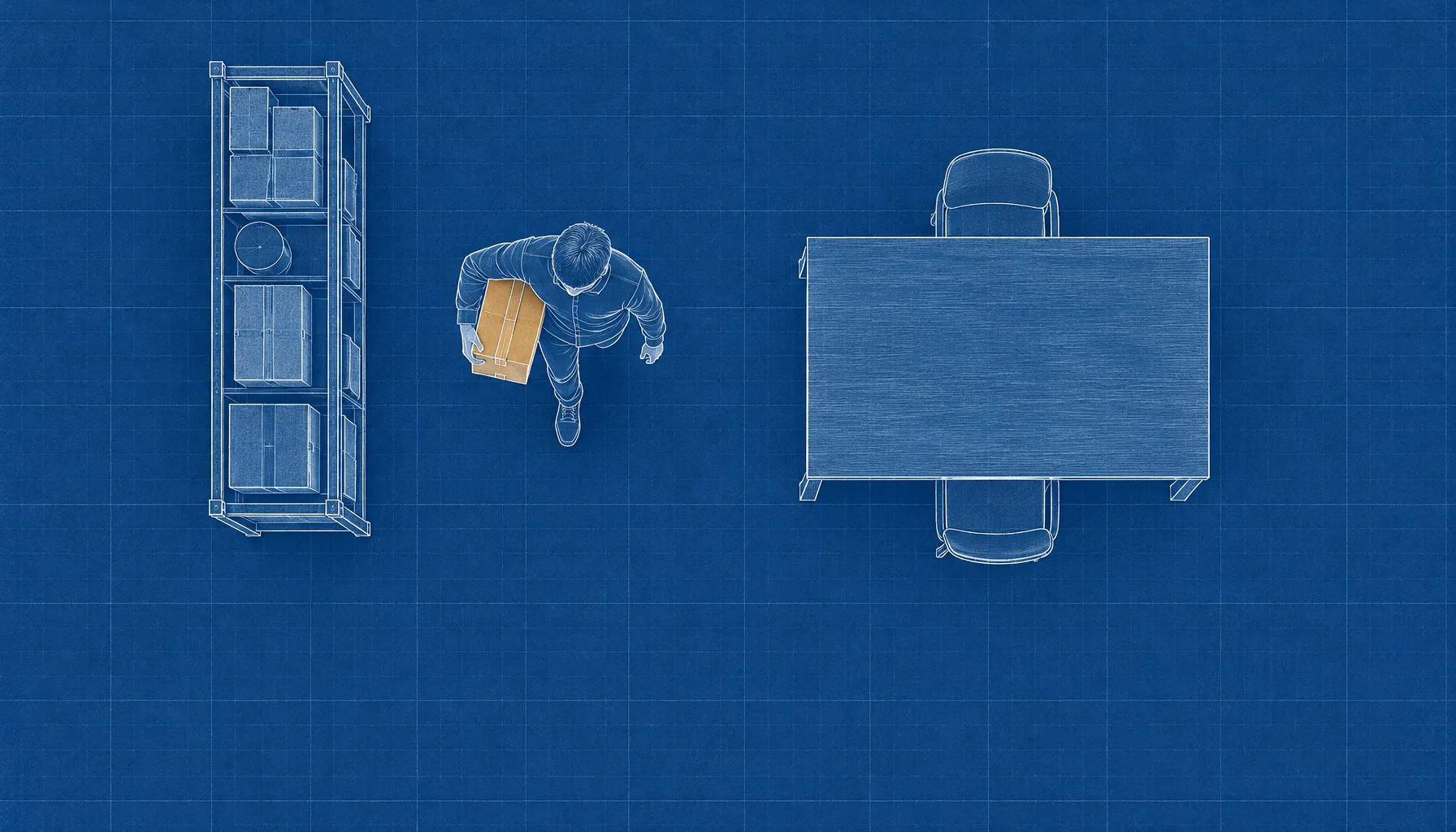
The researchers tested the controller on a size 3 basketball and a cardboard box measuring 15 centimeters on each side. In the on-body tasks, the robot moved each object to its shoulder or tucked it under one arm, then attempted to return it to a two-arm front hold. For the shelf task, it picked up the box, stowed it under one arm, carried it while walking, brought it back to a front hold and placed it on a table.
In the on-body tests, the task-level results show nine of ten completed shoulder round trips for the basketball and all ten for the box. For underarm round trips, the robot completed nine of ten for each object. The shelf-task breakdown lists ten successful pickups, nine stows, nine carries, nine un-stows and seven placements. Counting the complete round trips and shelf sequences from those task-level results gives 44 of 50. The paper’s results text, however, reports 45 of 50 overall, and its abstract gives a 90% success rate; those figures do not match the breakdown.
A single human operator guided all trials using motion references captured with an Xsens suit. The operator had more than eight hours of practice on the tasks, and the controller refined the arm targets to help maintain object support as the robot changed contact positions. The authors also report that the system transferred from simulation to the real robot without additional training.
Drops and operator guidance remain
The comparison was not a test of an autonomous robot deciding what to pick up and where to take it: a teleoperator supplied the desired motions. The controller’s contribution was to adjust those motions for object support. The researchers write that the robot still lost contact and dropped the object in some trials, and note that limited tracking coverage can restrict dexterity when using VR equipment.
The benchmark also covers a small set of objects and tasks, with ten trials for each controller, object and on-body task, and ten trials per controller for the shelf sequence. Those results show that learned contact transitions helped on this test setup; they do not establish performance across the varied objects, surfaces or unscripted tasks a deployed robot might encounter.
The paper’s next proposed step is to add leg contacts to the grasp dataset and train the controller on those configurations. That could let a humanoid brace an object against a knee while moving its arms, an ability the current experiments do not demonstrate.