The Pulse
Ukraine Says AI Turrets Have Downed Russian Geran-5 Drones
Ukraine’s Air Force says machine-vision gun turrets have shot down Russian jet-powered drones, including Geran-5s. President Volodymyr Zelenskyy said more than 12 turrets were already in Kyiv, with eight more planned for the surrounding reg
AI.info Team · Written with AI ·
Ukraine’s Air Force says robotic gun turrets using artificial intelligence have shot down Russian jet-powered drones, including Geran-5s. Air Force spokesperson Yurii Ihnat described the interceptions on national television on Oct. 5, saying the systems use machine vision to engage targets. The announcement did not give a number of drones brought down or a success rate for the turrets.
What the Air Force reported
Ihnat said the reported shootdowns involved the same turrets being installed to strengthen defenses against faster drones. Ukrainska Pravda quoted him saying:
“There have already been cases of jet-powered UAVs, including Geran-5s, being shot down by these very turrets.”
He also said artificial intelligence and machine vision help the systems aim at jet-powered targets. The claim concerns successful combat use, but the Air Force did not disclose when the interceptions occurred, how many engagements there were, or whether the drones were all Geran-5 models.
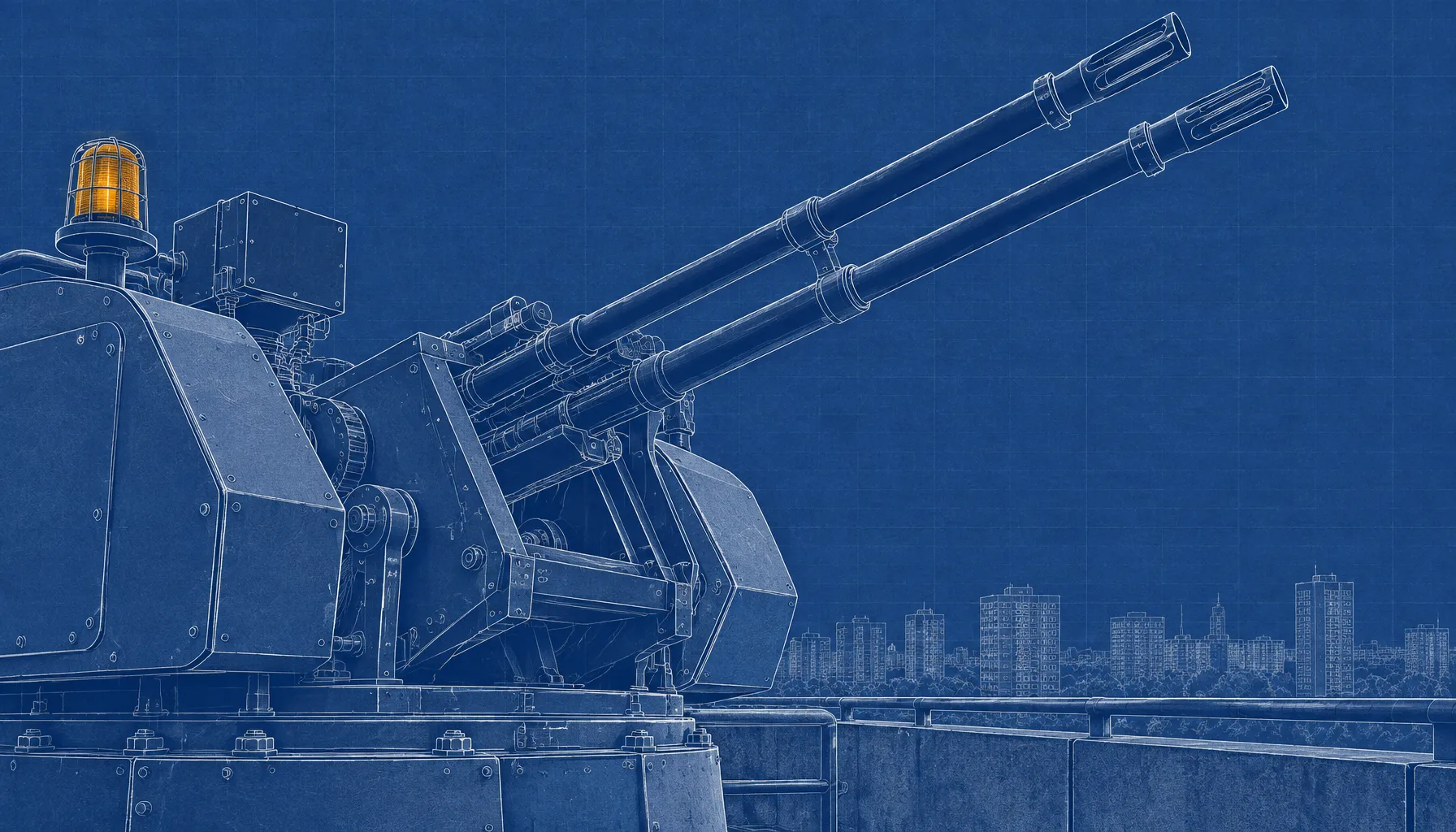
The announcement followed President Volodymyr Zelenskyy’s Oct. 4 account of the deployment. He said more than 12 turrets had been positioned in Kyiv and that eight additional units were being prepared for Kyiv Oblast. The systems are automated combat modules designed for.50-caliber machine guns, according to Ukrinform’s report of Zelenskyy’s remarks.
A short-range layer against faster drones
The turrets add a ground-based option to Ukraine’s defenses against jet-powered drones. Their machine guns and automated aiming distinguish them from interceptor drones, which pursue airborne targets, and from surface-to-air missiles. Ihnat said the turrets’ operational range is limited, with machine guns serving as their primary armament. That makes them a local defense measure rather than a way to cover wide areas.
The threat is difficult for existing defenses because jet-powered drones move faster than conventional Shahed-type models. The Kyiv Independent reported that many interceptor drones used against Shahed-style aircraft are not fast enough to catch the jet-powered variants. It also described jet interceptors as under development, while noting that scaling their production faces supply-chain challenges for inexpensive jet engines.
Figures reported by Hromadske illustrate the broader interception challenge, but do not measure the turrets’ performance: Ihnat put Ukraine’s interception rate for conventional Shahed-type drones at about 85% to 92%, compared with an estimated 50% to 70% for jet-powered UAVs. Those figures concern Ukrainian air defenses overall, not the newly reported turret engagements.
Deployment and remaining questions
Hromadske reported that Russian forces had launched around 50 jet-powered drones on each of the two nights before its Oct. 5 report, alongside conventional Shahed-type drones. It said some turrets were being positioned around bridges and other sites where short-range protection could cover critical infrastructure. The report did not provide a count of the turrets assigned to each location.
Ukraine has described the systems as one part of its response to a changing mix of aerial threats. Their ability to engage a jet-powered drone, if confirmed as described by the Air Force, would extend the targets they can address beyond slower drones. But the public statements leave key operational details unanswered: the number of interceptions, the circumstances of each engagement, and how often the turrets can hit incoming targets have not been released. The stated range limitation also means the systems cannot, by themselves, provide broad-area protection.