The Pulse
UK and US launch AI partnership after uncrewed torpedo test
The UK and US are launching a defence partnership focused on artificial intelligence and autonomy. The announcement follows the first launch of a US torpedo from a British uncrewed undersea vehicle.
AI.info Team ·
The UK and US are presenting artificial intelligence as a tool for protecting critical infrastructure while demonstrating its military edge through an unprecedented undersea weapons test. Prime Minister Andy Burnham announced the new AI and Autonomy partnership on September 22, 2026, as the two countries confirmed that a US torpedo had been fired from a British uncrewed underwater vehicle.
The announcement, made during Burnham’s visit to the United Nations General Assembly in New York, links two strands of Anglo-American cooperation: the development of AI systems for national security and the expansion of autonomous maritime operations. The British government says the partnership will focus on detecting threats and deterring adversaries across areas including sea lanes and airspace.
The announcement was published by the UK government on September 22.
AI for infrastructure, autonomy for defence
The new work will bring together the UK Ministry of Defence Rapid AI Delivery Taskforce and the US Department of War Chief Digital and Artificial Intelligence Office. Their stated objective is to accelerate the delivery of trusted, interoperable capabilities that can be used by both countries.
The government describes the partnership as part of a broader effort to use AI responsibly while improving security at home. Its immediate military relevance is clear: the systems are intended to help identify threats across infrastructure and operating environments where human crews may face greater risk or where persistent monitoring is required.
Burnham said the agreement reflects a wider argument he plans to make at the UN: that international cooperation should shape how AI is developed and used. “That ambition is underlined in our new defence partnership with the United States on AI and autonomy, bringing together the brightest minds to strengthen the protection of critical infrastructure, deter those who threaten our security, and use the enormous potential of AI to our advantage,” he said.
Excalibur puts the partnership in the water
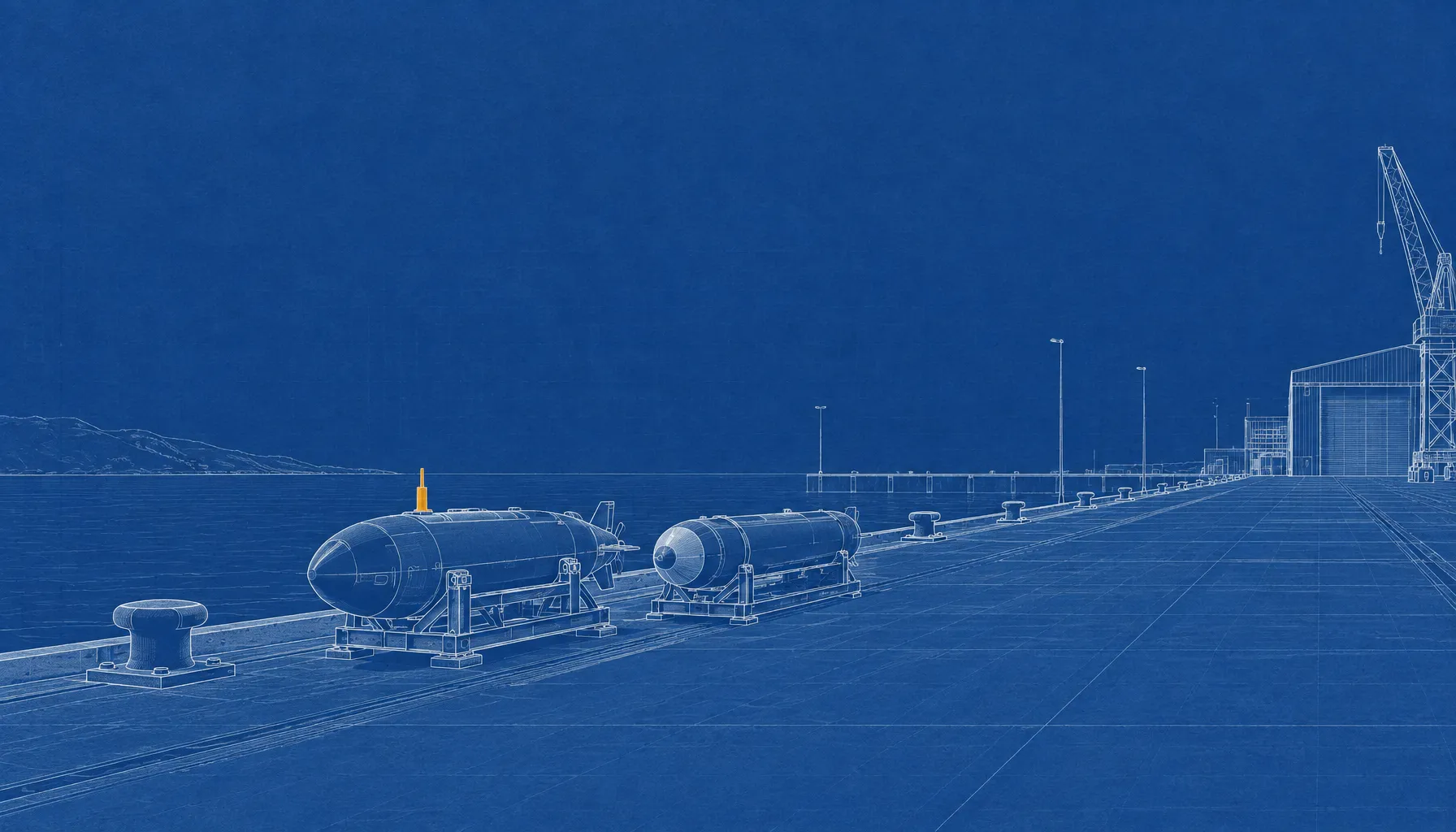
The announcement follows a live firing in UK waters last week involving Excalibur, a 12-metre-long uncrewed underwater vehicle made in Plymouth. The vehicle launched a heavyweight torpedo jointly developed by the US and Australia as part of the AUKUS programme.
The British government says it is the first time either the UK or US has launched a torpedo from an uncrewed underwater vessel rather than a crewed submarine. The weapon is designed to attack ships and deep-diving submarines, making the test a direct demonstration of how autonomous platforms could extend the reach of naval forces.
Officials describe the firing as a major advance for submarine technology and a contribution to NATO’s undersea advantage. The test also gives the new bilateral AI agreement a concrete starting point: cooperation is moving from trials of software and sensors toward systems that can carry weapons beneath the surface.
AUKUS supplies the existing framework
The bilateral partnership builds on AUKUS, the security agreement between Australia, the UK and US. AUKUS already covers autonomous systems and AI alongside undersea capabilities, and the British government says the new work will extend technology collaboration between London and Washington.
Earlier AUKUS trials have focused on sharing AI models, operating systems across national platforms and testing autonomous vehicles under hostile conditions. The new UK-US arrangement narrows that wider programme into a dedicated defence relationship between the two countries’ AI offices.
That distinction matters because military AI depends on more than model performance. Allied forces also need common data practices, compatible systems and confidence that software can operate predictably when communications are disrupted or conditions change. The government’s reference to interoperable capabilities points to those practical barriers as much as to new algorithms.
Burnham frames AI as an international issue
Burnham’s visit places the defence agreement inside a larger diplomatic push. His UN speech is expected to argue for international cooperation on AI, alongside discussions on Ukraine, the conflict in the Middle East and climate change.
The prime minister also plans to confirm that next year’s G20 leaders’ summit, hosted by the UK, will take place in Manchester in November. The government presents the summit as another venue for coordinating responses to shared economic and security problems, with AI among the issues Britain wants to place on the international agenda.
The immediate measure of the new partnership, however, is not the UN speech or the future summit. It is whether the two countries can turn shared AI work into systems that perform reliably across national forces, protect infrastructure and operate alongside autonomous platforms such as Excalibur. The first test has already moved from a laboratory demonstration to a torpedo launch in UK waters.