The Pulse
Uber and Wayve Launch London’s First Autonomous Ride Service
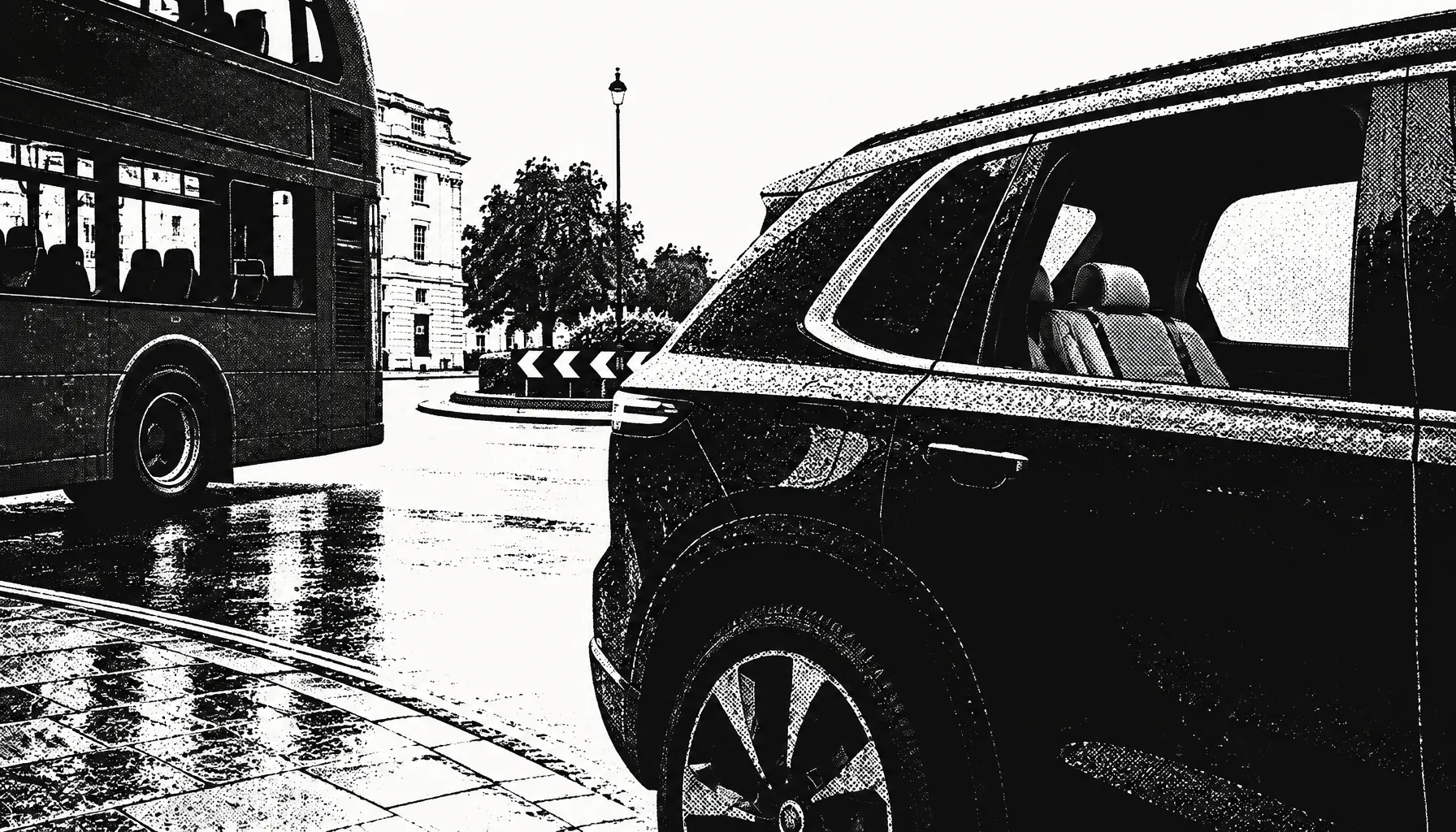
Uber and British self-driving company Wayve have launched supervised autonomous rides across London, marking the United Kingdom’s first public autonomous ride-hailing service. Passengers can be matched with an electric Ford Mustang Mach-E a
AI.info Team ·
“We're proud to introduce the Wayve AI Driver to the public for the first time right here in London, our home city and one of the most complex driving environments in the world.”
Alex Kendall, CEO and co-founder, Wayve
Uber and British autonomous-driving company Wayve have begun carrying passengers in London, opening the United Kingdom’s first public autonomous ride-hailing service on September 3. The launch puts Wayve’s driving system into ordinary Uber bookings, but it is not yet a driverless service: every vehicle carries a trained, Transport for London-licensed private-hire driver who supervises the trip and can take control if necessary.
Londoners requesting an UberX, Uber Electric or Uber Comfort ride may be matched with a Wayve vehicle at no additional charge. The passenger sees the fare before booking and can accept the autonomous vehicle or switch to a conventional ride before the car arrives. Uber says the initial fleet is small and will expand in line with demand, operational readiness and regulation.
The service is available across London except for airports, according to Uber’s launch announcement. The vehicles are electric Ford Mustang Mach-E cars fitted with Wayve’s AI Driver and surrounding sensors. Uber has added screens inside the vehicles that allow riders to start the trip and view the car’s planned route, with the interface available in 64 languages.
London Gets an Autonomous Service, Not a Driverless One
The distinction between autonomous and driverless matters in this launch. Wayve’s system performs the driving, while a human remains responsible for monitoring the road and responding when required. The arrangement lets Uber and Wayve collect passenger and operational experience under the United Kingdom’s emerging automated-vehicle framework without beginning with a fully unstaffed vehicle.
Transport for London granted private-hire licences to a number of Wayve’s vehicles in August. That approval completed the licensing requirements for the operator, driver and vehicle under the same local authority. Uber and Wayve said the cars were inspected against TfL policy and safety standards before passenger operations began.
The United Kingdom’s Department for Transport opened applications for commercial self-driving passenger services on May 22. The government’s pilot scheme allows taxi, bus and private-hire-style services to carry members of the public, subject to safety assessments and local approval. TfL also has a role in consenting to services operating in London.
Wayve’s supervised model therefore arrives as a commercial service inside a regulatory process that is still being built. The government says pilot operations will provide evidence for future rules governing automated passenger services, including how vehicles interact with traffic, passengers and local transport systems. The London launch gives regulators a live service to examine rather than a closed test route.
How Uber Riders Encounter a Wayve Car
Passengers cannot order a Wayve vehicle as a separate product. They request an eligible Uber ride through the normal app and may receive a Wayve match if one is available nearby. Customers who opt in through the app’s Trip Preferences settings improve their chances of being matched, and Uber says more than 140,000 Londoners had already opted in by the time the service launched.
After receiving the match, the passenger can accept the Wayve ride or choose a conventional vehicle. Once the car arrives, the rider unlocks the doors and starts the journey through the Uber app. The in-car display provides a visible account of the vehicle’s planned path, an attempt to make the unfamiliar experience easier to understand from the back seat.
The arrangement also preserves Uber’s existing pricing and dispatch system. Wayve vehicles enter the same marketplace as human-driven cars rather than operating through a separate booking service. That gives Uber a way to test how autonomous cars fit into its existing supply network while allowing passengers to make the final decision before boarding.
Airport trips are excluded at launch, although Uber has not described the restriction as permanent. The company has also not announced a date for removing the safety driver. Its launch materials describe the first phase as supervised autonomous rides and say the fleet will grow gradually as the companies assess demand, readiness and regulation.
Wayve’s Mapless Driving System Enters Public Service
Wayve says it has developed and trained its technology on London roads since 2018. The company describes its approach as “AV2.0,” referring to an AI Driver designed to learn from driving experience rather than depending on traditional high-definition maps and large collections of hand-coded rules for each road and situation.
The system is intended to adapt across different roads, vehicles, weather conditions and cities. Wayve says its technology has operated in more than 500 cities worldwide, although the London launch uses a specific vehicle and sensor configuration rather than offering a general demonstration of every possible deployment.
That hardware flexibility is central to Wayve’s commercial strategy. The company does not build a dedicated robotaxi vehicle; instead, it supplies the driving system to automakers and fleet operators. In London, the initial platform is the Ford Mustang Mach-E. Uber and Wayve have also said a Nissan Leaf equipped with Wayve’s software and NVIDIA’s DRIVE Hyperion platform will support a planned Tokyo service later in 2026.
The London fleet is the first public demonstration of Wayve’s system in an Uber passenger service. Alex Kendall, the company’s CEO and co-founder, said the technology would complement London’s existing transport network rather than replace the city’s other modes of travel. The first vehicles will have to contend with the same dense traffic, narrow streets, buses, cyclists, pedestrians and complex junctions that make London a demanding test environment for automated driving.
Uber’s Hybrid Network Strategy
Uber is presenting the launch as part of a hybrid network in which autonomous vehicles and human drivers operate side by side. That model differs from a fully automated fleet in which a company owns or controls every vehicle. Uber’s role is to supply the marketplace, dispatch software, passenger relationship and operating infrastructure while partners provide the autonomous technology and, in some cases, the vehicles.
The company says it works with more than 30 autonomous-vehicle partners across mobility, delivery and freight. Uber also says those partners complete millions of autonomous trips on its platform each year, although the total includes services outside London and does not mean that all trips involve cars carrying passengers without human supervision.
Uber expects to facilitate autonomous trips in as many as 15 cities by the end of 2026. Its partnership with Wayve includes plans to deploy the British company’s vehicles on the Uber network in 12 markets around the world, beginning with London. Wayve’s February funding announcement said Uber had committed additional milestone-based capital to support global robotaxi deployments.
Wayve announced a $1.2 billion Series D investment in February, bringing the total capital secured in that financing effort to $1.5 billion when related commitments were included. Microsoft, NVIDIA, Uber, Mercedes-Benz, Nissan and Stellantis participated in the round. The company said the funding would support commercial robotaxi trials in 2026 and supervised autonomy features in consumer vehicles from 2027.
What the Launch Proves—and What It Does Not
London’s service establishes that autonomous passenger rides can operate inside Uber’s normal consumer app under the United Kingdom’s new pilot framework. It also gives Wayve access to paying riders in a city where the company has spent years collecting driving data. Those are concrete commercial milestones, but the launch does not demonstrate that London is ready for unattended robotaxis at scale.
A licensed driver remains in every vehicle. The fleet begins with only a small number of cars, airport journeys are excluded, and passengers must accept the autonomous match before boarding. Wayve and Uber have not published a timetable for expanding the service to fully driverless operations or disclosed a target fleet size for the first phase.
The near-term test will be operational rather than theatrical: whether the vehicles can complete ordinary trips reliably, how often the human supervisor must intervene, how passengers react to the system and how quickly the companies can add cars without creating new problems for TfL. Uber’s app-based opt-in system also gives the companies an early measure of demand, with more than 140,000 people already expressing interest before launch.
For London passengers, the immediate change is modest but tangible. A normal Uber request can now produce an electric Ford Mustang Mach-E that drives itself under human supervision, displays its route on an interior screen and charges no premium for the autonomous capability. The driver’s seat is still occupied, and the next stage of the service will depend on what happens during these first supervised rides.