The Pulse
TakeMe2Space Plans Two-Satellite Orbital AI Data Center for 2028
Hyderabad-based TakeMe2Space plans to launch two networked computing satellites on a SpaceX Falcon 9 in 2028. Each spacecraft is designed to carry Nvidia GPUs, 100 terabytes of storage and an Earth-observation imager.
AI.info Team · Written with AI · fact-checked ·
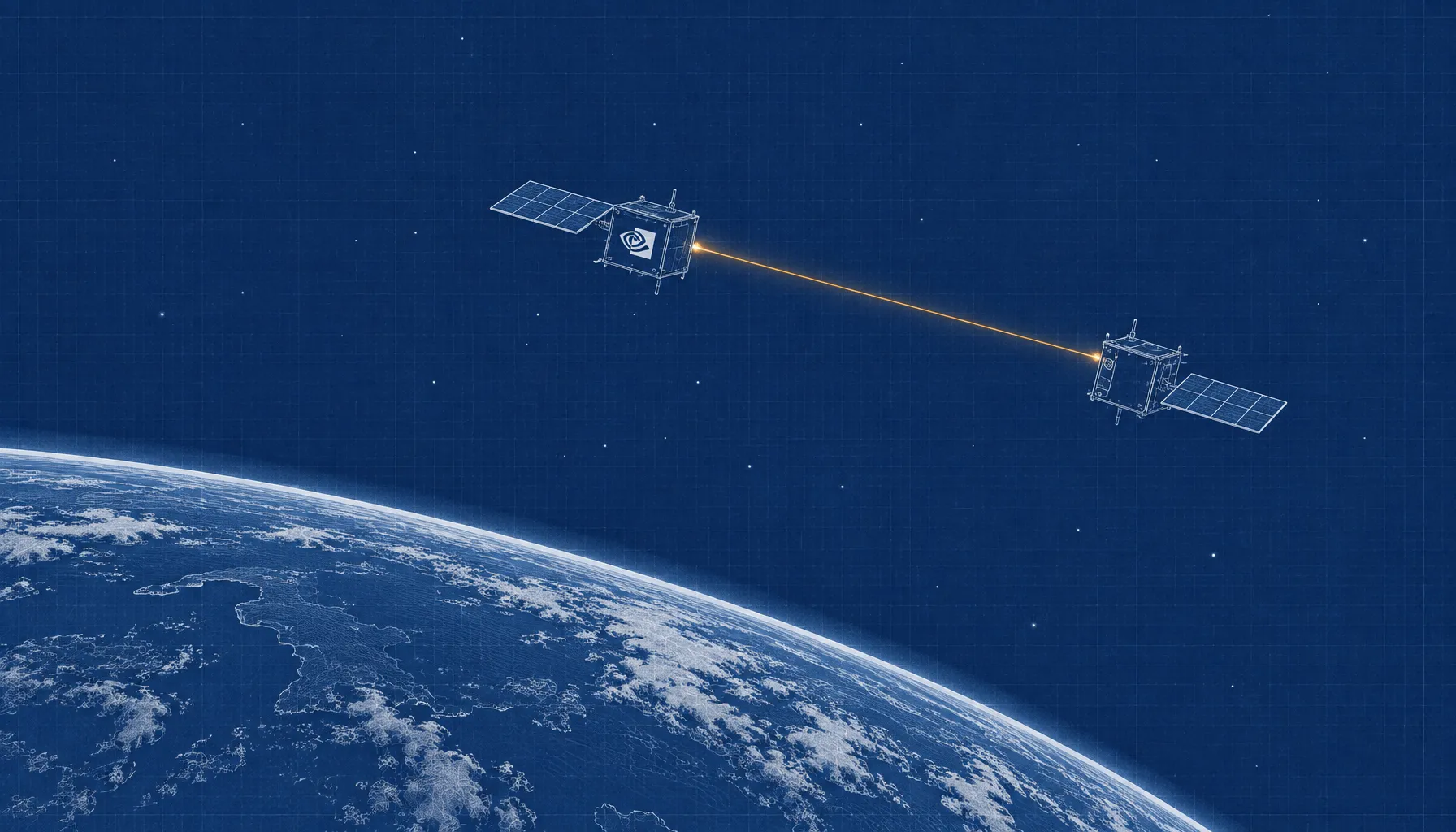
Two 100-kilogram satellites carrying 10 Nvidia Thor GPUs apiece are at the center of TakeMe2Space’s plan for an orbital data centre mission in 2028. The Hyderabad startup says the spacecraft will fly on SpaceX’s Falcon 9 as part of the Waymaker-2 rideshare mission. Their defining test is whether they can share computing workloads and data through optical links, functioning as a network rather than as separate satellites.
Two satellites, one computing system
Each spacecraft is planned to carry 100 terabytes of storage, a one-metre multispectral imager and equipment generating about 1.5 kilowatts of power. Together, the satellites would process Earth-observation data in orbit, rather than send full raw image files to the ground before analysis. TakeMe2Space founder and chief executive Ronak Kumar Samantray described the mission to The Times of India as a technology demonstration for the company’s next generation of orbital data-centre spacecraft.
“These two satellites are about proving it at a scale that pays,” Samantray said. The pair will use optical inter-satellite links to pass workloads and data between spacecraft. The mission is intended to test distributed computing in orbit; it is a planned demonstration, not an operating orbital data centre.
From raw imagery to flood maps
TakeMe2Space’s proposed service would return processed findings instead of complete image frames. The company says its OrbitLab platform would run analytics and AI workloads onboard, with potential outputs including flood maps, ship counts and crop-stress analysis. Selective downlinking could reduce how much imagery must be transmitted, while delivering a result that users can act on.
The approach ties computing to the satellite’s imaging role: the spacecraft gather Earth-observation data and analyze it before sending selected information to users. That could be useful when the desired product is a count or a map, rather than a large collection of pictures. The mission’s two-satellite link will test whether the computing can be shared across spacecraft, a more demanding setup than processing data on a single satellite.
Waymaker-2 targets late 2028
The Times of India reported that the satellites will target a roughly 500-kilometer sun-synchronous orbit, with launch capacity arranged through Paris-based RIDE! Space in partnership with SEOPS. SEOPS lists Waymaker-2 as a Falcon 9 rideshare mission to sun-synchronous orbit, with a target window in late 2028. The mission’s schedule remains a plan several years ahead, rather than a completed launch booking disclosed directly by SpaceX.
RIDE! Space chief executive Valentin Benoit described the payload as one “defined by what it computes rather than what it carries.” That distinction captures the mission’s commercial pitch: sell access to processing and analysis in orbit, not simply access to a satellite bus. Whether the two spacecraft can sustain the compute, imaging and communication work together is what the demonstration is meant to establish.
A near-term flight precedes the larger test
TakeMe2Space is also preparing MOI-1a, a separate satellite scheduled for launch on SpaceX’s Transporter-18 mission on October 1, 2026, according to the Times of India report. The company’s larger 2028 mission follows the loss of its MOI-1 satellite in the PSLV-C62 launch failure in January 2026. Those milestones make the near-term flight an important step toward the more complex two-spacecraft test.
For customers, the practical question is whether orbital processing can deliver useful results faster or with less data transmission than sending raw imagery down for analysis. For TakeMe2Space, the 2028 mission must show that two satellites can exchange data and divide workloads while operating their imaging and computing systems in orbit.