The Pulse
Skywork Open-Sources Matrix-Game 4.0 With Three 5B Models
Skywork released Matrix-Game 4.0 on October 15, 2026, with separate five-billion-parameter video models for a medieval castle, Ancient Egypt and city racing. The open-source package pairs those models with executable games, inference code a
AI.info Team · Written with AI ·
Each of Skywork’s three Matrix-Game 4.0 scene checkpoints contains 5,001,016,512 BF16 parameters. The company released the system on October 15, 2026, pairing models for a medieval castle, Ancient Egypt and city racing with the games, assets and inference software they need. The weights are available on Hugging Face, alongside the project’s code repository.
A game engine keeps the rules
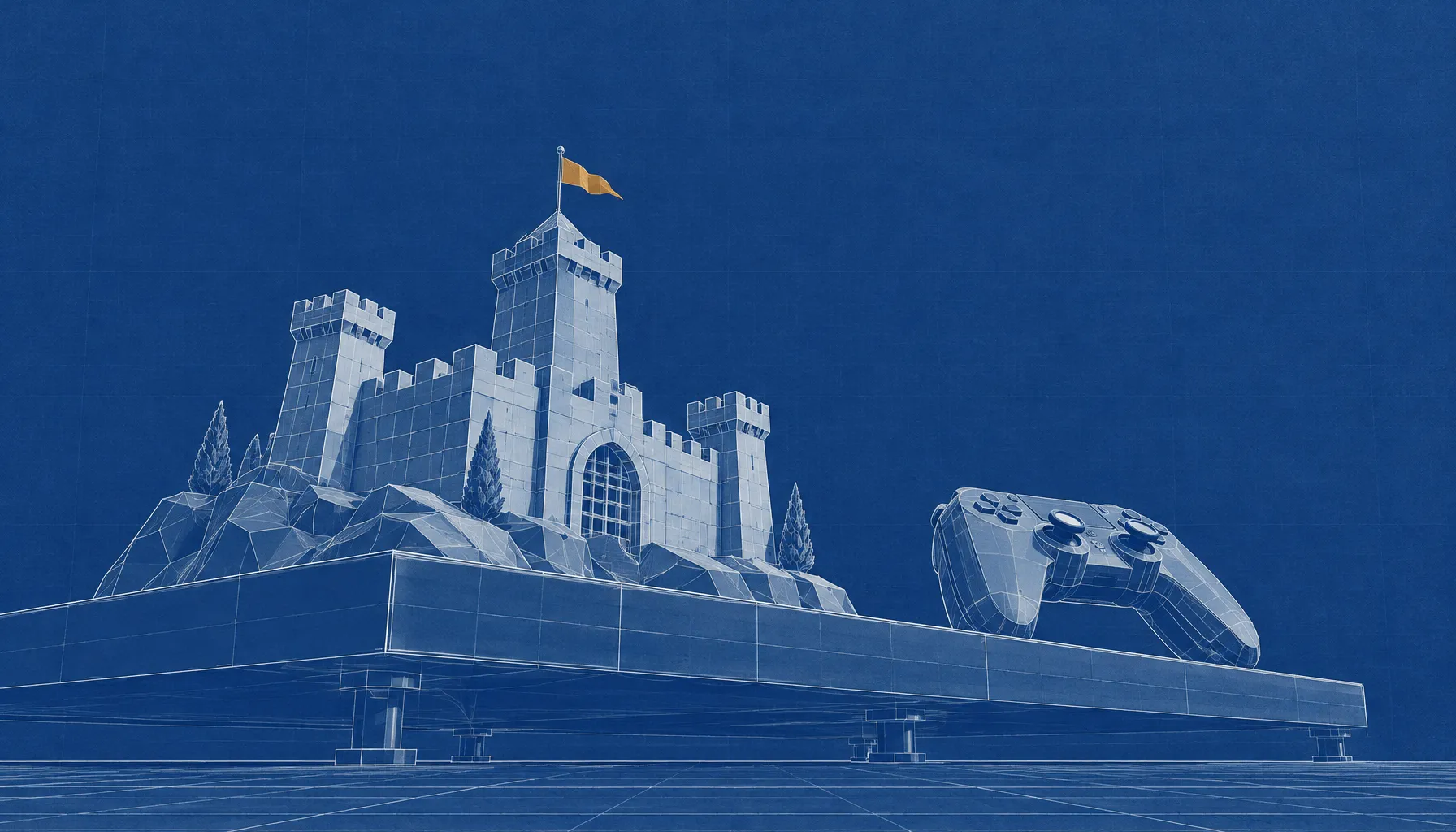
Matrix-Game 4.0 divides work between conventional game software and a causal video model. An executable game handles player input, physics and gameplay state; the model takes clean, low-poly RGB frames and redraws them with richer visuals. The heads-up display and sound stay separate from the model’s visual input and are synchronized with the output.
Skywork’s release includes two third-person shooting scenes—Medieval Castle and Ancient Egypt—and a driving scene, City Racing. Each has its own checkpoint and configuration. The setup is narrower than a general-purpose world simulator: the model card says the systems are specialized for the supplied scenes and camera profiles.
Streaming comes with a defined format
The model card specifies output at 480 by 864 pixels. After an initial startup frame, each latent chunk corresponds to four RGB frames. The package offers a quality setting that uses two denoising steps and a faster preset that uses one step with the TAEHV codec and optimized single-GPU inference.
Those settings describe how to run the released code, not a published speed result. Skywork provides no guaranteed frame rate or consumer-GPU memory requirement, and its model card says it does not claim a performance benchmark. It also warns that unseen geometry, fast camera movement, occlusion and long sessions can lead to visual drift or geometry errors.
Open weights, but not training materials
The model files, scene assets and v4 project are released under Apache-2.0, according to Skywork’s repositories. Third-party components keep their own license terms; the racing audio bundle includes CC0 and CC BY 3.0 material with attribution requirements. The model card identifies Wan2.2 components and a TAEHV codec among the shared resources used by the system.
Skywork has not released the training code or training data with Matrix-Game 4.0. The weights also depend on the project’s inference source and are not drop-in Diffusers pipelines. That means developers can inspect and run the released scenes, but cannot reproduce the training process from this package alone.
Visual control is not game logic
Keeping gameplay state inside executable software separates the system from approaches that ask a video model to infer all world rules from pixels. In Matrix-Game 4.0, collisions and game state remain the engine’s responsibility; neural generation changes the appearance of the scene, not its underlying mechanics. The distinction sets a clear boundary on what the model is responsible for.
The release leaves practical limits in place: only three supplied environments, scene-specific camera profiles, no training materials and no stated performance guarantee. Skywork’s documentation also cautions that the model may lose visual consistency during long sessions, even while the game engine continues to govern the actual gameplay.