The Pulse
Simbe Passes 3,000 Contracted Retail Robots
Simbe says more than 3,000 autonomous units are now under contract across over 75 retail banners in nearly a dozen countries. The company is expanding Tally from a shelf-scanning robot into a broader platform for retail operations.
AI.info Team ·
Simbe says it now has more than 3,000 autonomous units under contract, a milestone the retail robotics company describes as the largest commercially committed shelf-intelligence fleet identified in its own research. The announcement, made September 21, 2026, marks a shift in Simbe’s pitch from inventory-scanning hardware toward a broader operating layer for physical stores.
The claim comes from Simbe rather than an independent industry census. The San Francisco company says its systems now serve more than 75 retail banners across nearly a dozen countries, giving it a commercial footprint that extends well beyond limited pilots.
Simbe’s 3,000-unit claim rests on contracted deployments
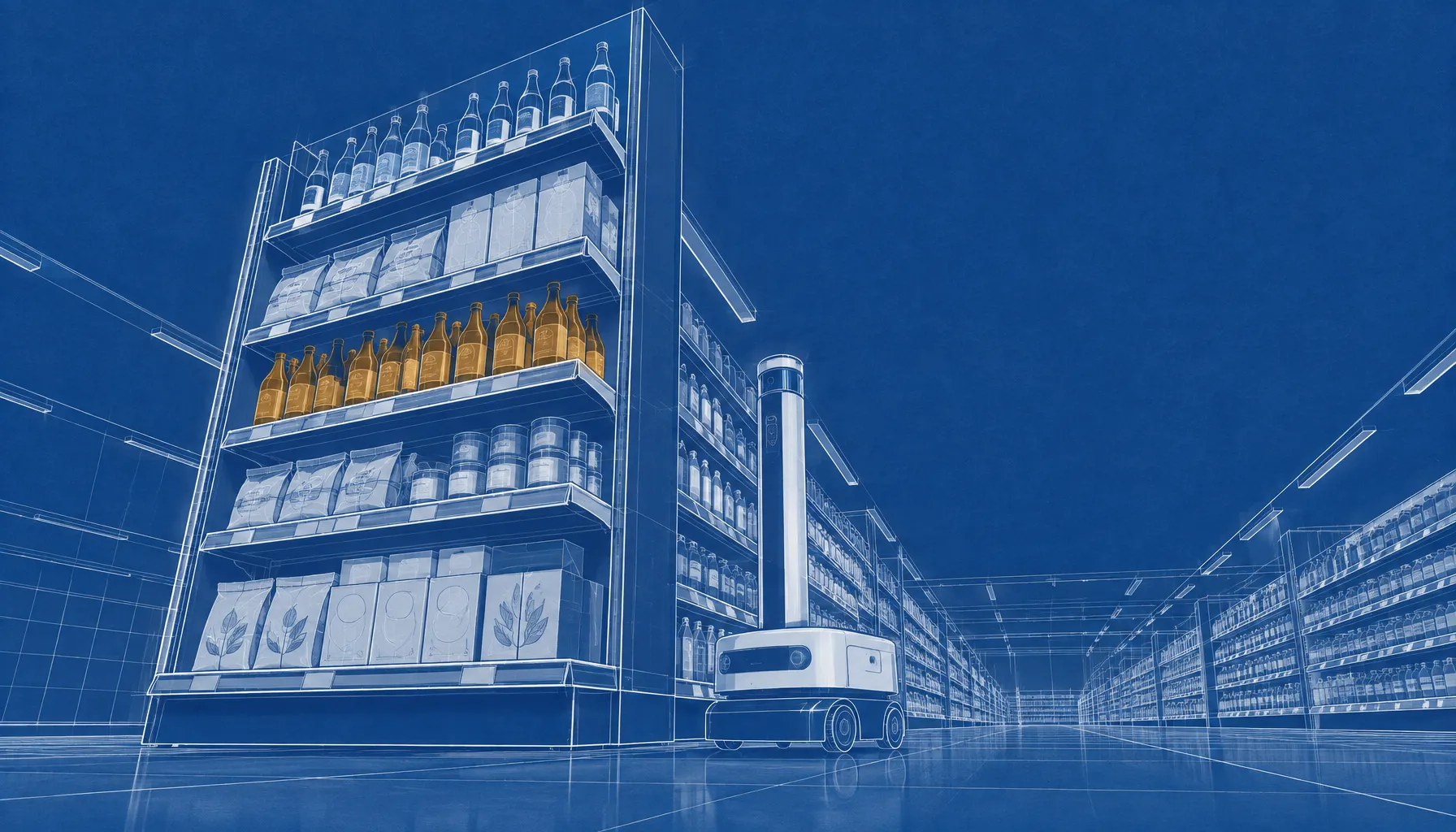
Simbe’s contracted fleet centers on Tally, its autonomous shelf-scanning robot. The company says Tally and related systems capture information about inventory availability, product location, pricing, promotions and merchandising conditions inside stores.
Simbe describes the milestone as evidence that retailers are moving from isolated automation projects to broader data systems for store operations. Deborah Weinswig, founder and CEO of Coresight Research, said the milestone reflects a shift in which “trusted shelf-level data is becoming foundational to store operations, digital commerce, merchandising and supply chain decisions.”
The announcement does not identify the retailers or disclose how the 3,000 units are divided among customers, countries or product types. It also does not provide revenue, contract value or a year-over-year deployment figure.
From Tally scans to a wider store platform
Simbe says its platform now combines autonomous robots with computer vision, radio-frequency identification, handheld systems and fixed sensors. The company’s stated aim is to turn data collected from store aisles into applications, workflows, AI agents and connected devices that can support more autonomous operations.
That strategy broadens the role of the robot. Rather than treating Tally as a standalone inventory machine, Simbe positions each deployment as a source of repeated observations about how products and shelves change across individual stores and retail chains.
Brad Bogolea, Simbe’s co-founder and CEO, said, “A decade of operating autonomously in stores has given us the foundation to think far beyond the robot. We’re building the physical intelligence layer that enables retailers to understand and operate stores with greater autonomy.”
Commercial scale remains the test
Retail stores present a harder operating environment than controlled facilities. Robots must move around shoppers, employees, carts and changing displays while collecting usable shelf data across different store formats.
Aidan Madigan-Curtis, partner at Eclipse Ventures, said, “What works once in a lab doesn’t often work in the real world, and it’s brutally hard to build robotics that operate reliably across thousands of stores for the world’s largest retailers.” He called Simbe one of the few companies delivering at global scale.
Simbe also says it is the first and only company to earn UL 3300 certification for a robot designed to operate in public. The company reports that more than 90% of store managers working alongside Tally say the technology makes their jobs better, though the announcement does not provide the survey sample, methodology or date.
Why the fleet milestone matters for retail automation
The 3,000-unit figure gives Simbe a commercial marker in a field where many robotics programs remain confined to trials or early production. Retailers have used shelf-scanning systems to identify missing products, pricing errors and misplaced merchandise, but scaling those systems across chains requires consistent navigation, data processing and integration with store workflows.
Simbe’s announcement frames shelf intelligence as the starting point for broader automation rather than the final product. Its immediate evidence is the contracted fleet and the company’s presence across more than 75 retail banners; the next question is whether those deployments generate repeatable operational gains that retailers expand beyond shelf monitoring.
For now, Simbe’s clearest number is the one it announced: more than 3,000 autonomous units under contract as of September 21, 2026.