The Pulse
GigaChat team releases 708B GigaChat 4 with million-token context
The GigaChat 4 family includes 708-billion- and 37-billion-parameter models, both with a context window of up to one million tokens. The larger model is available under the MIT license, while the smaller one has a noncommercial license for individuals.
The GigaChat 4 family includes a 708-billion-parameter language model released under the MIT license and a smaller 37-billion-parameter version with a noncommercial license for individuals. Both final models support a context window of up to 1,048,576 tokens, according to the GigaChat team's post and model repository.
The team published the release on November 26. Each model can use tools and has both a direct-answer mode and a mode that reasons before responding.
Two sizes, different licenses
The larger model has about 41 billion active parameters per token; the post puts the smaller model's active parameters at about 3.8 billion. Both offer an instant and a reasoning mode within a single instruction-tuned checkpoint, selectable for each request.
The final instruction-tuned weights are available in FP8, BF16 and GGUF formats, alongside base models and intermediate training checkpoints. The repository notes that intermediate checkpoints can have shorter context windows and different attention settings; the full window applies to the final base and instruction-tuned models.
How the models handle context
Both models use a hybrid mixture-of-experts architecture, combining Gated DeltaNet layers with multi-head latent attention and DeepSeek Sparse Attention. The 708B model has 64 decoder layers, while the 37B model has 32.
For each token, a sparse-attention indexer selects up to 2,048 positions from the context for the main attention calculation. The team trained the models on sequences of up to one million tokens during context extension, using material that included long documents, books, repositories and scientific papers.
For the larger model's pretraining, the technical report describes a corpus of approximately 15.35 trillion tokens and a pretraining target of 20 trillion tokens. The material included filtered web text, documents and source code; English and Russian formed the core of the web corpus.
Results and demonstrations
In the team's evaluation, the 708B model scored 71.26% on Terminal-Bench 2.0 in reasoning mode and 60.47% in instant mode. The reported reasoning and instant scores for GigaChat 3.5 were 30.30% and 12.94%, respectively.
On Terminal-Bench 2.1, the team's table lists 69.66% for GigaChat 4 in reasoning mode, compared with 78.65% for DeepSeek V4 Flash 0731. For DeepSWE, the respective results were 35.40% and 53.10%; both benchmark rows used a seven-hour timeout.
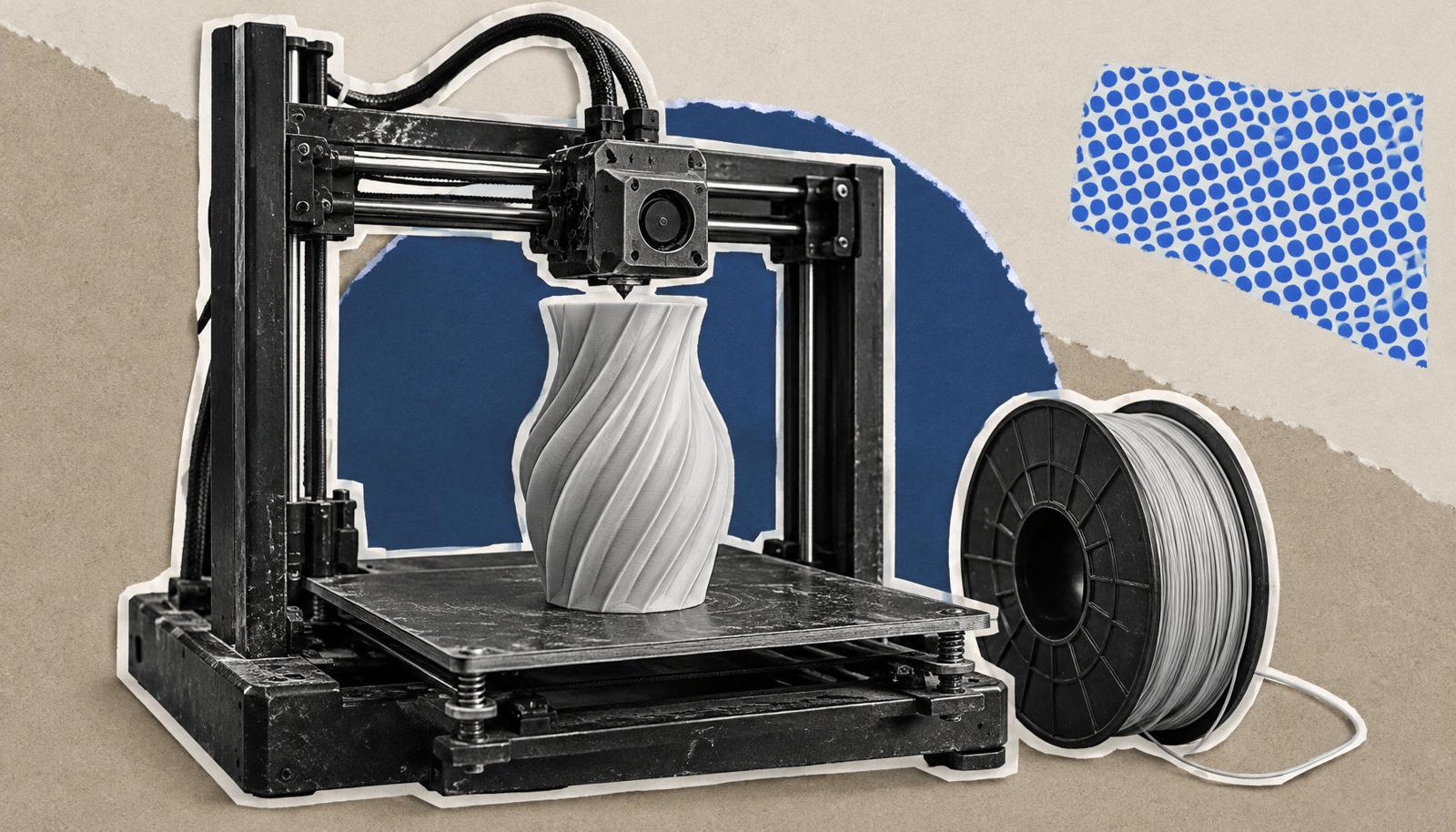
The post describes an experiment in which the 708B model generated an STL file for a vase from a text request. The team opened the file in slicing software and printed a version of the vase; it said the model had not been specially fine-tuned for that task.
The team also describes using reinforcement learning to train specialist models for areas including mathematics, coding and tool use, then transferring their capabilities into a single model. A separate report on the 37B model's training and experiments is planned for later.
Sources
- Original source · Blog post GigaChat “GigaChat 4: Two Powerful Models, One Million Tokens, and New Agentic Capabilities” giga.chat
Other pages read
- GigaChat “GigaChat 4: Technical Report” giga.chat
- GigaChat on GitHub “GitHub - salute-developers/gigachat4” github.com