The Pulse
Sabi Raises $50 Million to Build a Brain-AI Cap
Sabi announced a $50 million seed round led by Khosla Ventures on October 9, 2026. The company says its cap uses custom EEG hardware and a model trained on more than 100,000 hours of neural recordings to turn imagined speech and intent into
AI.info Team · Written with AI ·
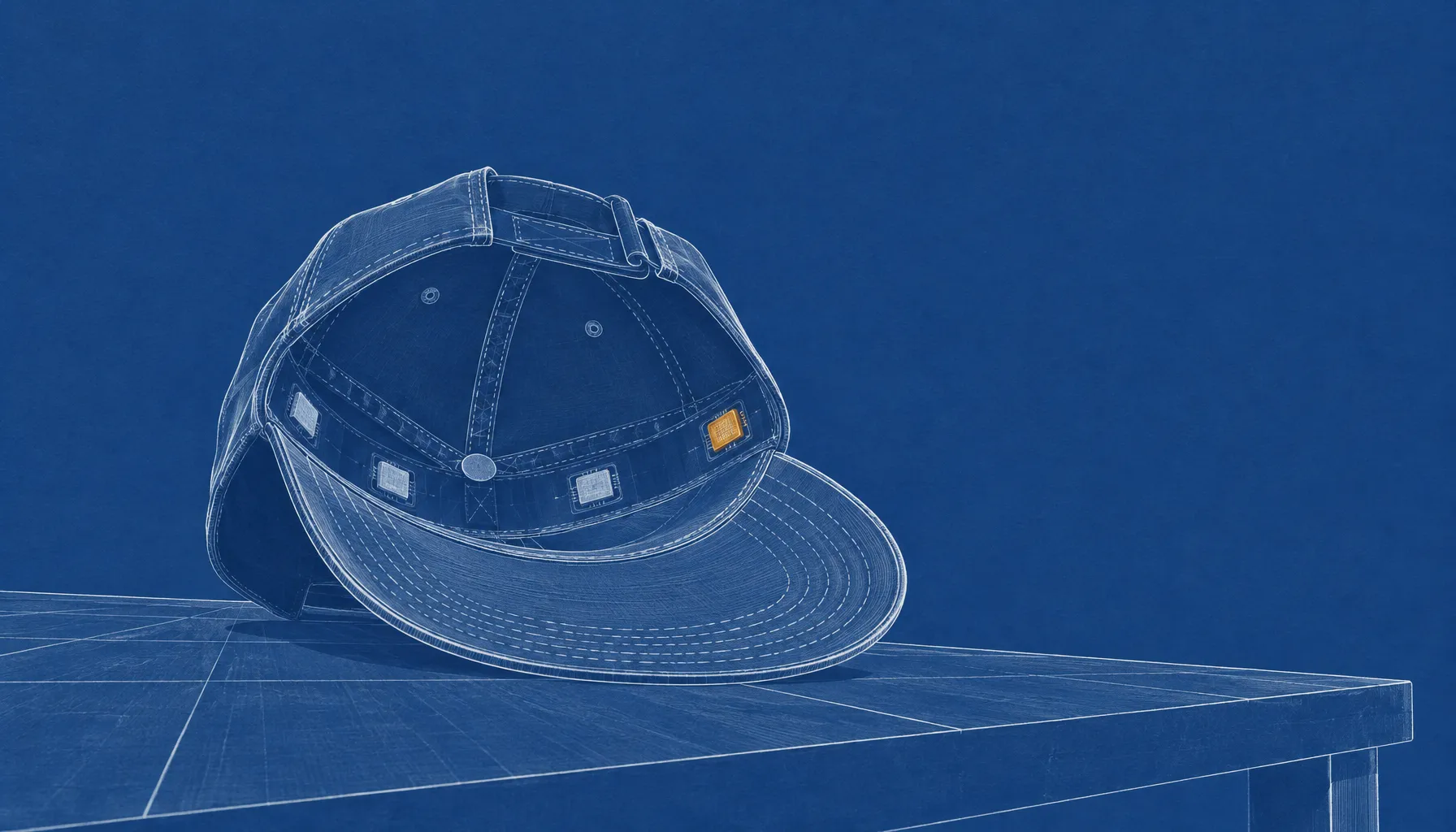
Sabi announced a $50 million seed round on October 9 to develop a brain-computer interface concealed inside an everyday baseball cap. Khosla Ventures led the financing; Accel, Initialized Capital, former OpenAI Chief Product Officer Kevin Weil, DST Global, Collaborative Fund and Ascend also participated. The company says the cap is designed to turn imagined speech and intent into commands for AI without requiring users to type or speak aloud.
A cap built around custom EEG sensors
Sabi says sensors measuring between one and five millimeters sit inside the cap and can pick up neural signals through hair, across a gap of up to five millimeters. The device uses the company’s custom electroencephalography chip, which Sabi says was more than 50 times as power-efficient as Texas Instruments’ ADS1299 EEG analog front end in internal benchmarks. The announcement does not provide the benchmark methodology or independent test results.
The company’s Brain Foundation Model processes the signals. Sabi says it trained the model on more than 100,000 hours of labeled, non-invasive recordings from people imagining words and performing specific mental tasks, describing that as the largest disclosed dataset of its kind. The release gives no accuracy rate for decoding imagined speech or evidence of performance in everyday use.
From imagined words to AI instructions
Sabi describes three intended interactions: displaying words a person deliberately imagines, turning a trained mental command into an instruction for an AI assistant, and predicting likely keystrokes or on-screen actions for the user to complete or confirm. The cap connects wirelessly to a phone or computer, which the company compares to the way earbuds connect. Sabi says early versions of these interactions will be demonstrated at CES 2027 in Las Vegas.
The company frames the device as an alternative to interfaces based on keyboards, touchscreens and voice, and to brain-computer systems that require surgery. “The goal is a cap people can wear in ordinary life and use when they intentionally want to communicate with AI,” said Rahul Chhabra, Sabi’s CEO and co-founder. He described the product as an interface that does not require surgery or a laboratory.
Sabi says neural data stays encrypted
Sabi says its system encrypts neural data at the sensor and is designed to run inference while the data remains encrypted, so servers do not receive unencrypted signals. The company is also developing controls for when the cap records, which applications can receive commands and which actions require user confirmation. The announcement describes these as design goals; it does not detail an independent security assessment.
The financing will fund work on the neural dataset and custom chip, production of early devices, and hiring across neuroscience, hardware and machine learning, according to Sabi. The company says it is preparing units for people on its early-access waitlist. Its next stated public milestone is the planned CES 2027 demonstration.
Khosla sees an interface beyond keyboards
Vinod Khosla, founder of Khosla Ventures, tied the investment to the prospect of replacing familiar input methods. “You cannot perform a billion brain surgeries to replace a billion keyboards,” he said. Sabi’s announcement sets out the intended use and early hardware claims, while leaving key measures—including decoding accuracy—unreported.