The Pulse
Runware targets 30 MW a day from its Romanian data-center factory
Runware plans to scale production of its factory-built AI data centers to 30 megawatts of capacity per day by 2028, with installation and setup targeted to take as little as 48 hours. The company says it already has two factories, and its e
AI.info Team · Written with AI · fact-checked ·
Runware wants to build AI data centers on an assembly line, then bring them online at customer sites with installation and setup targeted to take as little as 48 hours. TechCrunch reported on October 30 that the company plans to scale production at its Romania-based factory to 30 megawatts of data-center capacity per day by 2028. That target would amount to nearly 1 gigawatt per month, but it is a production goal, not current output.
Installation and setup targeted for 48 hours
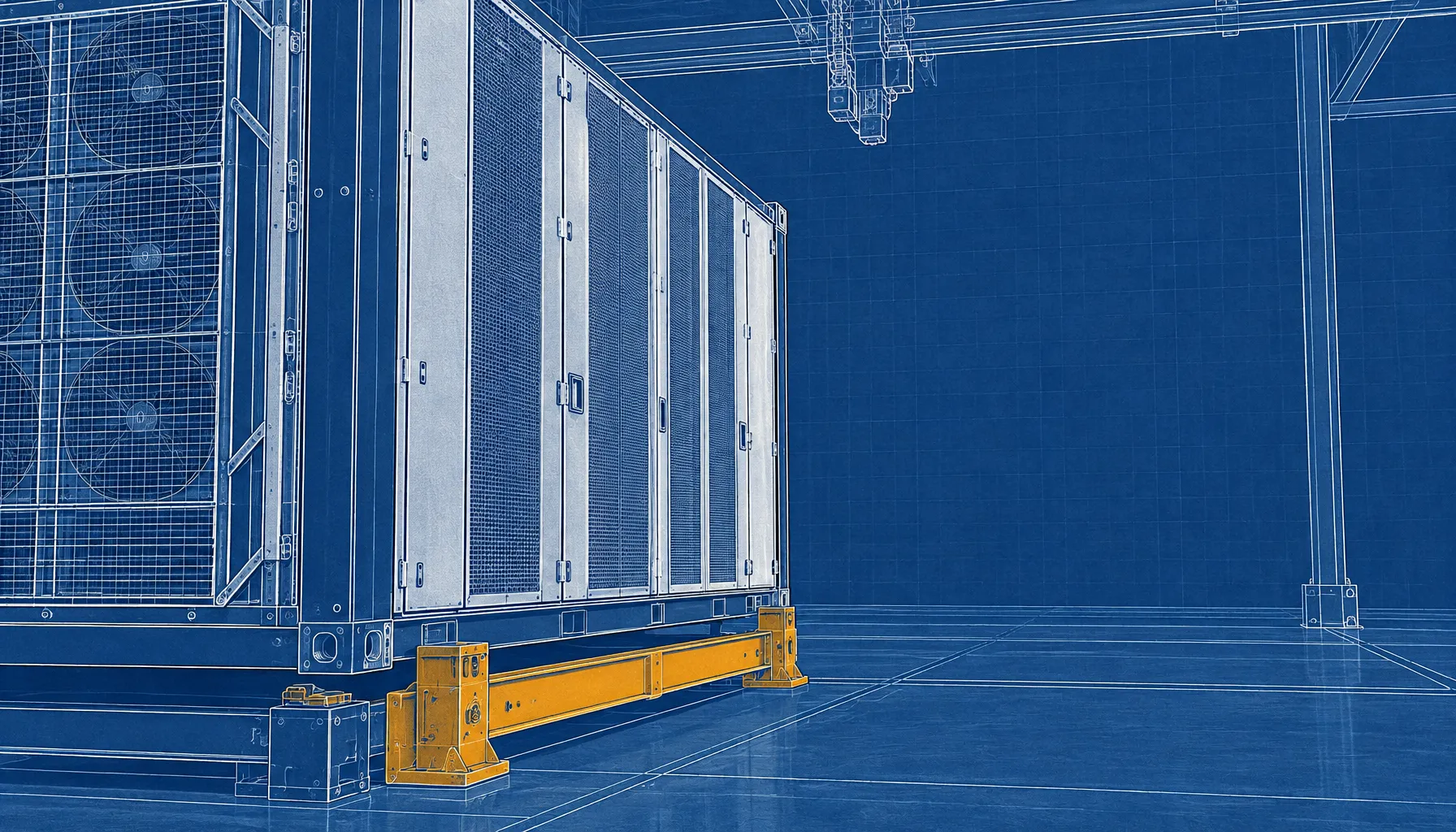
Runware’s product, the Sonic Inference Pod, is a modular data center built in a factory and shipped for installation. Co-founder and CEO Flaviu Radulescu said Runware already has two factories: one it has used for a few years to build pods, and a second it started building earlier this year. The second is expected to be finished within months and go online early next year. Runware plans to increase production gradually from 2027.
The 48-hour figure covers installation and setup at a customer site, not the time needed to manufacture a pod. A unit that once took three weeks to build is expected to take one day as production ramps up, according to the company. Customers can supply a site or ask Runware to find one, and the company says it will provide spare parts if components fail.
“For new GPU generations, our in-house hardware team can design, build, and test components itself, allowing us to adapt quickly.”
Runware co-founder and CEO Flaviu Radulescu told TechCrunch. The company says customers can configure the standard pod design for their requirements and for newer GPU chips. It offers two arrangements: customers can rent compute from Runware or bring their own GPUs and pay a monthly fee for the pods and operations, with power and internet billed separately.
Demand is claimed; manufacturing remains the test
Runware says it has received $1 billion in committed interest for its Sonic pods since it began offering them to outside customers about a month ago. Radulescu said that interest represents more than 20 megawatts of capacity the company is working to deliver. The company has raised more than $60 million, including a $50 million Series A last December, and says that funding is supporting the new factory; it plans to raise a Series B.
Radulescu said Runware has brought in a plant manager from the automotive industry to work with its hardware chief. “Our cost structure is very different,” he said, arguing that factory labor and widely available parts make the economics unlike those of electric-vehicle startup Arrival, which struggled to produce vehicles cost-effectively. The comparison points to the central risk: factory space and a production line do not, on their own, establish that a company can source parts, manage inventory and deliver at its promised pace.
Runware also depends on outside suppliers for some components. The company says pumps and fans come from Germany, while its networking equipment depends on Nvidia. Its own team designs and builds cooling and other pod systems using standard components, but scaling output will still require reliable supply chains alongside the factory expansion.
Power sites and a larger capacity pipeline
The company says its pods need power and an internet connection and use closed-loop liquid cooling with air-cooled radiators, avoiding a water connection. Radulescu said Runware is working with power providers on a site pipeline of 397 megawatts, with potential to expand to 1.2 gigawatts. He said the sites typically already have power and are smaller than the campuses operated by hyperscalers.
Those are company claims, not evidence that the installations will have no effect on local grids or communities. Runware says it uses renewable energy when possible and aims to make renewables its main energy source. Its immediate milestone is more concrete: completing and opening the second factory early next year, then showing whether factory-built pods can move from a three-week build toward a one-day build while meeting customer orders.