The Pulse
Rune Raises $40M to Put AI Compute at Solar Farms
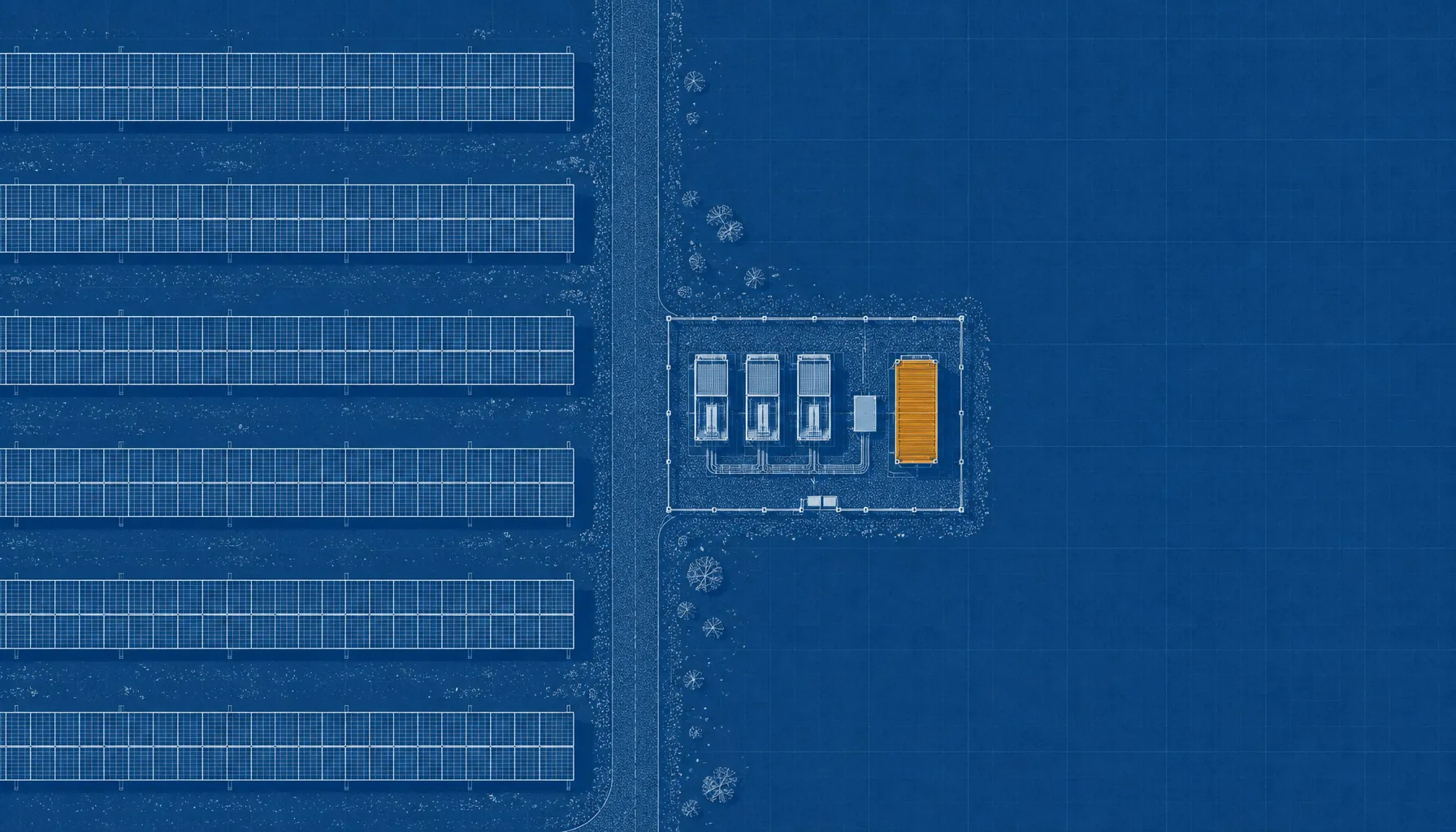
Rune has raised $40 million in Series A funding to launch RELIC, modular AI compute systems installed directly at solar-generation sites. The Mountain View startup says its Texas deployment can use underused solar power without new grid con
AI.info Team ·
“Every solar plant is a latent data center. The power is already there, sitting idle while AI labs wait years for grid connections that may never come.”
William Layden, co-founder and CEO of Rune
Rune announced the launch of RELIC and a $40 million Series A on September 16, pitching solar farms as ready-made locations for AI computing. Spark Capital led the round, joined by Union Square Ventures, Lowercarbon Capital, Activate Capital, Committed Capital, Timeless Partners and Logos Fund.
The financing brings Rune’s total funding to $53.5 million, according to the company’s announcement. RELIC, short for Renewable Energy Linked Intelligent Compute, is designed to place modular compute systems directly at solar-generation sites and use electricity that would otherwise go unused or fail to reach the grid.
RELIC Targets Solar Power That Never Reaches the Grid
Rune says solar plants can waste up to 20% of the energy they generate because of curtailment, clipped production or limits on grid delivery. The company estimates that more than 50 terawatt-hours of solar power go unused each year in the United States.
RELIC is designed to operate behind the meter and run natively on direct current, matching the electrical output of solar installations. Rune says the arrangement removes the need for a new grid connection, transformers, utility approvals and conventional data-center construction.
“AI’s power constraint isn’t generation, it’s resource allocation,” said Varun Palivela, Rune’s co-founder and chief technology officer. “The industry is retrofitting data centers designed for a different era rather than rethinking the architecture itself.”
A 200-Megawatt Texas Site Is the First Public Deployment
Rune is also disclosing a RELIC installation at a 200-megawatt solar facility in Texas. The company describes the system as live on an existing renewable asset without site modifications, grid work or construction.
According to Rune, RELIC units can be physically deployed in 60 minutes, while compute customers can be energized in as little as six weeks after signing a contract. That timeline contrasts with the years often required to build a conventional data center and secure an interconnection.
The company says RELIC is aimed at high-performance computing and that customers can reserve inference capacity. Rune has not disclosed the number of GPUs operating at the Texas site or identified the compute customers using the installation.
Rune Claims Lower Construction Costs and No Water Use
Rune says the system cuts non-compute infrastructure costs by 85% compared with traditional AI data centers. The company estimates that difference would equal $620 million in savings for a 100-megawatt deployment.
Those figures describe Rune’s own comparison rather than an independently audited result. The company also says RELIC uses no water, requires no heavy site preparation and can capture underused electricity without interfering with a solar plant’s primary operations.
Santo Politi, founder and general partner at Spark Capital, said Rune’s model could expand the number of sites available for new computing capacity. “Rune deploys compute directly behind the meter at operating solar farms, converting clean power into rapidly scalable AI capacity,” Politi said.
A Team Built Around Power and Processor Design
Layden previously ran a division of Cube Hydro that used unused hydroelectricity for bitcoin mining. He later evaluated technology across SoftBank Energy’s 1.7-gigawatt solar portfolio and served in the Obama White House, according to Rune.
Palivela brings semiconductor experience to the company. At NUVIA, he worked on a high-performance processor core before Qualcomm acquired the chip startup for $1.4 billion. He previously held design roles at Qualcomm, Arm and Marvell and holds multiple U.S. patents, Rune said.
That background points to a company focused less on building another AI model than on placing processors where electricity is available. RELIC’s commercial test will be whether solar-site compute can deliver predictable service despite variable generation, while giving renewable operators a dependable customer for power that would otherwise have limited value.
Rune says RELIC is already live across initial clean-energy partner sites and that it is expanding both its power-partner pipeline and its base of compute customers. The disclosed Texas installation and the $40 million financing are the company’s clearest public commitments yet to making solar facilities part of the AI compute supply chain.