The Pulse
Rivian Buys Third Dimension to Build 3D Driving Simulations
Rivian acquired Third Dimension, a startup that turns images and video into editable 3D environments, to support driver-assistance and autonomous-driving development. The 15-person team joins Rivian as the automaker reports receiving more t
AI.info Team · Written with AI · fact-checked ·
Rivian says its customer fleet uploads more than 400,000 driving sequences a day. The automaker is bringing in a 15-person startup, Third Dimension, to turn real-world images and video into editable 3D scenes that can help its teams train and test driving systems.
Rivian announced the acquisition on October 22, without disclosing financial terms. Third Dimension’s technology uses AI to build lifelike 3D worlds from images and video; the team will join Rivian’s autonomy and AI group, led by James Philbin. Most of Third Dimension’s employees are based in the U.K., and Philbin told TechCrunch the deal could also expand Rivian’s AI hub in London.
From customer footage to repeatable road tests
Rivian collects data from R1T pickups, R1S SUVs, delivery vans and R2 SUVs when owners enable external-camera sharing. The company aggregates and anonymizes that data for driving-model training. Philbin told TechCrunch that more than 400,000 sequences arrive from customer vehicles each day.
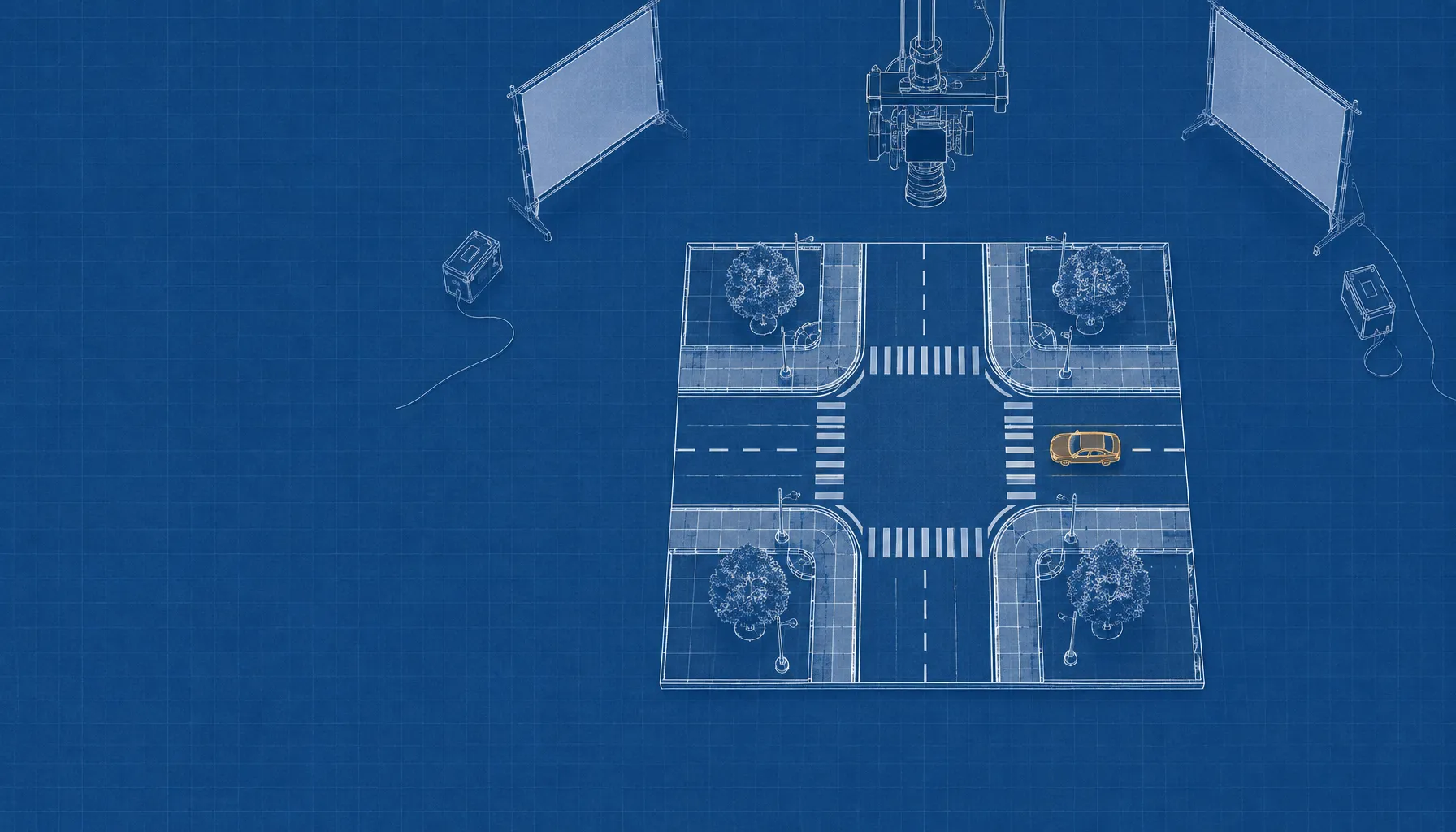
Third Dimension’s software is meant to make those real driving situations simulatable: teams can reposition cameras and other road users, or alter lighting and weather. That gives developers ways to test variations of a recorded scene rather than wait for an uncommon event to happen again on public roads.
“For us, it’s about taking real scenarios, but making them simulatable,” Philbin told TechCrunch. He said Rivian wants to move objects and change conditions within scenes that reflect events in the real world, rather than rely only on video-game-style synthetic environments.
Why Rivian wants more than synthetic scenes
Autonomous-driving teams use simulation to train and validate their systems. But a virtual scene that looks convincing may not behave like an actual road; that difference, often called the sim-to-real gap, can make it harder to know whether a system’s performance in a simulator reflects what it will do outside one.
Third Dimension was founded in 2024 by CEO Tolga Kart and Piotr Sokolski. The company raised $7 million in seed funding from investors including Abstract Ventures, MVP, Soma Capital and Solari Capital, TechCrunch reported. Its tools were initially developed for video-game production, and the founders also saw applications in defense and autonomous vehicles.
“The team is excited to be able to focus on one problem,” Kart told TechCrunch. He described the move as a chance for a small team that had served different markets to work on a single, large-scale challenge.
The Uber robotaxi program sets a longer test
Rivian plans to use Third Dimension’s technology for driver-assistance development and its longer-term self-driving work. The latter includes R2 robotaxis planned for Uber’s platform. In March, Rivian and Uber announced plans for an initial 10,000 fully autonomous R2 robotaxis, with first commercial deployments planned for San Francisco and Miami in 2028; the companies also outlined a possible expansion to more cities.
Rivian currently offers highway hands-free assistance that still requires drivers to watch the road. TechCrunch reported that the company planned a point-to-point feature for surface streets and highways by the end of 2026, with drivers still responsible for supervision and taking over when needed. Neither the acquisition announcement nor the reported daily data volume establishes how much the new simulation capability will improve system performance or when it will reach customers.
Validation remains the hard measure
Philbin framed simulation as part of the decision about whether a system is ready to ship. The central test is whether a model that performs well in a recreated scene also handles the corresponding conditions on real roads. Third Dimension gives Rivian a way to vary scenes and test more cases, but the acquisition alone does not show how closely those simulations match driving outside the lab.
Rivian has not disclosed the deal price, detailed integration plans or a measured improvement in its autonomy systems. For now, the concrete change is organizational: Third Dimension’s team and technology move inside Rivian, where they will be applied to the company’s driving-data pipeline and its effort to validate automated driving.