The Pulse
Rabbit Releases OS3 as a Standalone Cross-Device AI Agent
Rabbit has released OS3, a cloud-based agentic operating system that can control up to five connected devices across Windows, Mac, Linux, cloud virtual machines and the r1. The software supports direct computer control, user-supplied model
AI.info Team ·
Rabbit Puts OS3 Beyond the R1
Rabbit released OS3 on September 22, 2026, shifting its AI-agent strategy from a dedicated handheld toward software that can coordinate work across several kinds of computers. The company describes OS3 as an agentic operating system built around a single chat interface, where users state an outcome and the system decides which models, services, files and devices are needed to complete it. The release is available without an r1 through Rabbit’s desktop web portal.
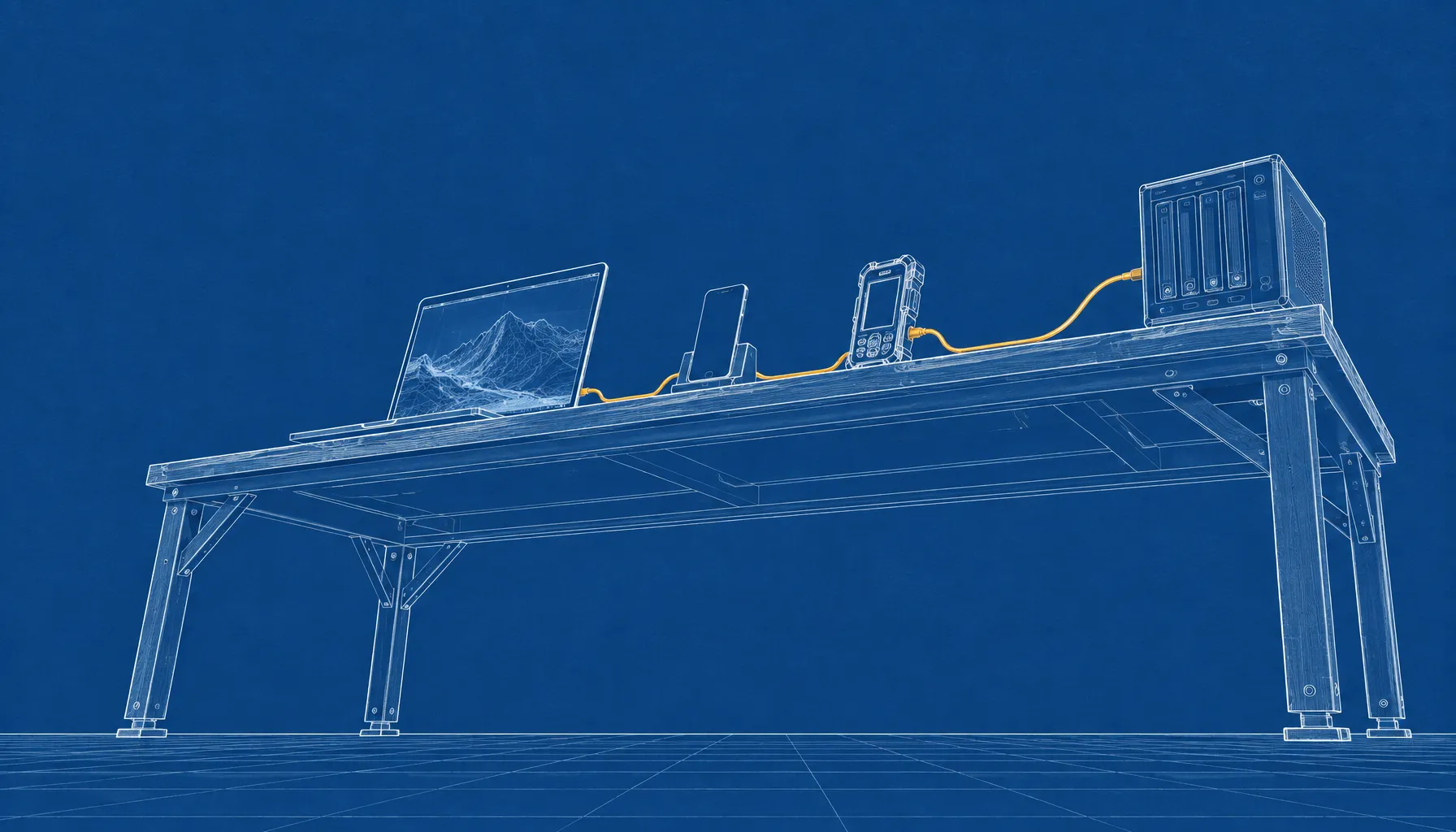
The move creates a tension in Rabbit’s product strategy. The company introduced the r1 as dedicated hardware for interacting with its software, but OS3 makes the r1 one endpoint among several. Rabbit says users can connect as many as five devices to one account, allowing a task to move between local computers, cloud machines and the handheld as needed. Rabbit’s announcement identifies Windows, Mac and Linux PCs, cloud virtual machines, dedicated AI computers and the r1 as supported endpoints at launch.
One Conversation, Multiple Machines
OS3 runs in the cloud and reaches local hardware through the Rabbit agent, which users install on their computers with a single command. The system can choose whether a task runs on one machine or across several, while carrying files, applications and skills between those environments. Rabbit says the agent can work with local files, desktop software and web pages, as well as write, debug and run software workflows.
Rabbit founder and CEO Jesse Lyu framed the release as a move away from operating computers through individual applications and sessions. “We've spent two and a half years building toward a system you don't operate, but instead just tell it the outcome,” Lyu said. “OS3 allows users to stop worrying about whether a task is technically possible, and start collaborating on whatever is on their mind (whether a wild idea or a concrete problem). By combining open skill compatibility with direct computer control, OS3 turns human intent into complex, multi-device action.”
Rabbit Lets Users Bring Their Own Models
OS3 does not lock users to a single AI provider. Rabbit says customers can connect API keys from major AI laboratories, cloud routing services or locally hosted models, then switch models without losing their context, memory or skills. The approach places model selection and usage costs with the user rather than presenting OS3 as a fixed, Rabbit-operated assistant.
The software also accepts skills through URLs. A user can paste a skill’s address into the OS3 chat, after which the system sets it up without requiring command-line prompts or additional configuration files. Rabbit positions that system as a way to make skills published across different sources available inside the same operating environment.
Direct Control Brings Privacy Tradeoffs
Rabbit says the local agent keeps files on the user’s computer and does not copy, store, use or sell them. Conversations with OS3 and the memory built from those conversations are stored on Rabbit’s servers, while relevant task content is sent to the model provider selected by the user. Rabbit says that content passes through its servers before reaching the provider, but the company does not retain a copy of the transferred data.
OS3 takes action only after a user initiates a task, according to the release. Sensitive actions require confirmation, and operating-system permissions are requested locally. Those controls matter because the product is designed to operate desktop software, browse pages and handle files directly rather than only produce text in a chat window.
Web, Messaging and the R1 Share the Same Agent
Users can begin with OS3 at os3.rabbit.tech through a desktop browser, then interact with it through the web portal on desktop or mobile. Rabbit also supports paired Telegram, iMessage, RCS and SMS access, along with the r1. The company says additional input methods are planned.
The r1 remains part of the product, but its role changes. Rabbit says users complete OS3 onboarding on the web and can then route r1 queries through the new system, bringing the device into the same conversation and context as the other endpoints. Rabbit’s upcoming cyberdeck, described as a dedicated machine for AI-assisted coding, will ship with OS3 as its default operating system.
OS3 is available now through Rabbit’s web portal, with local agents for supported computers and the r1 listed as launch devices. The immediate product is not a new handheld; it is a cloud service that connects existing computers, messaging channels and Rabbit hardware through one account.