The Pulse
Quad leaders back AI accelerator for Indo-Pacific access
Leaders of Australia, India, Japan and the United States affirmed the importance of an initiative intended to coordinate and fund efforts to support AI access across the Indo-Pacific. Their foreign ministers had expressed an intent to provide over $85 million in technical and financial assistance for AI access in the region.
Quad leaders have affirmed the importance of an initiative intended to coordinate and fund efforts to support artificial intelligence access across the Indo-Pacific. The accelerator was among the technology priorities set out in a joint statement published by the White House after the leaders met in Manila on November 17.
Source whitehouse.gov
President Donald Trump met Australian Prime Minister Anthony Albanese, Indian Prime Minister Narendra Modi and Japanese Prime Minister Takaichi Sanae at the summit. The initiative was announced by their foreign ministers in Atlanta before the leaders' meeting.
Funding and access
At that meeting, the ministers expressed an intent to provide over $85 million in technical and financial assistance to support access to trusted AI across the Indo-Pacific, including through the accelerator.
The White House statement calls the initiative the Super Intelligence Accelerator, while noting that Australia, India and Japan use “Super Intelligence” to refer to artificial intelligence. The leaders said the initiative is intended to support access, deployment and technical assistance across the region.
The ministers met in Atlanta on October 31 to discuss progress on Quad initiatives. They also described AI and initiatives such as Pax Silica as important to future economic growth.
The leaders' statement placed investment in and deployment of trusted AI alongside work on critical supply chains, freedom of navigation and disaster response. It also expressed concern about economic coercion, including through arbitrary export restrictions.
Hardware and connectivity
In Atlanta, the foreign ministers set out other technology work, including a future effort to identify semiconductor and AI supply-chain chokepoints before they cause disruptions. They said the Quad countries had reinforced the need for secure and trusted supply chains for advanced semiconductors and AI hardware.
They also committed to identifying priority countries for cooperation on advanced communications technologies, including 5G, 6G and Open Radio Access Networks. The governments are developing a pipeline of trusted 5G projects and exploring future cooperation on AI radio access networks.
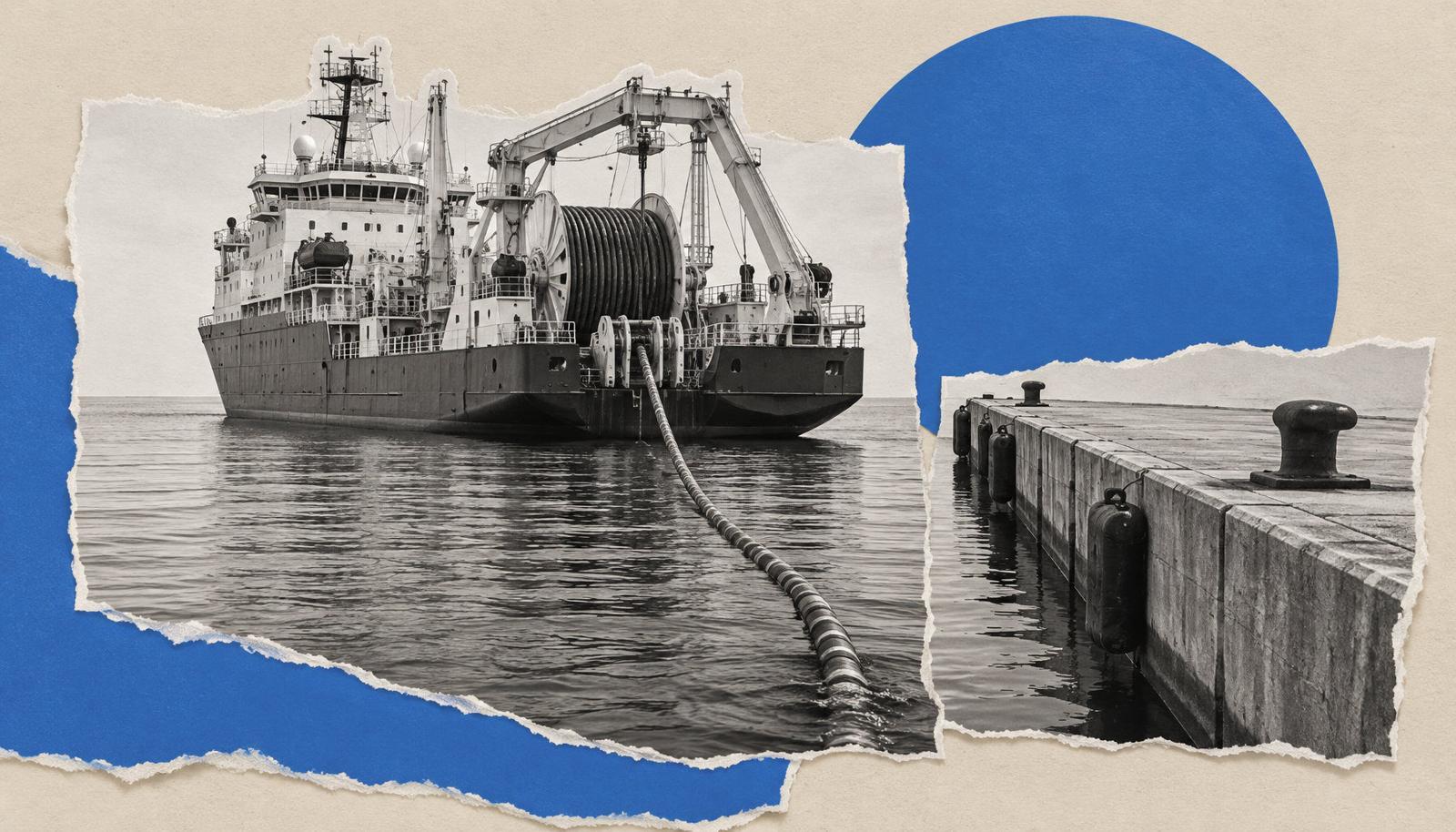
At the Manila summit, the leaders announced enhanced Quad cybersecurity cooperation, under which they plan to work together on cyberspace. They also welcomed an expansion of Australia's contribution to the Quad Partnership for Cable Connectivity and Resilience to focus on electricity cables.
The partnership has worked on regional communications infrastructure. The leaders welcomed upcoming undersea cable projects in the Indian Ocean that are intended to strengthen connectivity.
Business and supply chains
The leaders announced an inaugural Quad Business Leaders' Forum, scheduled for early 2027. It is intended to bring business leaders, government officials and policy experts from the member countries together to encourage commercial deals and partnerships.
In the October statement, the ministers said Quad export credit agencies would meet in Tokyo on November 18 to identify opportunities for practical cooperation, building on a 2024 memorandum of cooperation. They also welcomed private-sector investment in waste collection networks, processing plants and refineries connected to critical minerals recycling.
The ministers welcomed a U.S. commitment to provide $10 million to promote infrastructure and facilities in India and ASEAN countries that recover critical minerals from waste. Quad countries also planned to explore streamlining export and import procedures for recyclable materials.
Sources
Related stories
- CloudBackend raises €6.6 million for AI application infrastructure
- Hyve to offer Astera Labs' Orion components in AI inference racks
- ASUS ramps up Vera Rubin NVL72 shipments in fourth quarter
- CoreWeave reports multi-rack Vera Rubin AI training results
- Lambda connects more than 10,000 GPUs with photonics switches