The Pulse
Pony.ai Debuts Gen-4 Electric Robotruck With GAC
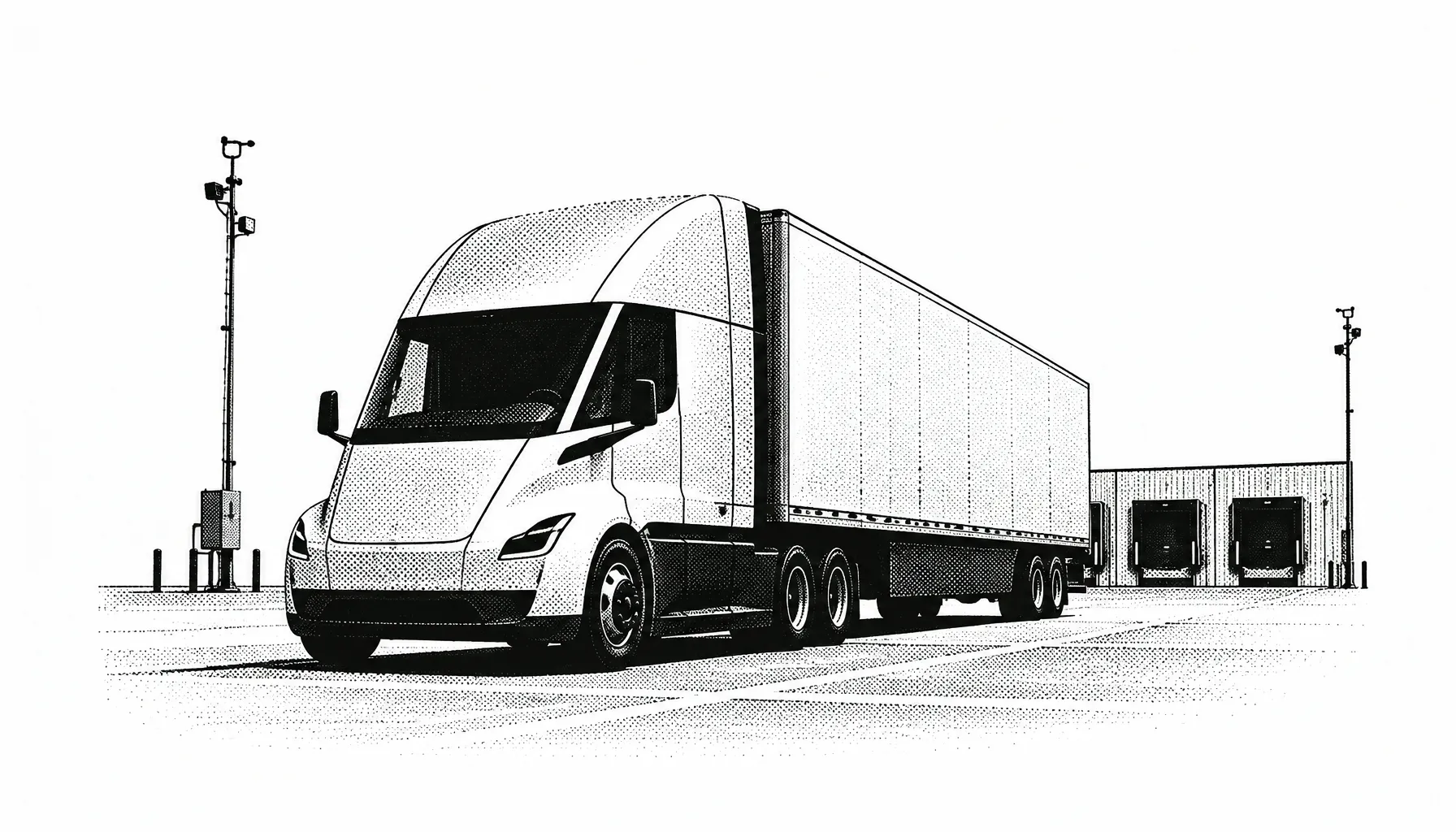
Pony.ai has unveiled a Level 4 autonomous heavy-duty truck built on GAC Commercial Vehicle’s T9 battery-electric platform. Volume production is scheduled to begin later in 2026 for long-haul freight, dedicated-route logistics and port trans
AI.info Team ·
“The global debut of the T9 autonomous heavy-duty truck with GAC Commercial Vehicle marks another important step in accelerating the mass production and commercial deployment of Pony.ai's Robotrucks.”
He Xing, vice president of Pony.ai and head of the company's Robotruck business
Pony.ai unveiled a new Level 4 autonomous heavy-duty truck in collaboration with GAC Commercial Vehicle on September 14, 2026, at IAA Transportation in Hannover, Germany. The T9-based vehicle marks the companies’ first public truck launch under their expanded partnership and moves Pony.ai’s fourth-generation Robotruck platform closer to volume production.
Production is scheduled to begin later this year. Pony.ai says the trucks will serve long-haul freight, dedicated-route logistics and port transportation, three operating environments where repeatable routes and freight volumes can support early autonomous deployment. The announcement comes less than five months after the companies signed a strategic cooperation agreement on April 16 and began joint vehicle testing and validation.
GAC’s T9 Provides the Electric Platform
The new Robotruck uses GAC Commercial Vehicle’s T9 battery-electric heavy-duty truck platform. Pony.ai combines that vehicle with its Gen-4 Level 4 autonomous driving system and a fully redundant drive-by-wire chassis from GAC Commercial Vehicle.
The redundancy extends across steering, braking, communications, power supply, computing and sensing. Those systems are designed to provide backup capability if a component or subsystem fails, a requirement for operating a heavy truck without a driver directly controlling the vehicle.
Pony.ai describes the autonomous driving kit as fully automotive-grade. It includes nine lidar sensors, three millimeter-wave radars and 13 cameras, giving the truck 360-degree sensing coverage. The vehicle also uses the same domain controller as Pony.ai’s seventh-generation Robotaxis, linking the truck program to the company’s existing autonomous vehicle hardware work.
Lower Hardware Costs, Cheaper Freight Operations
Pony.ai says the bill-of-materials cost for the autonomous driving kit is 70% lower than that of the previous generation. The company expects transportation costs per ton-kilometer to decline by 30%, although the announcement does not provide a baseline cost, a test fleet size or an independently measured result.
Energy consumption is also a target. Pony.ai says its energy-efficiency algorithms, combined with the T9’s drag coefficient of 0.4 Cd, should reduce energy use by 10% compared with conventional trucks. The company presents those figures as expected reductions rather than results from a published field trial.
Cost is central to Pony.ai’s truck strategy. The company announced its broader Gen-4 autonomous truck lineup in November 2025, saying the first models would use battery-electric platforms and be designed for production at the thousand-unit scale. The T9 is the latest vehicle to join that program and gives Pony.ai another manufacturing partner alongside companies including SANY Truck and Dongfeng Liuzhou Motor.
From Robotaxis to Freight Vehicles
Pony.ai began developing Robotrucks in 2018 and now says its product portfolio covers both heavy- and light-duty trucks. The company applies its “Virtual Driver” technology across Robotaxis, heavy trucks and light trucks, while adapting the vehicle hardware and operating systems to different freight applications.
The GAC agreement extends a relationship that already includes Robotaxis. Pony.ai has worked with GAC Group on passenger autonomous vehicles, and the new truck program gives the partners a way to apply that manufacturing and software relationship to commercial freight.
He Xing said the companies plan to continue advancing production and deployment of the T9 Robotrucks and to bring their jointly developed trucking systems to overseas markets. Pony.ai identifies Europe and the Middle East as international expansion targets over the next two years, building on Robotaxi operations and partnerships in the United Arab Emirates, Qatar, Croatia, Luxembourg, Singapore and South Korea.
Production Will Test the Business Case
The T9 debut gives Pony.ai a production timetable, named freight applications and a defined sensor package. It does not yet establish how many vehicles will enter service, which routes they will operate, or whether the projected cost reductions will hold under commercial workloads and regulatory requirements.
Those details will determine whether the truck can move beyond demonstrations and limited deployments. For now, the concrete milestone is a planned start of volume production later in 2026 for an electric T9 heavy-duty truck equipped with Pony.ai’s Gen-4 Level 4 system.