The Pulse
Periodic Labs Deploys 1T-Parameter Neon Model in Its Materials Labs
Periodic Labs says its 1T-parameter Neon model now analyzes difficult X-ray diffraction results from the company’s physical laboratories. The model reaches a 55.3% success rate on Periodic’s FrontierXRD benchmark and outperforms larger fron
AI.info Team ·
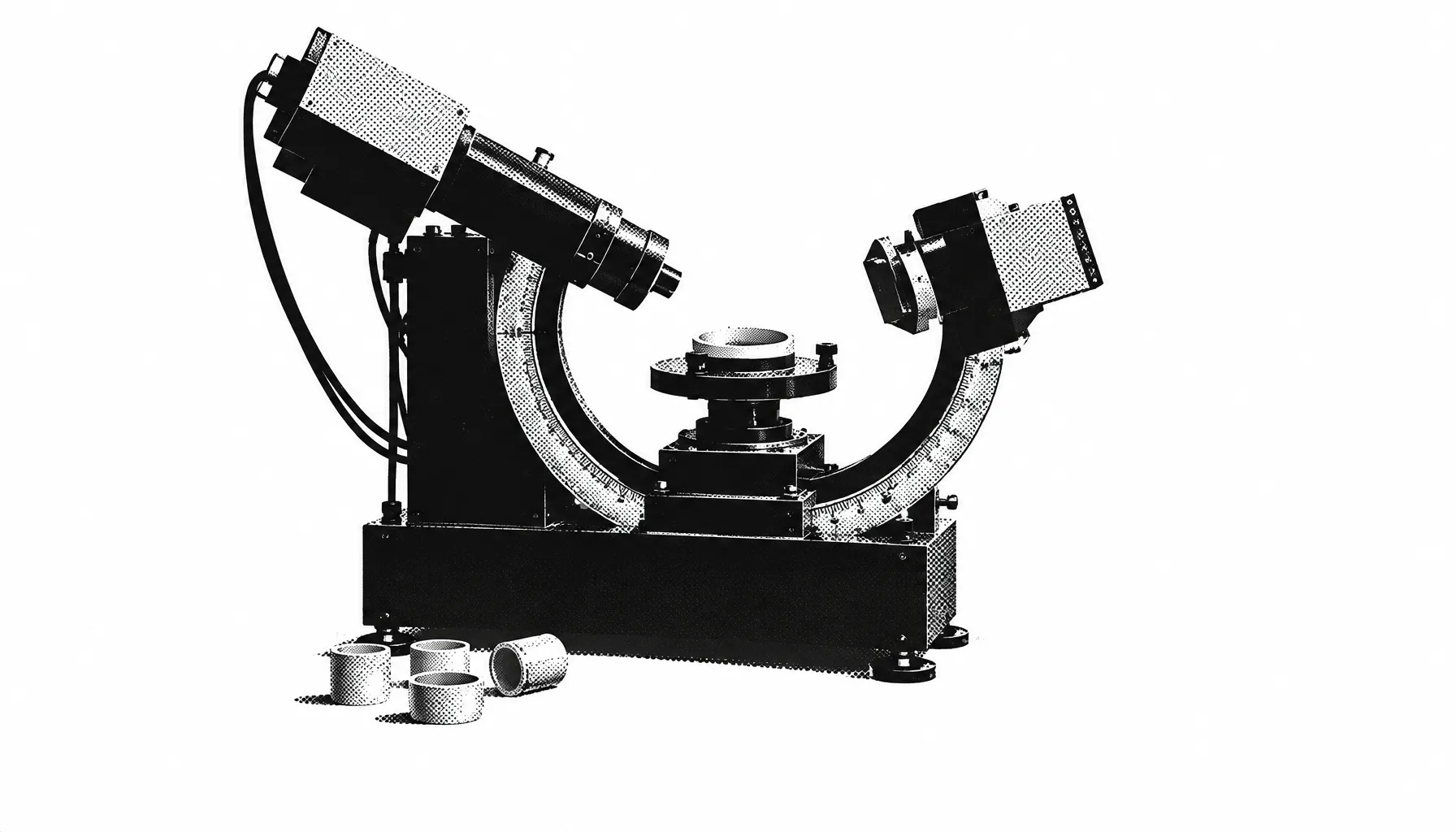
Periodic Labs says it has deployed Periodic Neon, a 1 trillion-parameter model, inside its physical materials laboratories after training the system on data generated by the company’s own experiments. The model analyzes difficult X-ray diffraction measurements, a task that can require scientists to compare instrument data with synthesis conditions, prior experiments, simulations and crystal-structure databases.
In a research post published September 15, 2026, Periodic reports that Neon achieved a 55.3% success rate on FrontierXRD, its most difficult internal evaluation set. The company says that result exceeds the performance of GPT-6 Astra and Claude Fable 5.1 while costing less per analysis under Periodic’s evaluation setup. Periodic’s published results describe the benchmark and the tools used to produce them.
Neon Targets the Hardest Part of XRD Analysis
X-ray diffraction gives researchers a way to infer the structure and composition of crystalline materials. A synthesis run can produce the intended material alongside unreacted precursors, byproducts or several competing phases. Their diffraction patterns overlap, forcing scientists to decide not only which mathematical fit looks plausible, but also which explanation makes chemical sense.
Periodic says its FrontierXRD evaluation contains 134 samples from the company’s laboratories. The patterns are difficult enough that human experts can spend hours resolving them, and accepted solutions contain five phases on average. The company evaluates success with an ensemble of two language-model judges, Opus 5 and GPT-5.6-Sol, calibrated against expert ratings.
That scoring method reflects a problem that standard diffraction software does not solve by itself. Existing tools work best when a scientist has already narrowed the list of plausible elements and phases. Neon is designed to reason across the surrounding experimental context, including the starting materials, temperature, atmosphere, handling history and related samples.
A 20-Fold Gain From the Starting Model
Periodic says the initial Kimi K2.6 model reached a 2.7% success rate on FrontierXRD. After midtraining and reinforcement learning on laboratory data, Neon reached 55.3%, which the company describes as a 20-fold improvement over that starting result.
The company says Neon began with an open-weight model containing 1 trillion parameters. Its training combined academic literature, code and experimental data, followed by reinforcement learning on the laboratory task. Periodic also reports that its proprietary scientific corpus is currently doubling every month, although the company does not disclose its total size.
Periodic’s final training run used 1,300 H200 GPUs. The research post contrasts that figure with more than 100,000 Blackwell GPUs reportedly used for Astra, while warning that the comparison is not a direct measure of model quality because the systems, training methods and deployment conditions differ.
The Harness Matters as Much as the Model
Neon’s results come from a broader software environment that Periodic calls its Scientific Harness. The system supplies laboratory context, internal materials databases, simulation resources and XRD analysis software. Periodic says the harness produced a 3.8-fold higher success rate than Claude Code paired with standard open-source databases and tools, at a similar cost per analysis, when both systems used the same underlying Claude Opus 5 model.
That finding complicates any simple comparison between model names. Periodic’s own evaluation gives each system access to a tool environment, but the environments are not identical. The company’s harness includes internal infrastructure that its comparison setup with Claude Code does not.
Periodic also tested Neon on 198 XRD measurements from chemical systems excluded from both midtraining and reinforcement learning. The company says Neon outperformed the frontier models on that held-out evaluation, which it presents as evidence that the model learned analysis skills that transfer beyond the chemical systems represented in training.
Turning Physical Experiments Into Training Data
Periodic’s broader strategy links model development to high-throughput laboratories in Menlo Park. The company says those labs now run continuously and generate data for models that help identify problems, interpret results and decide what to do next.
The company describes materials discovery as a three-stage loop: predict what material to make, determine how to synthesize it, then analyze what the experiment produced and whether it has the intended properties. Results from the third stage refine the next hypothesis. Neon currently operates in the analysis portion of that cycle, while Periodic says it is extending its systems toward campaign planning, synthesis procedures and experiment selection.
Physical experiments impose limits that do not apply to software-only reinforcement learning. Equipment, power and engineering capacity restrict the number of concurrent runs, experiments can take days, and the results may be ambiguous. Periodic’s approach is to use data from completed experiments to train and improve its systems while new experiments continue.
What Periodic Has Actually Shown
Neon’s public evidence is concentrated on one demanding materials-science task: interpreting laboratory XRD data. Periodic has not presented the model as a general-purpose scientific system, and the company’s results come from internal datasets and an evaluation process that relies partly on language-model judges.
Human experts agreed with one another on 77.2% of the labeled patterns in Periodic’s analysis. The LLM-judge ensemble agreed with human experts 74.6% of the time and matched expert consensus 84% of the time, according to the company. Those figures show why evaluating scientific reasoning is harder than checking whether a predicted number matches a fixed answer.
For now, the concrete deployment is narrow but operational: Periodic Neon is analyzing diffraction results from the company’s own laboratories as Periodic searches for improved superconductors and magnets. The company’s next stated step is to connect that analysis to the decisions that determine which material gets made and which experiment runs next.