The Pulse
Mueon Raises $65M to Advance Its Cubelets Data-Center Platform
Mueon says its $65 million Series A will fund hiring, engineering and operations as it moves its Cubelets computing platform toward broader system validation and production readiness. The Portland company is targeting up to 10X gains in pow
AI.info Team · Written with AI ·
Mueon Corporation announced a $65 million Series A on Oct. 15, with Maverick Silicon leading the financing. Intel Capital, Geodesic Alliances Fund, Oregon Venture Fund, M-Ventures, Wellington Capital, IQT and Defined also participated. The Portland semiconductor systems company says it will use the capital to expand its engineering and operations teams, move its Cubelets platform toward broader system validation and production readiness, and deepen customer engagements.
The funding follows a $15.5 million seed round announced in 2025. Mueon says the two rounds bring its capital raised to more than $80 million. As part of the Series A, Maverick Silicon Senior Managing Director Manish Muthal will join the company’s board, alongside Intel Capital Managing Director Srini Ananth.
Modular building blocks bring compute and memory together
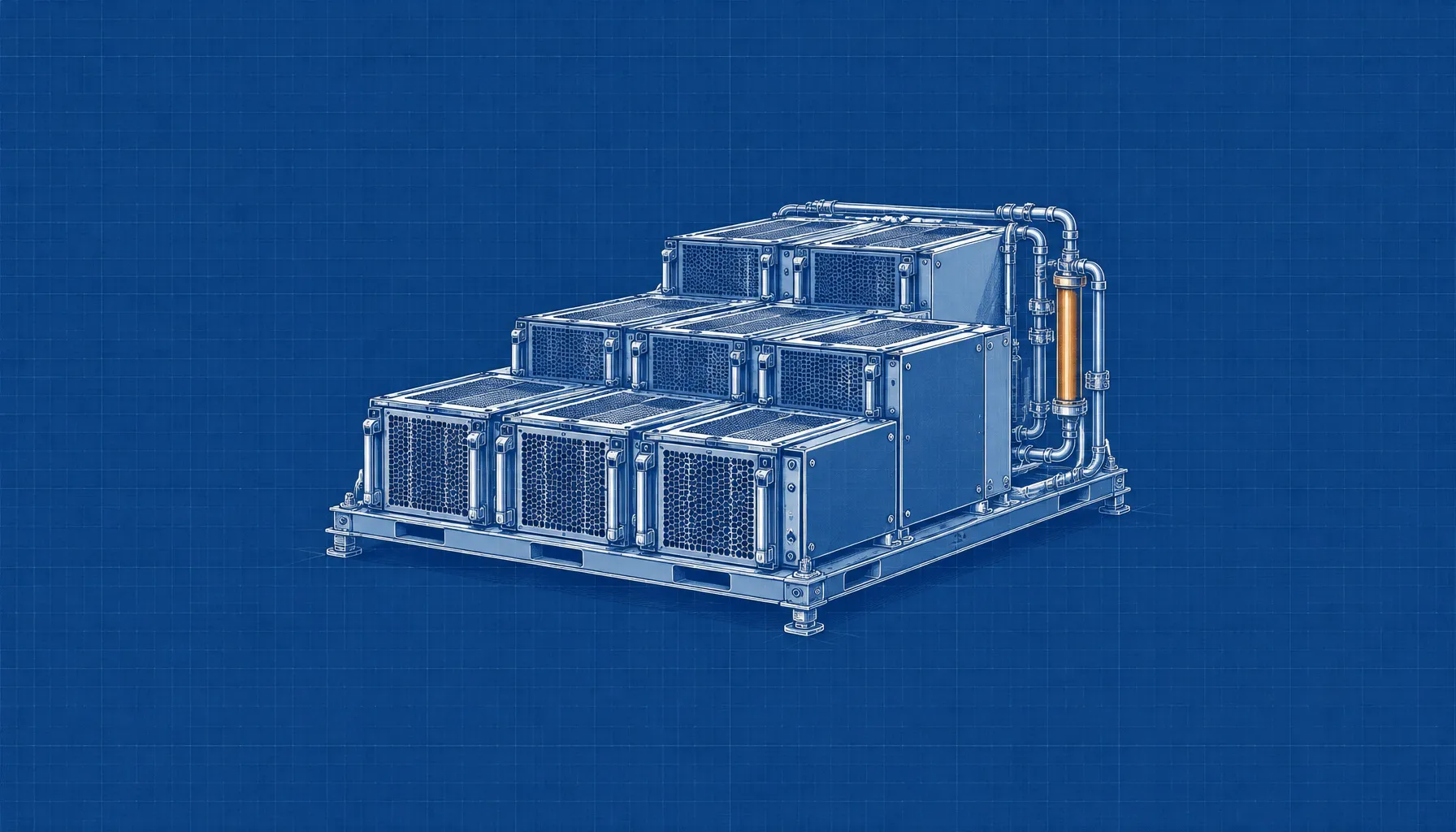
Mueon describes Cubelets as modular, three-dimensional compute-and-memory building blocks. Its stated design brings together compute, memory, interconnect, power delivery and thermal management. Rather than treating those elements as separate subsystems, the company says it is designing around data movement, power density and the constraints involved in deploying AI infrastructure.
The company says Cubelets are intended to reduce the physical distance data must travel and the power cost of moving it, without requiring the sprawl of a traditional server rack. Packaging, interconnect, power and thermal management are treated as design variables in the architecture. Mueon says the approach is intended to extend beyond any single accelerator technology.
Since its seed financing, Mueon says its development program has covered four areas. The first is silicon and system architecture, including compute, memory and interconnect design for scalable three-dimensional systems. The second is advanced integration, with packaging, power-delivery and thermal approaches aimed at increasing compute density without reproducing rack-level complexity at a smaller scale.
The other areas are software and system orchestration, and ecosystem validation. Mueon says it is building a software layer to support familiar AI frameworks and deployment workflows. It is also working with technology, manufacturing and industry partners to validate components and integration choices and to develop a path from prototype to production.
Efficiency figures are targets
Mueon says it is targeting up to 10X gains in power and cost efficiency within the same rack footprint. It also says the architecture is designed to scale toward megawatt-class density as demand grows. The release does not provide a benchmark, workload, comparison system or measured results for the efficiency target, so the figure describes a goal rather than a reported performance gain.
Wilfred Gomes, Mueon’s co-founder and CEO, said the financing would support the company’s effort to bring its design to market.
“This financing gives us the scale to bring the next generation of compute and memory system-scale integration to market,”
Wilfred Gomes, co-founder and CEO of Mueon Corporation
The announcement also includes support from potential industry partners. Sudeep Bhoja, co-founder and CTO of d-Matrix, said a modular system architecture combined with in-memory compute could enable smaller, denser infrastructure tailored to AI workloads, and give partners room to experiment and optimize. Rohit Vidwans, co-CEO of Ampere Computing, now part of SoftBank, said Mueon’s modular approach rethinks infrastructure’s physical building blocks and that Ampere is working with the company as it de-risks the technology on the path toward production.
Those partner statements describe potential applications and ongoing work; the announcement does not report a production deployment or performance test. For now, Mueon’s stated next step is to use the new funding to broaden system validation and move Cubelets from platform development toward production readiness.