The Pulse
MIT’s HardFlow Keeps AI Outputs Inside Safety Rules
MIT researchers developed HardFlow, a method designed to help pretrained generative AI models meet strict final-output constraints without retraining.
AI.info Team ·
HardFlow targets the last step that matters
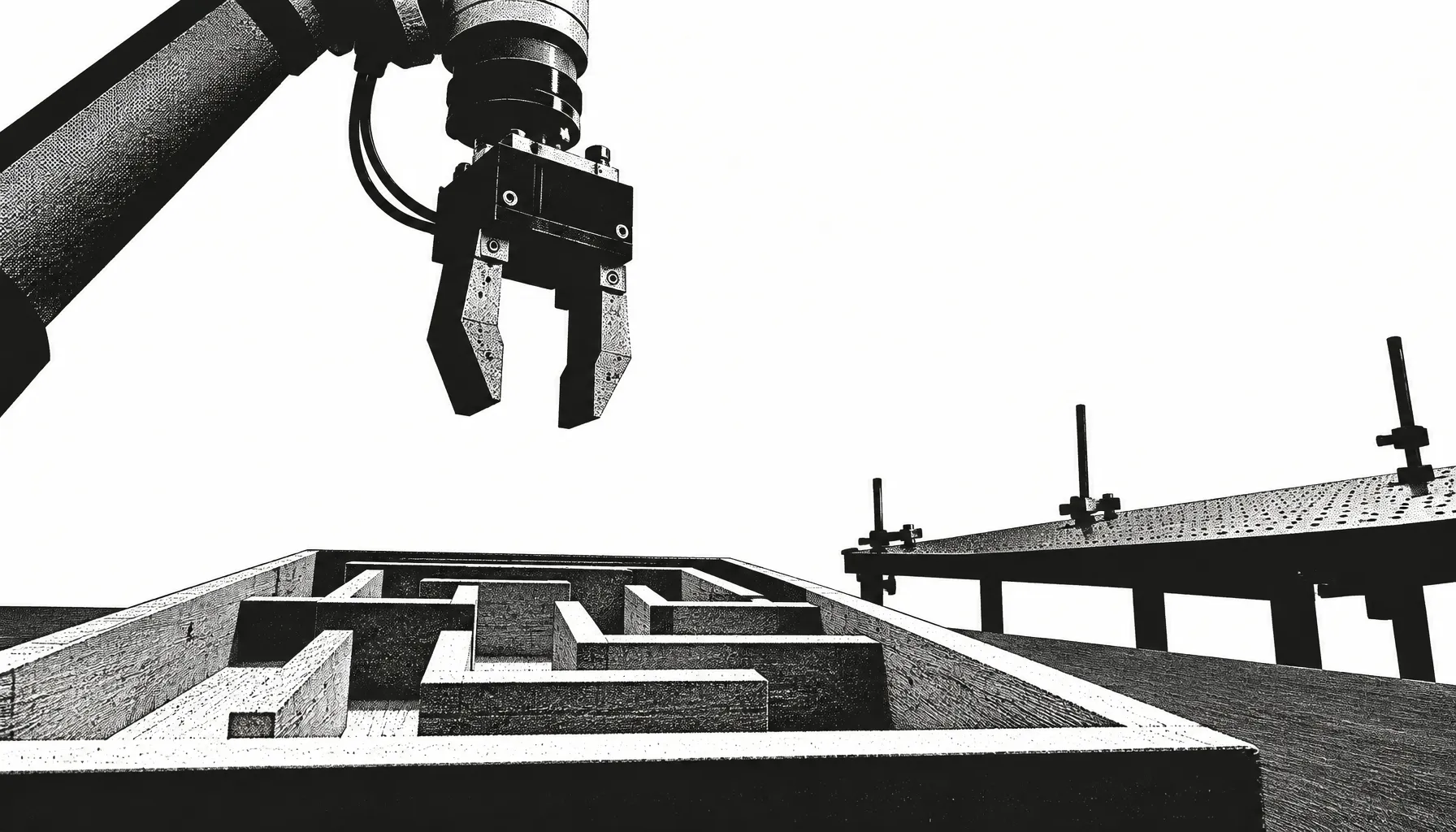
MIT researchers say their new HardFlow method achieved perfect constraint satisfaction across tests in robotic manipulation, maze navigation, and text-guided image editing while also improving the quality of the generated results. The work addresses a problem that conventional generative systems handle poorly: producing an answer that is not merely plausible, but acceptable under rules that cannot be broken.
Safety-critical applications expose that weakness quickly. A robot path that nearly avoids an obstacle can still cause a collision, while an image-editing system may preserve the wrong feature even when the final picture looks broadly correct. HardFlow is designed to make the final output satisfy those requirements without forcing every stage of generation to obey them.
Why intermediate constraints can damage the result
Generative models create outputs by moving from random noise toward a finished sample. Diffusion models such as Stable Diffusion and flow-matching models such as FLUX can produce useful results across many tasks, but their normal sampling process does not guarantee compliance with strict physical or task-specific rules.
One common response is projection-based sampling, which repeatedly pushes each intermediate sample back toward a constraint boundary. MIT researchers argue that approach can restrict the model too early. A robot planner, for example, may avoid collisions at every intermediate stage but lose the ability to find a shorter or otherwise better route by the time it reaches the final answer.
“For constraint satisfaction, what ultimately matters is the model’s final output, since the internal process is discarded. By not requiring every intermediate step to satisfy the constraints, we give the model more freedom to find high-quality solutions that are still feasible in the end,”
Zeyang Li, graduate student in mechanical engineering and the Laboratory for Information and Decision Systems at MIT
HardFlow treats generation as a control problem
The method reformulates constrained sampling as a trajectory-optimization problem using tools from optimal control. Instead of imposing the hard requirement throughout the entire sampling path, HardFlow steers that path toward a final state that meets the requirement.
That change also lets the system optimize other objectives at the same time. In the robotics experiments described by MIT, the method could seek a collision-free route while also reducing the distance to the target object. The researchers say HardFlow makes subtle corrections during generation rather than relying on repeated, potentially disruptive projections.
Solving that optimization directly around a large neural network would be expensive. The researchers use the structure of flow-matching models to break the problem into smaller single-step subproblems, then apply transformations and approximations intended to keep the method efficient enough to run at deployment time.
Tests span robots, mazes, and image edits
MIT reports that HardFlow met every tested constraint in experiments involving robotic manipulation, maze navigation, and text-guided image editing. The method also outperformed baseline approaches on measures of solution quality, according to the researchers.
In one example, a robotic manipulator avoided obstacles while finding a quicker route to a target. MIT says other methods either produced collisions or generated paths that took substantially longer. HardFlow’s computation time was comparable to or below that of most competing approaches in the reported experiments.
Deployment without retraining
HardFlow operates with pretrained generative models and does not require them to be retrained. That design makes the technique applicable at deployment time, where an existing model can be steered toward outputs that satisfy safety rules, physical requirements, or other strict conditions.
Navid Azizan, the Alfred H. and Jean M. Hayes Career Development Associate Professor in MIT’s Department of Mechanical Engineering and Institute for Data, Systems, and Society, is the paper’s senior author. He says the method is intended to preserve the range of possibilities that makes generative models useful while imposing requirements that real-world systems cannot ignore.
“The promise of generative AI is its ability to explore a rich space of possibilities, but the real world places boundaries on which possibilities are acceptable. Our approach lets us preserve that generative power while enforcing the nonnegotiable requirements of high-stakes or safety-critical applications,”
Navid Azizan, MIT
The next test is adaptive model control
The research team includes lead author Zeyang Li and Kaveh Alim, a graduate student in MIT’s Institute for Data, Systems, and Society and Laboratory for Information and Decision Systems. The paper, “HardFlow: Hard-Constrained Sampling for Flow-Matching Models via Trajectory Optimization,” appears this week in the IEEE Transactions on Pattern Analysis and Machine Intelligence.
MIT says future work could extend the framework to settings where the AI model itself is updated. The published results establish HardFlow as a method for steering pretrained models toward feasible final outputs; they do not establish that the system has been deployed in a live industrial or safety-critical environment.