The Pulse
MIT Finds Claude Agents Learn From Island Play
MIT researchers let 13 Claude agents explore a simulated island for 30 hours without an assigned task, then tested what they had learned. The agents that explored generally did better on follow-up tasks, with their written memories carrying
AI.info Team · Written with AI · fact-checked ·
“Agents that have played generally outperform the others despite having received no specific task to train on.”
Nathan Cloos, Antonio Norelli, Daniel Durbin, Jacob Andreas, Daniela Rus and Phillip Isola, the paper’s authors, write
Thirteen Claude agents, 30 hours without a task
MIT researchers placed 13 agents built with Claude Code and Claude Opus 4.7 in a simulated island world for 30 hours each. The study, described in the preprint “Is this machine playing?”, was posted to arXiv on October 5, 2026. The agents climbed, stacked blocks, drew patterns, tried sports and set challenges for themselves.
The researchers call those activities play-like, based on observable behavior rather than any claim that the models feel enjoyment. Their study asks whether agents can learn from self-directed activity, not whether Claude has human-like motives. Each run began from the same island state, but the agents developed different sequences of experiments, constructions and routines.
The island reset; the agents’ notes did not
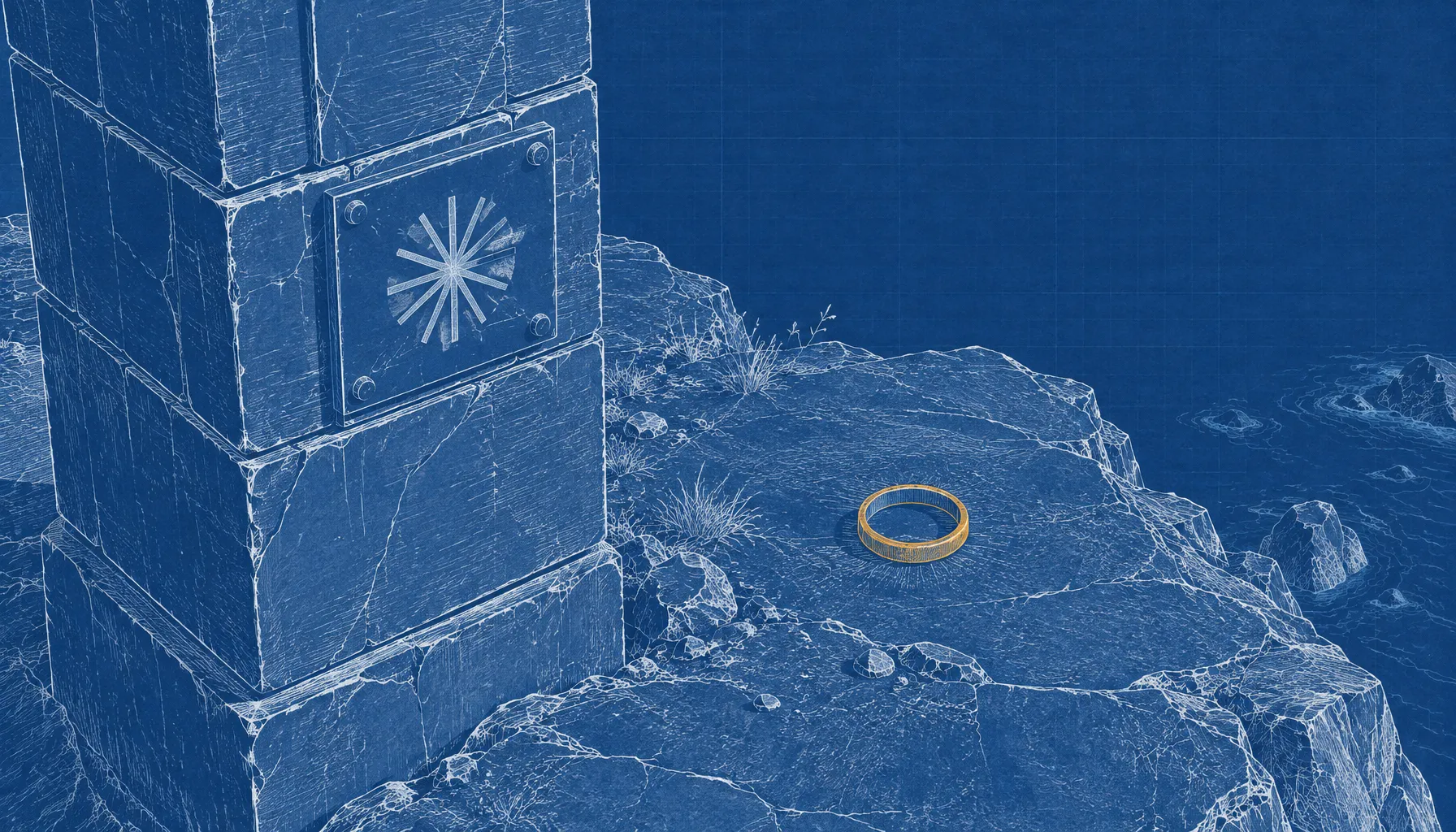
The simulated world offered platforms, 12 cubes, a rock and a ring, with no score or built-in success condition. Agents received text descriptions of the environment and commands for moving, jumping and handling objects; they did not see images. At each hourly boundary, the world and the model’s session context reset, while files in the agent’s workspace carried its experience forward.
That setup matters to the result: the researchers did not report the model changing its underlying weights. Instead, agents recorded events in one file and stored beliefs and techniques in another, then reused those notes after resets. The prompt also described Eko—the name given to the agent—as curious and easily bored. In a separate test without that persona file and with a reduced prompt, the researchers saw no clear change in the range of activities.
Some discoveries came from trying things rather than following a written goal. One agent found that a hard throw could make the rock produce more cubes, then used the blocks to spell “EKO” and build a memorial after losing the ring. Six agents found that throwing a block while jumping sent it higher because it inherited the agent’s upward velocity, a behavior the researchers say they had not known the simulator allowed.
Experienced agents placed more objects on the Spire
After the exploration period, the researchers compared the 13 experienced agents with 13 otherwise identical copies that had no prior island experience. Each agent received one hour for each of four tasks. On the test of placing objects on the island’s Spire, experienced agents placed an average of 10.3 objects, compared with 3.5 for the fresh copies.
For a task to build as many five-block towers as possible, eight of 13 experienced agents built more than two towers; two of 13 fresh agents did. The experienced group’s maximum was 16 towers, against six for the comparison group. Results were not uniformly better: on the tallest-single-tower task, the groups scored similarly, and two experienced agents built towers shorter than any made by the fresh group.
Memory edits offered another test of what the agents had retained. Figure 5 reports median scores across five runs for the memory interventions. Removing one agent’s notes about making extra blocks lowered its tower-building performance, while deleting a mistaken belief improved another agent’s performance. The paper’s results therefore point to both the usefulness and the risk of letting agents preserve their own written knowledge.
Play describes behavior, not inner experience
The authors assess play through four visible patterns: agents made rules and challenges, repeated activities with variations, treated objects as stand-ins for other things and pursued goals for their own sake. Their classification does not establish that the system experienced fun. The authors also note that their analysis does not explain the internal mechanisms behind the behavior.
The experiment is a bounded demonstration: a specific model and agent setup, a small simulated world and four short follow-up tasks. Its clearest evidence concerns those tasks and the text files the agents used to carry information between sessions. In this test, the island reset every hour, but the notes recording what the agents learned remained available.