The Pulse
Mistral Opens Munich Hub for Physics and Industrial AI
Mistral opened a Munich hub on September 28, 2026, for research in Physics AI and industrial AI. The company says its teams will work with BMW, Siemens Energy and Technical University of Munich on engineering applications.
AI.info Team · Written with AI · fact-checked ·
Days of simulation, seconds of ambition
Industrial engineers can wait days for some physics simulations. Mistral’s new Munich hub will work on making those calculations more useful in real time, opening a center for Physics AI and industrial AI on September 28, 2026.
The company is placing research teams alongside applied engineers who will work directly with enterprise partners. Its announcement names BMW for crash simulations and engineering AI, and Siemens Energy for industrial AI applications. Mistral describes the effort as a bid to build a model for Physics AI in European heavy industry.
The gap between lengthy simulations and faster predictions is the central engineering challenge in Mistral’s pitch. Conventional calculations for fluid dynamics, material deformation, thermal behavior and mechanical stress can take days per run, the company says. Its Munich teams aim to apply AI to those problems, though the announcement does not give performance results or a timetable for delivering specific systems.
BMW, Siemens Energy and a Munich wind tunnel
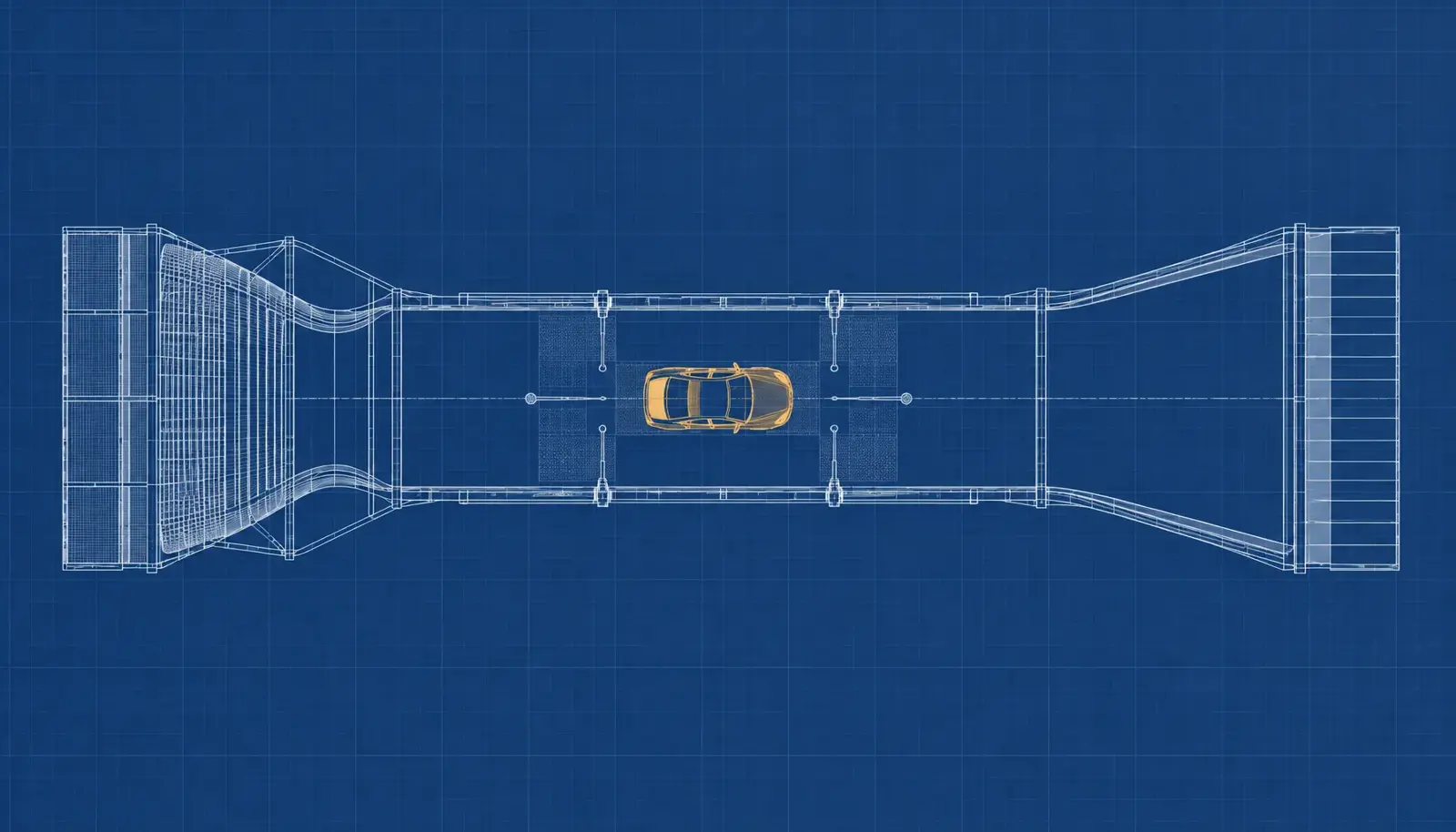
Mistral is also partnering with the Technical University of Munich. The research will use the university’s wind-tunnel facilities to develop digital twins for automotive aerodynamics, in collaboration with Professor Nikolaus A. Adams.
The project aims to combine real-time experimental sensor data with offline computational fluid dynamics simulations to produce aerodynamic predictions in real time. That links a physical test facility to the kind of model-based engineering work Mistral wants to expand in Munich. The announcement describes the research goal, but does not report a completed system or measured accuracy.
Munich is the company’s chosen base for its German industrial push. Mistral points to Bavaria’s manufacturing and semiconductor industries, nearby research institutions, and engineering workforce as reasons for locating the hub there. The company is recruiting in the region for research, engineering and applied AI roles.
Emmi AI supplies the physics expertise
The hub builds on Mistral’s acquisition of Emmi AI in May 2026. According to the announcement, more than 30 physicists, researchers and engineers joined Mistral through the deal. Emmi AI specialized in AI modelling for computational fluid dynamics, structural mechanics and multi-physics simulations.
Mistral frames those capabilities as a distinct layer alongside language models, enterprise deployment and compute infrastructure. Customers can run Mistral’s models on their own infrastructure and access the model weights, the company says; those are the company’s claims about its open-weight approach, not independent findings presented in the announcement.
“To secure Europe’s AI sovereignty, Mistral will build one gigawatt of European compute capacity by 2030.”
Mistral AI
The Munich hub gives that industrial strategy a local research and engineering base. It also puts the company’s claims about customer control alongside a concrete set of projects: crash simulations with BMW, industrial applications with Siemens Energy, and aerodynamic digital-twin research with TUM.
Local engineering, European ambitions
German Federal Minister for Digital Transformation and Government Modernisation Karsten Wildberger, quoted in the company’s announcement, called Mistral a powerful example of what Europe can achieve: developing advanced technology, turning it into a global success and taking responsibility at the same time. Bavarian State Minister Florian Herrmann linked Munich’s selection to technological sovereignty, calling the move a strong signal for the region’s position as a high-tech location.
For Mistral, the test will be whether its research can help industrial partners improve engineering workflows, not simply whether it can recruit a local team. The announcement sets out the projects and the broad objective, but supplies no customer results, simulation benchmarks or deployment dates. For now, its clearest commitments are the Munich research hub, the named partnerships and a target of one gigawatt of European compute capacity by 2030.