The Pulse
Report: Huawei Clients Turn to Smuggled HBM at $4,000 Each
Smugglers are reportedly moving South Korean high-bandwidth memory into China by packaging it with low-cost server processors, then recovering the memory after shipment. The chips are sold through several channels, including to Huawei custo
AI.info Team · Written with AI · fact-checked ·
A single HBM3E unit in China now sells for about $4,000, up from several hundred dollars a year ago, a broker told The Information. The outlet’s report describes a smuggling route that moves memory made by Samsung Electronics and SK hynix to Chinese buyers, including customers of Huawei.
Low-cost processors disguise the memory packages
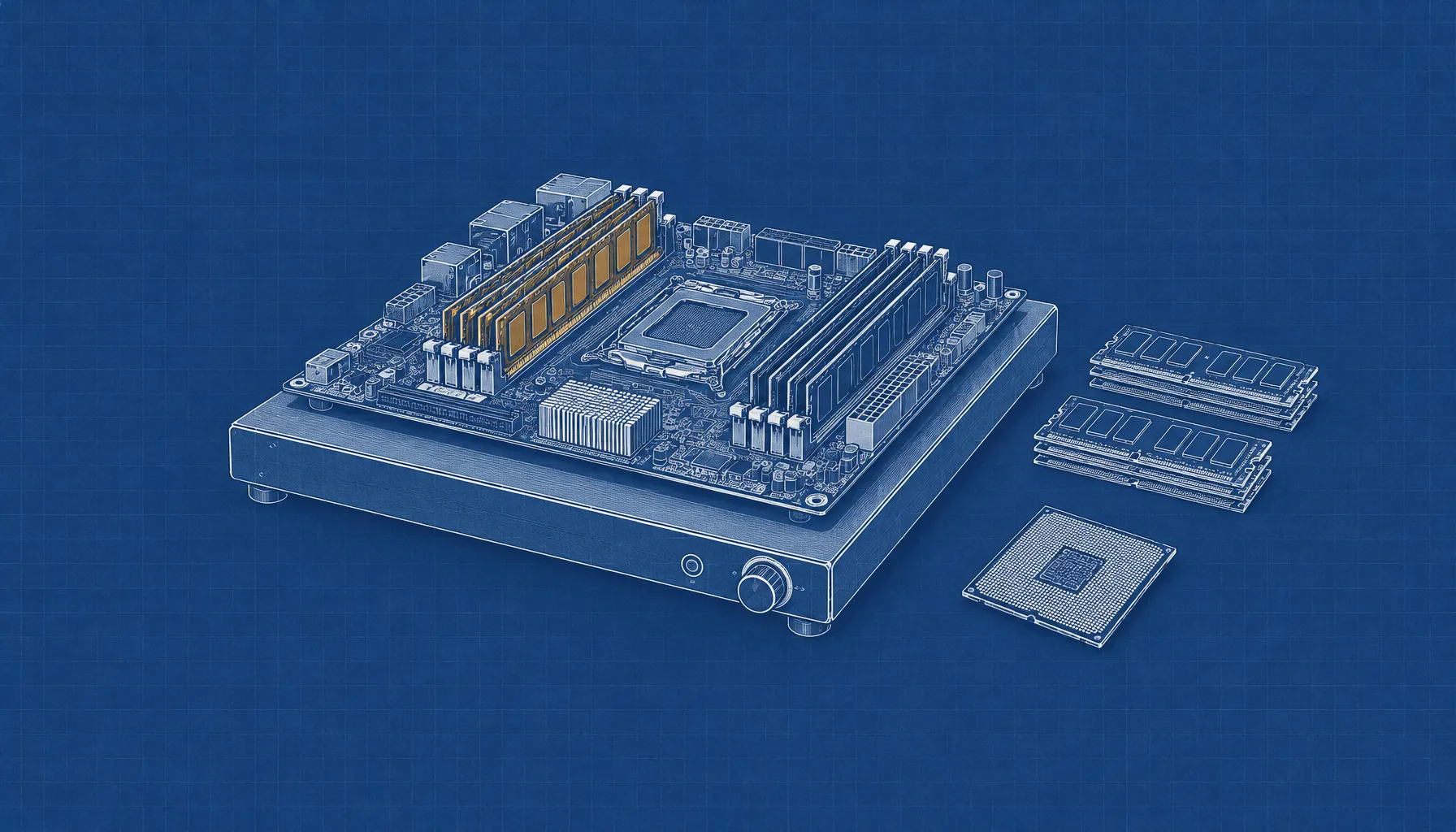
The reported route pairs HBM with low-cost server processors on a board before the package is shipped to China. The Information says U.S. export rules assess a package’s computing capability based on its server processor rather than its memory. That classification can allow a package to avoid restrictions that apply to HBM shipped on its own.
After the packages arrive, technicians heat them until the solder softens, then pry off the HBM and discard the processors. The work is delicate: if the memory is heated too quickly or for too long, a stack can warp or crack. The Information describes the extraction process as having a high failure rate, leaving smugglers at risk of losing the valuable component.
The operation depends on getting the packages out of South Korea and into China. The Information reports that processors and memory are attached to a silicon plate by specialist packagers in Taiwan, South Korea and Southeast Asia. Packages are then declared under the processor’s customs classification and shipped to Hong Kong, with some carried across the mainland border by couriers, in cars or in commuters’ bags.
Huawei customers seek memory for AI chips
The HBM recovered through the route often ends up with Huawei’s customers, according to the reporting. Two people familiar with Huawei’s supply chain told The Information that the company recently told some clients a large share of its next flagship AI chip, the Ascend 960DT, would use HBM produced by Samsung and SK hynix.
The Information reported that U.S. rules prevent Huawei from buying the memory directly from the South Korean companies, and that Huawei has told some customers ordering its AI chips to source the HBM themselves. China’s domestic HBM production is limited. Chosunbiz reports that Samsung and SK hynix together hold more than 80% of the global HBM market, while the broader supply is tight worldwide.
The shortage affects more than Huawei’s procurement. The Information says people in China’s chip industry see access to HBM as a constraint on the country’s AI ambitions. The memory’s ability to move data quickly helps AI processors perform; without enough HBM, Chinese firms have fewer options for assembling local AI systems and training large models.
Smugglers draw on several supply channels
Packages containing newly sourced Korean memory are not the only supply route described in the report. A Shenzhen broker told The Information that memory sold in China also comes from salvaged graphics processors, unused inventory and distributors holding stock. Salvaged memory is often an older generation and may have spent an unknown amount of time in use. Unused inventory can reach the market when chip designers cancel or delay projects and no longer need memory they ordered in advance. Distributors may hold limited supplies in expectation of higher prices.
The broker described the recent price increase this way:
“A year ago a single HBM3E unit changed hands in China for several hundred dollars.”
—A Shenzhen-based chip broker in his 20s, quoted by The Information
An AI chip package requires six to eight HBM units, according to the reporting. At roughly $4,000 per unit, the memory alone costs $24,000 to $32,000, before the AI chip, server or data-center power costs are included.
One smuggler told The Information that more operators are using the same route, increasing the risk that regulators will notice it. South Korea’s customs service reported that it had caught 770 billion won, or about $560 million, in trade-security violations through May; a third involved strategic goods shipped without permits or under false declarations, a category that includes advanced chips.