The Pulse
Hedra says Model Factory will train and deploy models for real-world uses
Hedra says its Model Factory platform combines post-training, GPU capacity and inference services for teams building models for physical-world applications. The company also reported faster image editing and results from tests involving vid
AI.info Team · Written with AI · fact-checked ·
A platform for model development
Hedra said it launched Model Factory on Nov. 10 as an autonomous post-training and inference platform for building models for real-world applications. The company described the service as combining flexible GPU sandboxes, post-training by its researchers working with autonomous AI agents, low-latency deployment and a data flywheel intended to improve models after they are deployed.
“Recursive self-improvement is already changing how frontier models get built,” said Michael Lingelbach, founder and CEO of Hedra. “The next step is the real world, where the data is video, sensors and simulation. Hedra Model Factory gives robotics, manufacturing, biology and defense teams the infrastructure to post-train, deploy and keep improving their own models.” Hedra said its revenue grew 15x over the past 12 months.
Training, deployment and ongoing updates
Hedra said customers can bring their own data and simulation engines. Its researchers help build reinforcement-learning environments and datasets, and can work with customer teams using tools such as vision-language models to caption and score data or provide feedback during online reinforcement learning. For companies without a research lab, Hedra said its researchers can also set up data capture, evaluations and the training-to-serving loop.
The company said teams can use its GPU sandboxes to scale training without long-term GPU commitments. Deployed models can run on low-latency compute on premises or at Hedra’s nearest partner data center; customers can also serve an existing model on Hedra’s inference engine. Hedra said its researchers review production performance, retrain models and release only versions that pass a customer’s evaluations.
Results reported by Hedra
Hedra said it retrained its H3 model for physical consistency. The model scored 34.9 on Google DeepMind’s Physics-IQ benchmark, compared with 30.3 for H3 Max, with comparable visual quality, according to the company. Hedra also said an autonomously distilled version rendered a five-second clip in under three seconds on AMD MI355X GPUs.
In an image-editing test, Hedra said it cut the time for 2K edits from about 22 seconds to 3.6 seconds on the same four AMD Instinct MI355X GPUs. The company described the result as roughly six times faster, achieved in under a week. Its baseline used the original bf16 model at 30 sampling steps; the faster version used a distilled 14-step model. Hedra said that model runs on MI355X at the company.
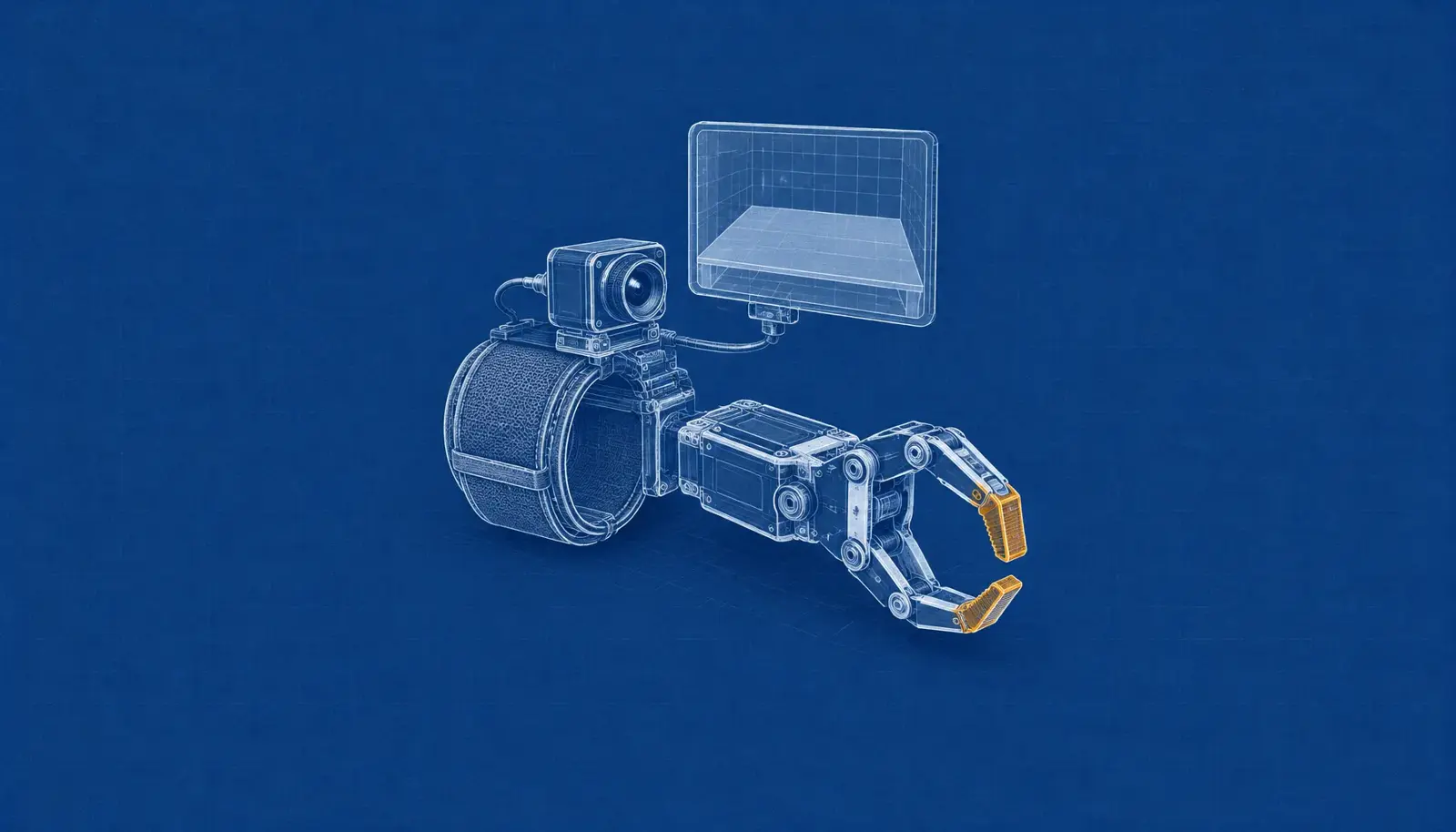
In a separate simulation study, Hedra fitted a robot running a trained policy with a new gripper. The company said task success recovered from near zero to near 100% without retraining by matching the new gripper’s reach and grasp point in the wrist-camera view.
Availability
Hedra said Model Factory was available starting Nov. 10 at hedra.com. Teams can work with its researchers to build and deploy a custom model, begin with GPU sandbox capacity without long-term commitments, or serve an existing model through Hedra’s inference engine. Hedra describes itself as an a16z-backed research company building models and infrastructure for multimodal and physical AI.