The Pulse
H Company launches Holo4 agents for screens, code and APIs
H Company says its Holo4 models can work across screens, code and software tools, with OSWorld 2.0 scores of 61.7% and 30.9%. The trajectories behind its benchmark scores are already public to replay and download, and the two models’ weight
AI.info Team · Written with AI · fact-checked ·
H Company says its new Holo4 agents can work across screens, code and software tools, but its own benchmark results show a wide gap between the two models in the family. The 27-billion-parameter model scored 61.7% on OSWorld 2.0; the 35B-A3B model scored 30.9%. Anthropic’s Opus 5.5 scored 81.8% in the comparison H published.
One model, several ways to use software
Released Monday, Holo4 comes in a dense 27B version and a 35B-A3B mixture-of-experts version, fine-tuned from Alibaba’s Qwen3.8 27B and Qwen3.6 35B-A3B respectively. H Company says both can click and type through a graphical interface, write and run code, or call tools through MCP and APIs. The models target desktop, web and Android environments, as well as code sandboxes and business APIs.
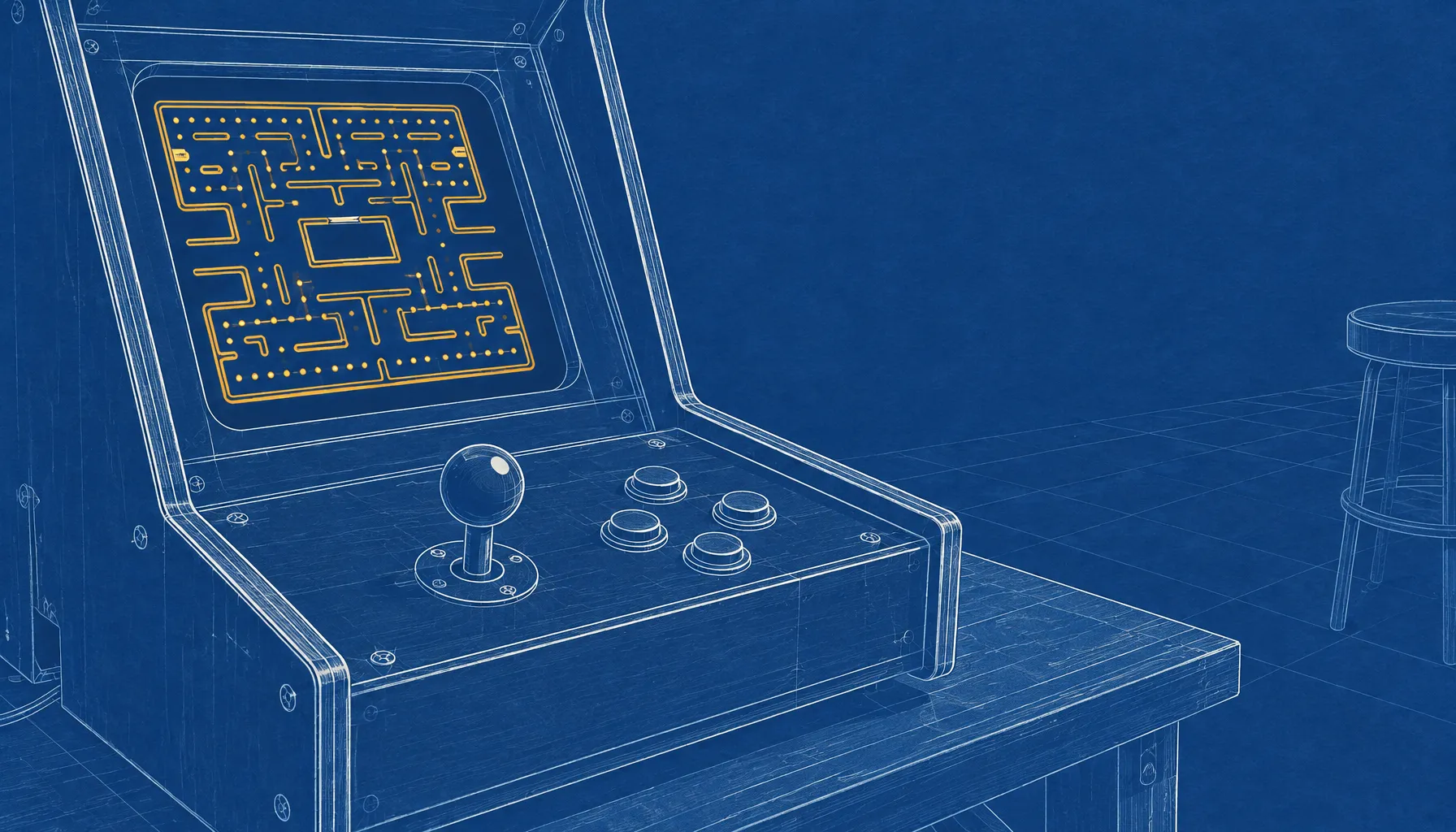
H Company presents that mix as a way to handle tasks that cross interfaces, rather than choosing a separate model for screen control and tool use. Its demonstrations set Holo4 27B against Qwen3.8 27B, its base model, with the same prompt and harness for both. In FreeCAD, Holo4 27B builds an Eiffel Tower model to a written specification in 84 calls and 1.3 million tokens, against 60 calls and 1.0 million tokens for the base model. In Godot, it builds a Pac-Man-style game that has to play itself, unattended: Holo4 27B took 68 calls and 2.4 million tokens, Qwen3.8 27B 197 calls and 11.4 million tokens.
Benchmark results depend on the test
The OSWorld 2.0 result is not the same as Holo4’s result on the original OSWorld benchmark: H Company reports 85.2% for Holo4 27B on OSWorld, compared with 61.7% on OSWorld 2.0. On that newer test, the company lists Opus 5.5 at 81.8% and says its figure comes from Anthropic’s harness at maximum effort. H Company cautions that public competitor results use different harnesses and effort settings, so the scores are not a direct like-for-like comparison.
The reported OSWorld 2.0 costs also differ: H Company puts a Holo4 27B task at $1.22 and an Opus 5.5 task at $8.48. Those estimates use H’s API rates for Holo4 and provider charts for the competitor figures, according to the company’s notes. The 35B-A3B model, which activates 3 billion of its 35 billion parameters, costs $0.61 per OSWorld 2.0 task at H’s rates.
Training on 10,000 generated tasks
H Company says its Agentic Task Factory has produced about 10,000 tasks across web apps, MCP servers and desktop environments. The generated tasks include setups where the same application state is available through both a graphical interface and MCP tools. The company says it trained Holo4 with supervised fine-tuning on 127 billion tokens, followed by reinforcement learning on long-horizon tasks.
That process trained two specialized LoRA experts—one for desktop and web, another for terminal, MCP and API use—and merged them back into the fine-tuned model. H Company also rebuilt the agent harness, which manages actions and context across long runs, adding a memory that can keep track of hundreds of steps and a shell on the desktop machine. The runs behind the published scores are already public:
“We open-source every trajectory behind our scores on public benchmarks: replay each step at trajectories.hcompany.ai or download them from Hugging Face.”
H Company, Holo4 launch announcement
Open weights, but not the same license
H Company makes the weights available in BF16, FP8, NVFP4 and 4-bit GGUF formats, alongside access through its hosted API. The distinction between the model licenses matters for developers: Holo4-35B-A3B carries an Apache 2.0 license, while Holo4-27B is marked CC BY-NC 4.0, a non-commercial license. The release therefore offers a commercially permissive option in the 35B-A3B model, but not in both Holo4 checkpoints. H says optimized DSpark drafter checkpoints, meant to speed up inference, will follow in the coming days.