The Pulse
Google Releases Gemma 4 for Phones, Raspberry Pis and PCs
Google has released Gemma 4, an open model family designed for local reasoning, agentic workflows and offline multimodal AI. The models range from edge-focused E2B and E4B versions to 26B and 31B systems for consumer GPUs and developer work
AI.info Team ·
“Today, we are introducing Gemma 4 — our most intelligent open models to date.”
Clement Farabet, VP of Research, Google DeepMind, and Olivier Lacombe, Director Product Management, Google DeepMind
Google released Gemma 4 on April 2, 2026, positioning the model family as a set of open systems for advanced reasoning, agentic workflows and local deployment. The release covers hardware ranging from Android phones and Raspberry Pi computers to consumer GPUs, developer workstations and cloud infrastructure.
Gemma 4 is available under the Apache 2.0 license. Google says the models can handle multi-step planning, function calling, structured JSON output, offline code generation, image and video understanding, and audio input on its two smallest variants.
Four Gemma 4 Models Target Two Hardware Classes
Google is releasing Gemma 4 in four sizes: E2B, E4B, 26B and 31B. The E2B and E4B models use effective 2-billion- and 4-billion-parameter footprints during inference, while the 26B model is a mixture-of-experts system and the 31B model uses a dense architecture.
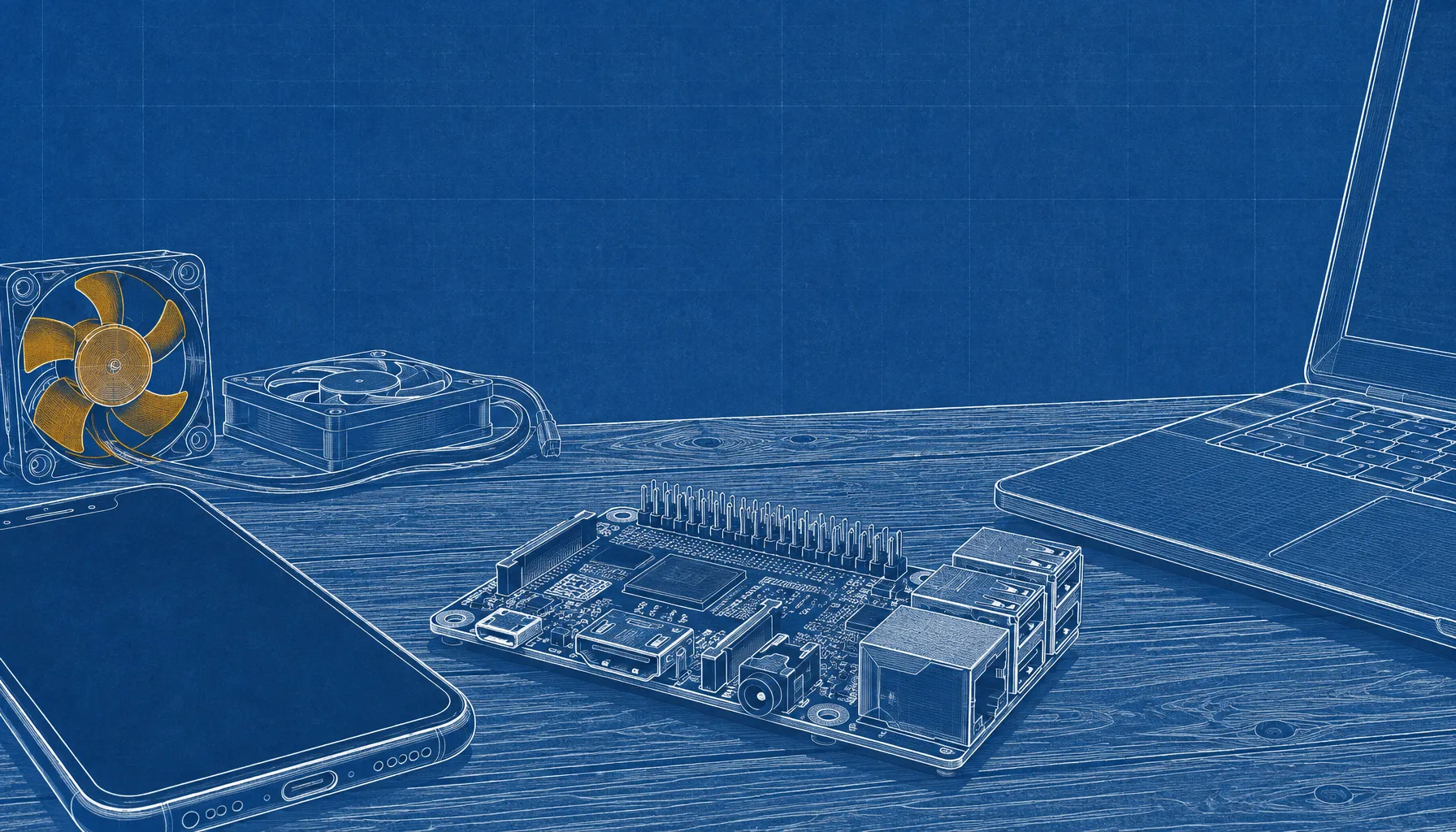
The E2B and E4B variants are built for mobile and edge hardware. Google says they support audio and vision processing, run completely offline and deliver near-zero-latency inference on devices such as phones, Raspberry Pi systems and NVIDIA Jetson Orin Nano computers. Their edge-focused context window reaches 128,000 tokens.
The larger models target laptops, workstations and consumer graphics cards. Gemma 4 26B activates only 3.8 billion of its total parameters during inference, a design intended to reduce latency. The 31B and 26B models support context windows of up to 256,000 tokens and are aimed at coding assistants, development tools and autonomous software agents.
Google Ties Gemma 4 to Gemini 3 Research
Google says Gemma 4 was built from the same research and technology as Gemini 3. The company describes the family as its most capable open models and emphasizes intelligence per parameter rather than total model size.
In results posted by Google from Arena AI’s text leaderboard as of April 1, the 31B model ranked third among open models and the 26B model ranked sixth. Google also says the two models outperformed systems 20 times their size in that comparison. Those figures are company-reported benchmark claims, not an independent assessment of every local deployment.
The models natively process more than 140 languages. Google also lists support for variable-resolution images and video, chart understanding, optical character recognition, tool use and native system instructions. Audio input is available on E2B and E4B, giving developers a smaller route to speech-enabled applications that do not require a cloud connection.
Agentic Workflows Move Onto the Device
Gemma 4 is designed to do more than generate chat responses. Its native function-calling and structured-output features allow developers to connect a model to tools and application programming interfaces, letting it plan a task and execute actions through software integrations.
Google’s edge documentation presents the smaller models as a foundation for local agents that can operate without sending prompts or media to a remote service. The company lists uses including offline code generation, visual analysis and in-app agent experiences across mobile, desktop and other edge devices.
Google is making the models available through Google AI Edge Gallery, Google AI Studio, Hugging Face, Kaggle and Ollama. The launch also includes support for tools such as LiteRT-LM, llama.cpp, MLX, vLLM, LM Studio, Keras, Docker and NVIDIA’s deployment software.
Apache 2.0 Keeps Commercial Deployment Open
The Apache 2.0 license gives developers permission to modify, fine-tune and distribute Gemma 4 within the terms of that license. Google presents the arrangement as a way to give organizations control over their data, infrastructure and model deployments, including systems operated on premises rather than through a hosted API.
Google has continued expanding the family since the April launch. A 12B model introduced on June 3 was designed for laptops and uses a unified multimodal architecture with native audio input. Google said that model can run locally with 16GB of memory when used with its supported software stack.
On June 5, Google added quantization-aware-training checkpoints aimed at reducing memory demands on mobile hardware and consumer GPUs. The company said its mobile format brought the memory footprint of Gemma 4 E2B down to 1GB, while preserving more of the model’s quality than standard post-training compression.
Downloads Show Demand for Local Models
Google said the broader Gemma family had passed 400 million downloads by the time of the Gemma 4 launch. In an Alphabet earnings update published later in 2026, CEO Sundar Pichai said Gemma 4 had exceeded 300 million downloads since its April release.
That adoption figure does not establish how many installations actively run on phones or other edge devices. It does show the distribution scale Google is pursuing: a model family available from a local development laptop to a mobile application, with the same open-weight foundation also deployable through Google’s cloud services.
Gemma 4’s release gives developers a choice between cloud inference and models that can operate on hardware they control. The practical dividing line is now model size: E2B and E4B address battery- and memory-constrained devices, while 12B, 26B and 31B versions target laptops, GPUs and workstations where longer context and deeper reasoning matter more.