The Pulse
Foundry Robotics Raises $100 Million for Emeryville Factory
Foundry Robotics raised an oversubscribed $100 million Series A led by Marlinspike Partners. The Emeryville startup says it will use the funding to expand its 130,000-square-foot factory and deploy AI-powered robotic assembly cells.
AI.info Team · Written with AI · fact-checked ·
“We believe the factories that revive America’s manufacturing sector will need to be rethought from the ground up rather than retrofitting one aspect in an existing factory,”
Adarsh Kulkarni, founder and CEO of Foundry Robotics
Foundry Robotics announced an oversubscribed $100 million Series A on October 28, led by Marlinspike Partners. The Emeryville, California, startup plans to use the capital to build out its factory, expand deployment of AI models on the factory floor and grow its robotics research, engineering and operations teams.
A 130,000-square-foot factory in Emeryville
Foundry says its manufacturing footprint has grown twentyfold to a 130,000-square-foot facility. The company builds and operates factories for complex assembly, combining robotic work cells with manufacturing staff. Its customers are in defense and commercial markets, particularly in areas where production of complex electromechanical products is constrained.
The announcement lists drones, autonomous-vehicle subassemblies, wire harnesses, underwater vehicles, ground robots, rugged computers, data-center and telecom infrastructure, and satellites among potential applications. It does not provide production volumes for those categories or a timetable for reaching a specified output at the Emeryville site.
Robotic cells, with people on the floor
Foundry’s manufacturing-as-a-service model puts the factory under the company’s ownership and operation, rather than asking each customer to install a dedicated production line. The company says customers can move from design to production in weeks without investing in new lines or expensive retooling.
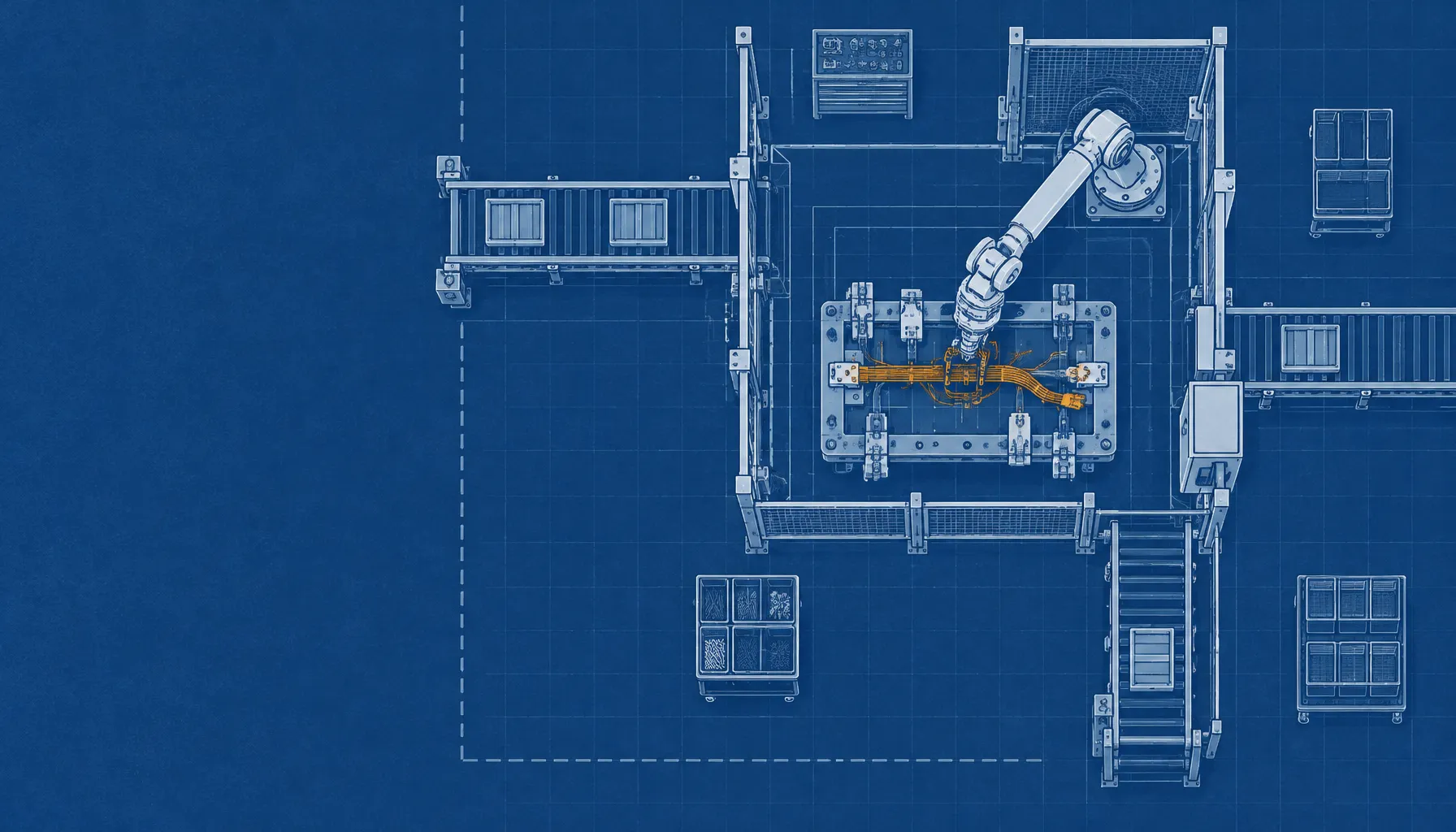
Foundry trains AI models on assembly tasks and deploys them across a grid of robotic cells. Its FoundryOS software links the robots, factory floor and cloud; the company says each production run adds data that can improve the models and help cells adapt to other products. Foundry also describes its expanded team as including robotics researchers, AI and software engineers, and experienced manufacturing specialists working directly in its facilities.
The company’s description of “autonomous” production does not mean the factory operates without people: Foundry says manufacturing experts work alongside its robotics and engineering teams. Its release presents the model as flexible capacity for varied products, rather than a single-purpose line designed around one item.
Investors back domestic assembly capacity
Marlinspike Partners led the round. Khosla Ventures and Red Glass Ventures, both early backers, participated, as did new investors SE Ventures, Wing VC and Axiom Ventures. Existing investors Hanabi and Zero Shot Fund also joined.
“Production capacity is a national constraint on getting unmanned systems to the fleet,” said Duane Fotheringham, president of HII Unmanned Systems. The comment reflects the defense sector’s interest in domestic production, while Foundry’s release does not disclose the value of its customer contracts or the share of factory work tied to defense.
Foundry is betting that shared robotic cells and manufacturing expertise can serve customers whose designs change faster than conventional production lines can be reconfigured. The company says a cell that assembles a drone could later adapt to a satellite component; the operational test will be whether it can deliver repeatable quality and production at useful scale across those different products.