The Pulse
Fleet says its Tau model cut copper-grade estimate error at a Chile project
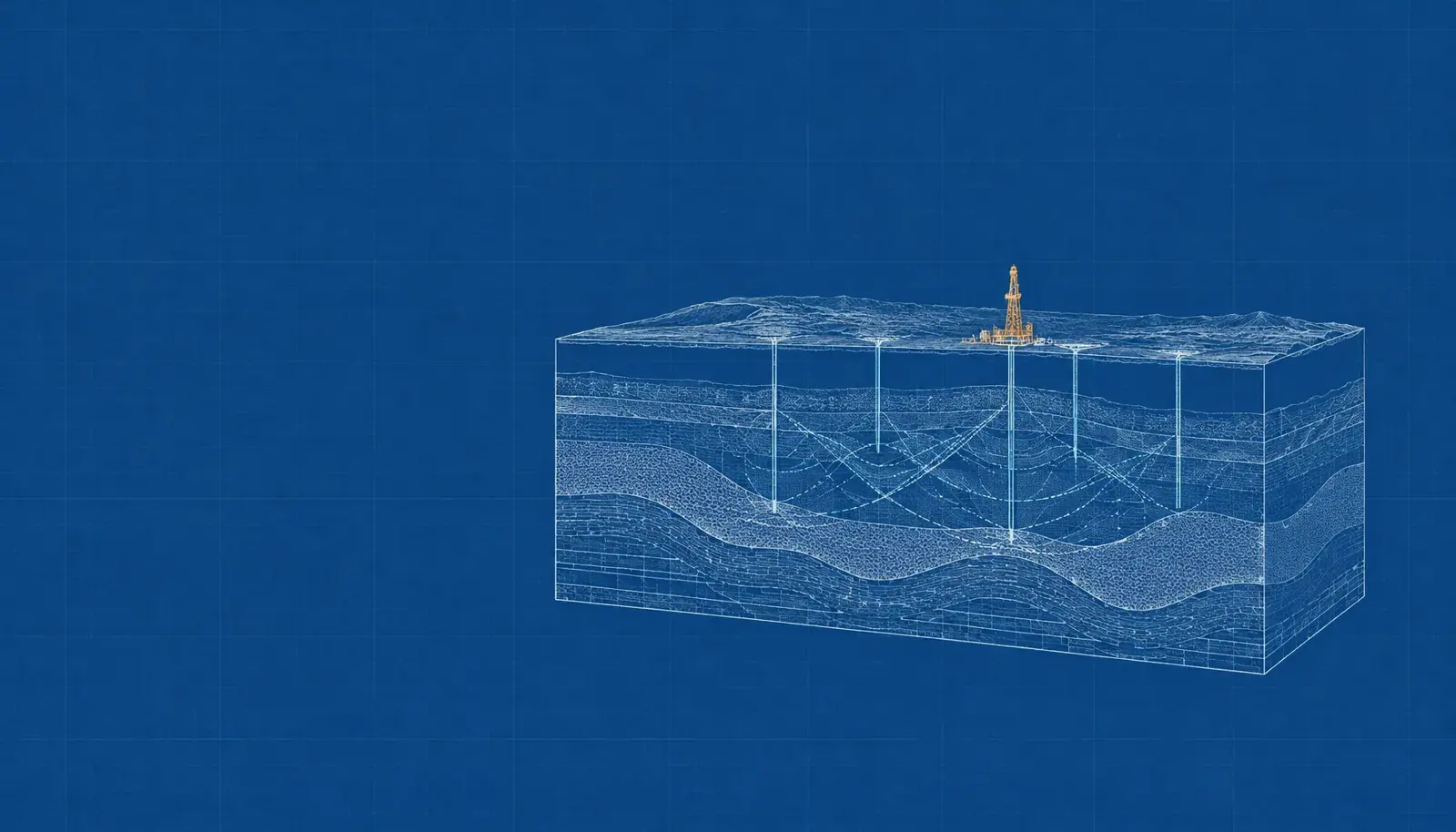
Fleet Space Technologies says its Tau 3.8 model estimated copper grades with 38% less error than a conventional method at ATEX Resources’ Valeriano project. The model was trained on ten million simulated geological environments and tested on drillholes withheld from it.
A lower-error estimate
Fleet Space Technologies says its Tau 3.8 model estimated copper grades at ATEX Resources’ Valeriano copper-gold project in Chile with 38% less error than a conventional geostatistical estimate. The comparison used drillholes withheld from the model and a kriging estimate built from the same drilling, according to Fleet.
Source prnewswire.com
For the deepest step-out holes, Fleet reported that Tau’s error was up to 67% lower. The conventional estimate was an independent exercise and was not related to the 2025 SRK Mineral Resource Estimate.
How Tau works
Fleet said it launched Tau 3.8 in the United States and Canada on Nov. 10 as an AI model for mineral systems. Tau was trained on ten million synthetic geological worlds and combines its 3D seismic data with drilling, geology, geophysics and mineralogy information.
The model reconstructs underground geology, ranks targets for resource expansion and identifies which additional measurement could most reduce uncertainty. At Valeriano, Tau combined ambient noise tomography and magnetotelluric surveys with Comet and machine learning.
The system is intended to help exploration teams assess where copper grades may continue and where they may not, and to choose targets for further drilling. Fleet said drilling is typically the largest cost in mineral exploration and a single deep diamond drillhole can cost hundreds of thousands of dollars.
Simulated geology, real measurements
Fleet describes world models as AI systems that learn how the physical world behaves, rather than predicting the next word. Its approach simulates geological environments and models what seismic sensors and drillholes would detect, so Tau can infer geology from partial measurements.
Fleet Chief Scientific Officer Gerrit Olivier said mineral systems are three-dimensional, buried and observed through data that is sparse and costly to collect. Fleet argues that seismic measurements help distinguish among possible underground models by constraining the depth, geometry, orientation and continuity of structures between drillholes.
As new information arrives, Tau updates its picture of the subsurface and recommends another measurement, according to Fleet. The company calls this approach Agentic Geoscience and says it is intended to give geologists a quantified view of uncertainty; Fleet says the model does not remove the geologist from the decision.
Development and use
Tau was developed by specialists in seismology, geology, geophysics, applied mathematics and machine learning, including geoscientists with more than 200 years of combined experience across more than 400 programs. Fleet also said it is working with Nvidia on computing infrastructure for future high-resolution subsurface models.
Fleet said its technology is being used in projects from Pakistan to Canada’s Athabasca Basin. The projects it listed include Barrick’s Reko Diq copper-gold project in Pakistan, Fermi Exploration’s Perch River project in the Athabasca Basin and Alkane Resources’ Boda-Kaiser copper-gold project in New South Wales.
Source
Related stories
- NVIDIA details 2B-parameter model for onboard AV reasoning
- Automattic launches Spacefast for agent-built apps
- Google says Gemini Robotics 2.5 raises task success 30% to 100% over earlier baselines
- Google Research presents Language Explorer for global language data
- Meta details TLX, a Triton extension for GPU orchestration