The Pulse
Einride Adapts Nvidia Hyperion for Heavy-Duty Autonomous Trucks
Einride is working with Nvidia to adapt the DRIVE Hyperion platform for heavy-duty autonomous trucking. The Swedish freight technology company will use Nvidia Halos, Cosmos and Blackwell infrastructure as it expands a fleet expected to reac
AI.info Team ·
“We have the customers, the operational experience and the technology. Building the next generation of the Einride Driver on the NVIDIA Hyperion platform, will enable us to scale autonomous deployment across a freight network that's already serving customers today.”
Henrik Green, chief technology officer, Einride
Einride Takes Hyperion Into Heavy-Duty Freight
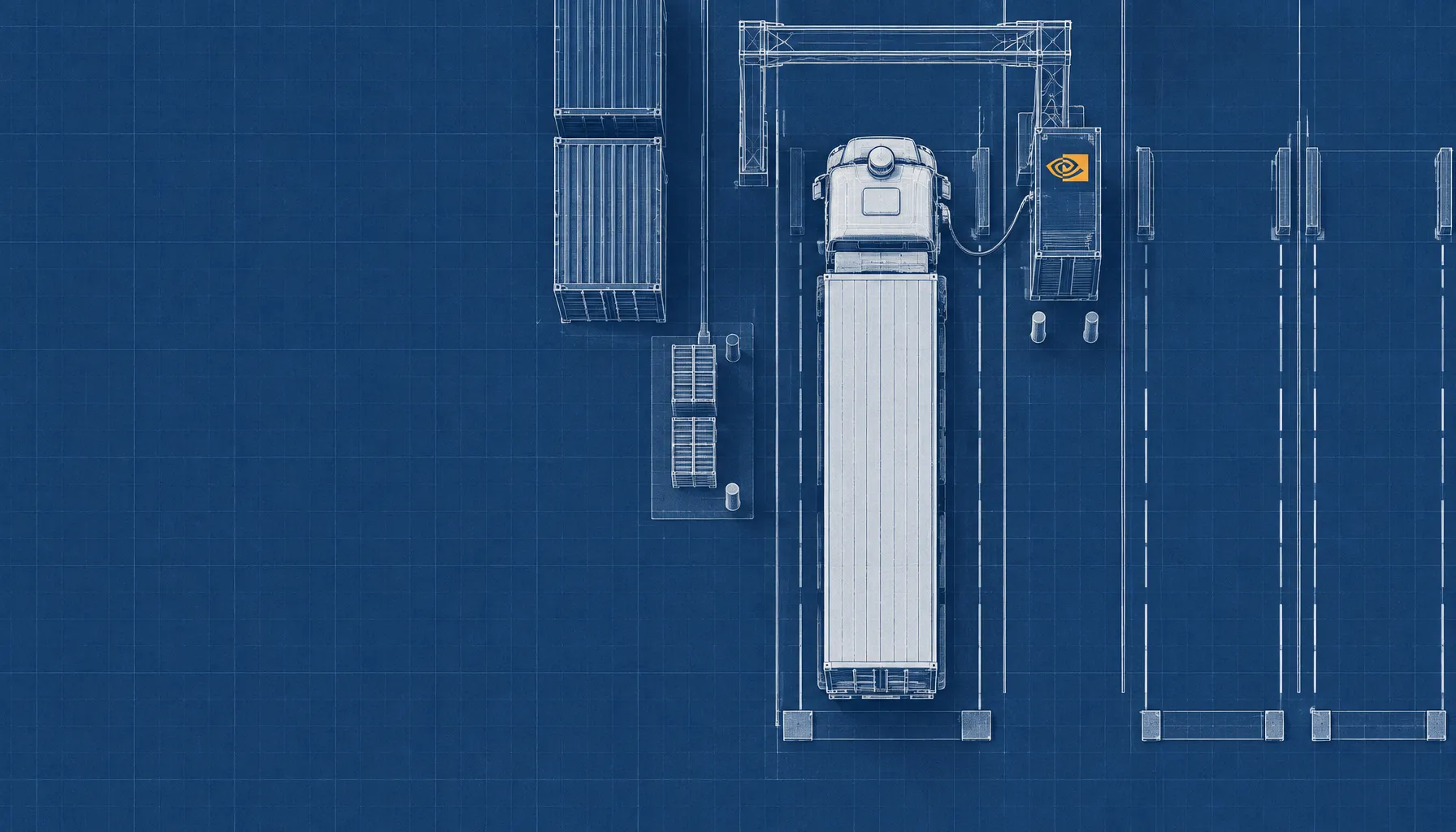
Einride is entering a strategic collaboration with Nvidia to adapt the DRIVE Hyperion platform for autonomous heavy-duty trucks, the Swedish freight technology company announced on September 21, 2026. The companies will extend Hyperion’s compute, sensor, software and safety architecture to meet the demands of highway and suburban freight operations.
Einride plans to build the next generation of its Einride Driver autonomous-driving system on the Nvidia platform. The arrangement gives Nvidia a role in the underlying vehicle compute and AI development tools while Einride continues to design, build and operate its autonomous-driving system, including safety validation, regulatory approval and customer deployments.
From Customer Routes to a Larger Autonomous Fleet
Einride says it already operates hundreds of electric trucks for major shippers across the United States, Europe and the Middle East. Some autonomous trucks are already operating in contracted customer deployments, giving the company an active freight network on which to develop and expand its driverless systems.
The company expects that vehicle footprint to grow to between 1,500 and 2,000 vehicles by 2028, based on customer demand captured on its platform. Einride says about 80% of that demand is suitable for automation over the medium term. The announcement does not specify how many of those vehicles will use the adapted Hyperion architecture or provide a production timetable for the new system.
Halos, Cosmos and Blackwell Form the Development Stack
Hyperion is described in the announcement as a production-ready compute and sensor reference architecture for Level 4 autonomy. Einride will integrate it with Nvidia Halos, the company’s safety system, to support autonomous freight operations designed for production use.
For model development, Einride intends to deploy Nvidia Blackwell architecture at scale with an Nvidia Exemplar Cloud partner. The company will use that infrastructure to train, test and refine its own autonomous-driving models rather than replace its driving stack with a Nvidia-built system.
Einride is also using Nvidia Cosmos to search and curate camera data for complex edge cases. The system can augment real-world material with photorealistic synthetic scenarios, giving the company additional data for AI training and validation.
Nvidia Supplies the Foundation, Einride Keeps the Vehicle System
The division of responsibilities is central to the deal. Einride brings its freight customers, operational experience and autonomous-driving software, while Nvidia supplies the compute platform and development tools beneath that system.
“Autonomous trucking represents one of the clearest opportunities to improve the safety and efficiency of global freight,” said Rishi Dhall, Nvidia’s vice president of automotive. Dhall said the combination of Hyperion, Halos, Cosmos and Blackwell infrastructure would help Einride develop and validate its technology and expand deployments across its freight network.
A Partnership Built Around Deployment, Not a Prototype
Einride’s announcement places the collaboration inside an operating freight business rather than a standalone research program. The company is pairing Nvidia’s vehicle architecture and training infrastructure with routes, trucks and customer contracts already in place, while its recent fleet plans set a concrete target of up to 2,000 vehicles by 2028.
The immediate test will be whether Hyperion can be adapted to the heavier sensors, compute requirements, safety cases and operating conditions of freight vehicles without slowing Einride’s existing customer deployments. For now, the agreement establishes the technical foundation and development plan; it does not announce a specific truck model, launch date or named cloud provider.