The Pulse
Dream Raises $17 Million to Design Buildings With AI
Dream has emerged from stealth with $17 million in seed funding to develop AI models for building design and engineering. The company says its product is being used on 10 active projects in Texas and California.
AI.info Team · Written with AI · fact-checked ·
“We’ve gone from dial-up internet to superintelligent AI, but our ability to build the physical world around us has actually decreased.”
Arjun Mathur, Dream co-founder
Dream wants to design the building, not just picture it
Dream emerged from stealth on October 29 with $17 million in seed funding led by Andreessen Horowitz. SV Angel, XYZ and Zigg Capital also participated, according to TechCrunch. The startup is developing what it calls “built world models” to automate design and engineering for buildings, taking aim at established tools such as Autodesk’s AutoCAD and Revit.
Founders Andy Elder and Arjun Mathur studied computer science at Stanford and spent a decade at Palantir before starting Dream. Elder led product design for a team of 800 building software for U.S. defense and intelligence agencies; Mathur was a senior vice president in Palantir’s commercial practice. Neither had a direct background in architecture, TechCrunch reported.
More than 100 million square feet of permit data
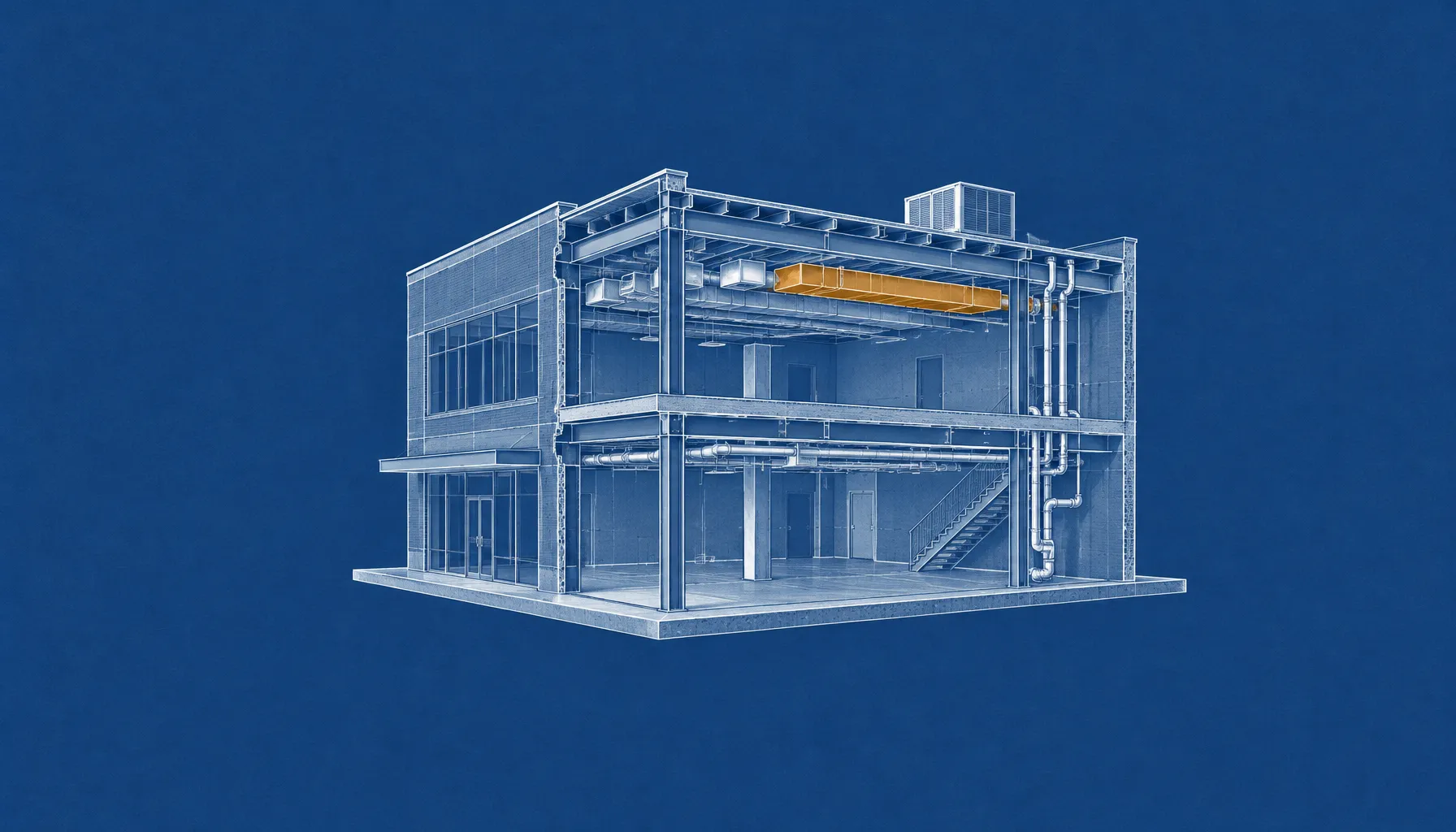
Dream says its model trains on data from permit archives covering more than 100 million square feet of buildings across the United States. The company’s pitch is that the model accounts for structure and building systems—not only a building’s visible shape. Mathur has described conventional architectural work as drawing designs part by part in legacy software, where, he said, “AI really plays no role in that equation.”
Co-founder Elder told TechCrunch, “Our model actually understands what’s within those walls. What materials are used, what the beams are made of, and how much weight they can support.” Dream calls this approach “structural cognition,” referring to designs that incorporate elements such as plumbing and HVAC alongside structural components. The company says its models reason about geometry, constraints and how objects fit together in constructed spaces.
Ten projects are already active in Texas and California
Dream has begun selling its product to architecture, engineering and construction professionals and developers, who use it to conceptualize designs and estimate project costs, according to the founders. The platform is deployed on 10 active projects in Texas and California. Dream’s website says its commercial work can produce construction documents for general contractors, rather than only visual renderings, and that it serves as architect of record on projects in those two states.
The company’s announcement also describes a workflow that can generate and check design options against building codes and project constraints. That is a broader claim than producing a plausible image: a design must coordinate systems inside the building and translate into documents that can guide construction.
A crowded market and a demanding test
Dream enters a field where Motif, Snaptrude and Arcol are also working to update architecture and engineering software with AI. Elder and Mathur say Dream is distinct because its model can design whole buildings at once; that is the founders’ claim, not an independently established comparison. Kimberly Tan, a partner at Andreessen Horowitz, told TechCrunch, “I have not seen anybody take the technical approach.”
The $17 million gives Dream capital to develop and sell a system intended to cover far more than early-stage concept design. Its test is whether the model can consistently account for building structure, materials and mechanical systems well enough to support real projects. For now, the company points to 10 active builds in California and Texas as evidence that customers are putting the product to work.