The Pulse
Cornelis raises $205M to put compute inside AI networks
Cornelis Networks announces $205 million in funding and introduces Active Compute Fabric for AI and HPC systems. The architecture adds programmable compute to scale-up and scale-out networking, with Qualcomm joining the company at AI Infra
AI.info Team ·
About half of the GPU hours in a modeled 100,000-GPU system are spent waiting for data, according to Cornelis Networks. The Pennsylvania networking company says that idle capacity would represent roughly $1.68 billion in annual waste and 500 gigawatt-hours of power, based on its model.
Cornelis announced the estimate on September 14, 2026, as it introduced Active Compute Fabric, an architecture that adds in-fabric acceleration and programmable compute to scale-up and scale-out networks. The company also announced approximately $205 million in funding and a collaboration with Qualcomm Technologies focused on future rack-scale AI systems.
The figures are projections rather than measurements from a deployed 100,000-GPU installation. Cornelis says its estimate uses public workload data, a $4 GPU-hour cost, 8,400 operating hours per year and an assumption that roughly half of GPU time is unproductive.
Cornelis moves beyond data transport
AI clusters traditionally use networks to move data between processors, memory and storage. Cornelis argues that synchronization, congestion and collective operations can leave accelerators waiting even when the network advertises high bandwidth.
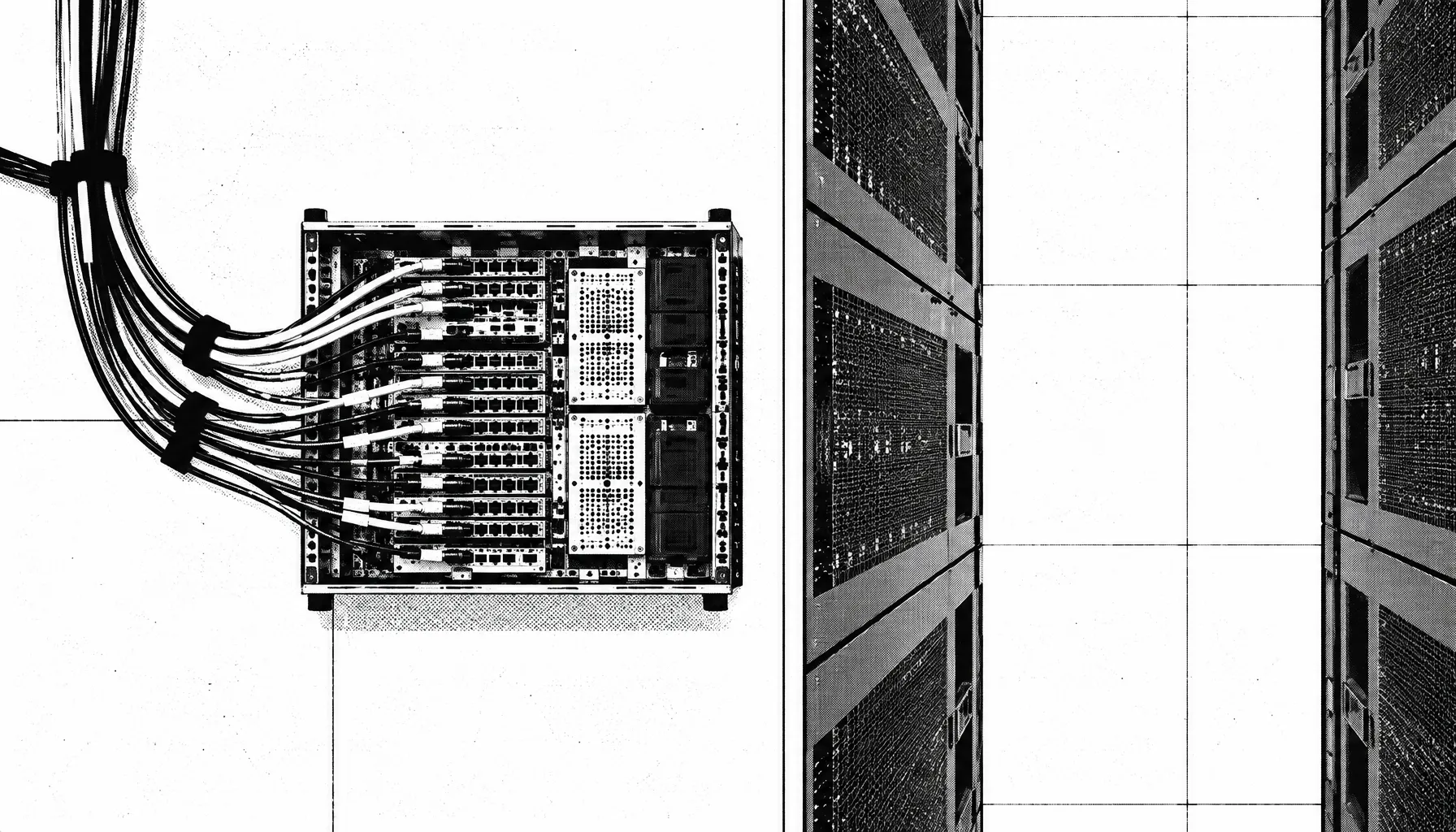
Active Compute Fabric combines three functions: lossless transport, acceleration inside the network and programmable compute. The design lets the fabric respond to changing traffic, perform operations on data while it is moving and offload collective work that would otherwise run on host software or accelerators.
“AI infrastructure is reaching a point where faster endpoints alone are not enough. The fabric has to become an active part of the compute system,” Lisa Spelman, CEO of Cornelis, said in the company’s announcement. “Customers want complete rack-scale solutions without being locked into a single vendor or architecture.”
Scale-up is Cornelis’ next market
The announcement marks Cornelis’ entry into scale-up networking, which connects accelerators within a rack or shared-memory domain. The company has previously focused on scale-out systems, where networks connect large numbers of computing nodes.
Cornelis says its architecture will use UALink and ESUN for scale-up networking and Ultra Ethernet specifications for scale-out deployments. The stated goal is one open architecture spanning both layers rather than separate systems with separate management planes.
The company’s product timeline separates what is available now from what remains on the roadmap. CN5000 is shipping as Cornelis’ current scale-out foundation. CN6000 is sampling with customers, with expanded availability expected in the fourth quarter of 2026. Cornelis describes the programmable compute layer associated with its next-generation architecture as a future capability.
Qualcomm joins the rack-scale discussion
Qualcomm Technologies is participating in the announcement through a collaboration on validation toward future rack-scale AI data-center designs. Tony Pialis, Qualcomm’s executive vice president and general manager for data center, is scheduled to join Spelman during her keynote at AI Infra Summit in Santa Clara, California, on September 15.
“As AI systems continue to scale, moving data efficiently across the rack becomes just as important as the compute itself,” Pialis said. “Improving utilization and AI economics will require a more integrated approach across compute, memory, and networking.”
Qualcomm’s involvement gives Cornelis a connection to an accelerator company as it tries to position networking as part of the rack design rather than a component selected after the compute system. The announcement does not describe a product launch or a commercial deployment between the two companies.
$205 million funds production and customer work
Cornelis says the approximately $205 million will support scale-up networking, CN6000 manufacturing and customer deployments. The funding will also pay for deeper customer partnerships and go-to-market efforts as the company expands beyond its established scale-out business.
Joel Whitley, a partner at IAG Capital Partners, said the investment group sees more than $55 billion of opportunity by 2030 in open-standard scale-up and scale-out networking for AI. “The company has brought multiple generations of technology to market and is well positioned to capitalize on the next phase of growth in AI infrastructure,” Whitley said.
Cornelis will demonstrate CN6000 and preview its scale-up and scale-out roadmap at booth 830 during AI Infra Summit. The company’s announcement presents Active Compute Fabric as an architectural direction backed by shipping and sampling products, not as a fully deployed programmable-compute system available to customers today.
The test is utilization outside the model
Cornelis’ case rests on whether processing inside the fabric can reduce communication overhead without adding unacceptable complexity to cluster design, software support or operations. Its architecture is intended to work with multiple accelerator choices and established interfaces, but each deployment will still depend on supported hardware, protocols and software versions.
The company’s $1.68 billion estimate describes the size of the problem Cornelis wants to address. The next evidence will come from customer systems that show how much of that waiting time the fabric can remove.