The Pulse
Ampt puts 80 kW battery converter for AI data centers into pilots
Ampt’s rack-mountable battery converter is in partner pilots for data centers using 800 VDC power architectures. The company says the 80 kW unit responds to GPU load changes in less than a millisecond, with general availability planned for Q3 2027.
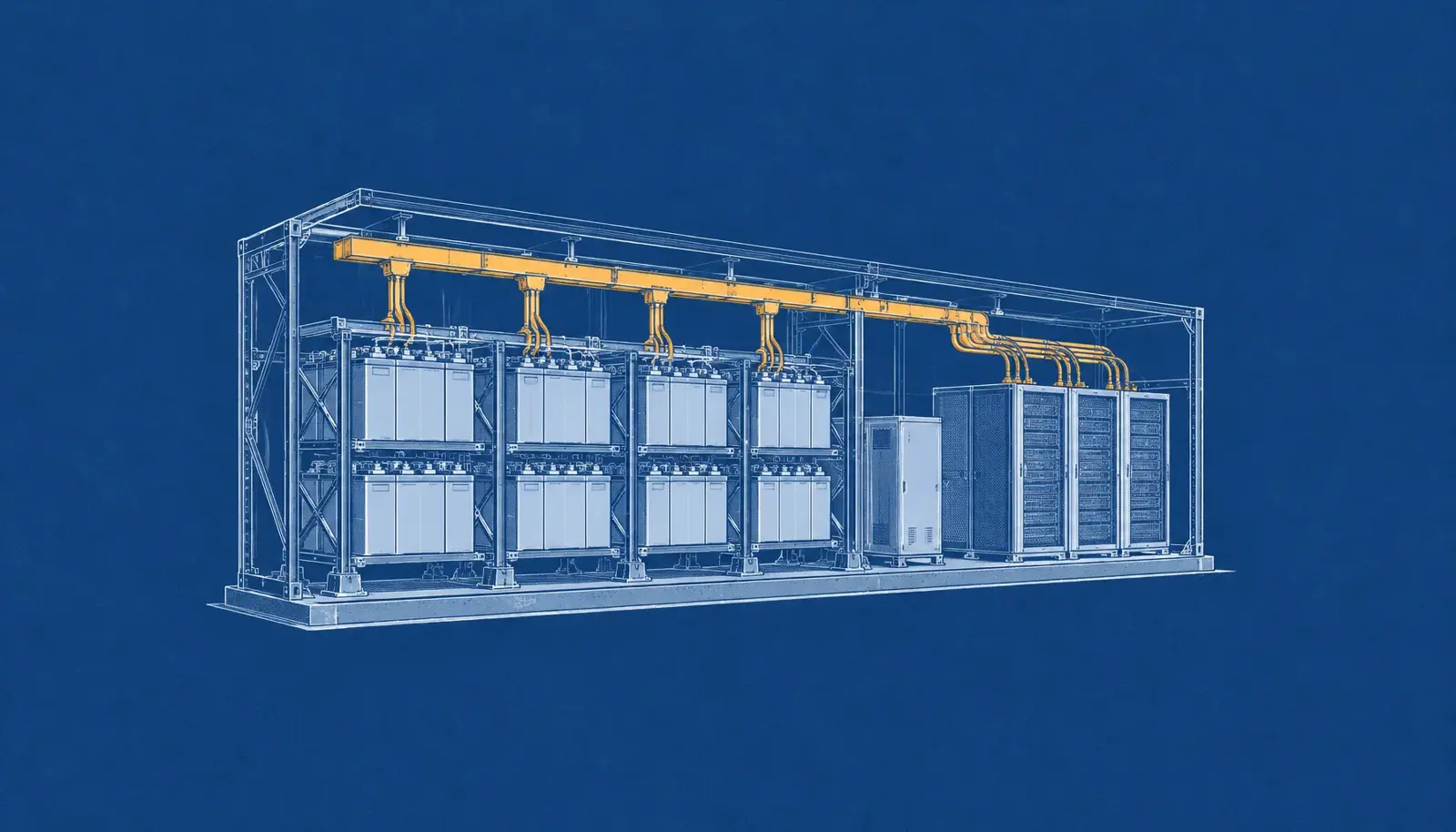
An 80 kW battery converter for AI data centers is in partner pilots, with general availability planned for Q3 2027. Ampt says the rack-mountable device responds to changes in GPU power demand in less than a millisecond, allowing battery storage to absorb short peaks while supplying regulated 800 VDC power.
Each 2U unit delivers 80 kW at 100 A. Units can be connected in parallel for use across a rack, a row or a larger GPU cluster.
Managing rapid load changes
In the company’s design, battery storage, the grid and any on-site generation feed a common direct-current bus. The converter steps the bus voltage down to a regulated 800 VDC supply for GPU racks.
When GPU demand changes, the battery supplies or absorbs the difference while grid or on-site generation sees steadier demand, according to Ampt. The company says battery storage can handle short peaks so GPUs can run without power capping and a grid connection can be sized for average rather than peak load.
The grid connects to the bus through a medium-voltage transformer and power conversion system. That connection feeds batteries that operate at up to 1500 VDC. With a grid-forming power conversion system, the battery can also support grid voltage and frequency.
Efficiency and controls
Depending on the battery’s state of charge, the bus feeding the converters runs at 1100 to 1500 VDC, while the converters supply a stable 800 VDC to the racks. The company says the higher-voltage bus carries the same power at lower current, reducing conductor losses or allowing smaller conductors. Stored energy also stays in direct current, avoiding the DC-to-AC-to-DC conversions used in AC-coupled storage.
Ampt puts the converter’s peak efficiency at up to 99.2%. The product uses MOSFET switching, which the company says lowers electricity and water-cooling costs compared with IGBT switching in MW-class converters.
Each converter has a built-in web application for local control, configuration and testing. It also supports Modbus TCP for SCADA commands and telemetry.
Scaling and redundancy
Multiple 80 kW units can be connected in parallel to serve a single GPU rack, a full row or an entire data hall. Adding a unit provides N+1 redundancy, which the company says maintains full power if a unit goes offline.
For a 1.5 MW GPU rack, Ampt says its converters require 5% more installed capacity for redundancy, compared with 100% more for a MW-class converter.
Ampt says sites with existing or planned solar installations can connect photovoltaic systems to the same battery bus through its String Optimizers without an additional inverter or transformer. The converter is currently in partner pilots for data centers, ahead of its planned Q3 2027 general availability.
CEO Aaron Gomolak said GPU loads swing in milliseconds, so “storage has to work every minute of the day.” The company’s design uses the same battery to address those swings while providing a steadier load to the grid.
Sources
Related stories
- Nevada Data Center Fight Puts Federal Land in Governor’s Race
- Meta Claimed $3.9 Billion in Research Tax Credits for AI Data Centers
- SK Hyper Seeks $350 Billion for First 5GW Phase of AI Data Center Plan
- Tech Giants Offer More Cash to Ease Data Center Opposition
- DOJ Warning Pulls AI Data-Center Protests Into Foreign-Influence Debate