The Pulse
AMD details FP4 kernel design for its MI455X GPU
AMD described how hand-written FP4 matrix multiplication kernels in AITER use its MI455X GPU’s memory and compute hardware. In a GEMM-only test, the company reported a 16.1% throughput gain from pre-shuffling static activations.
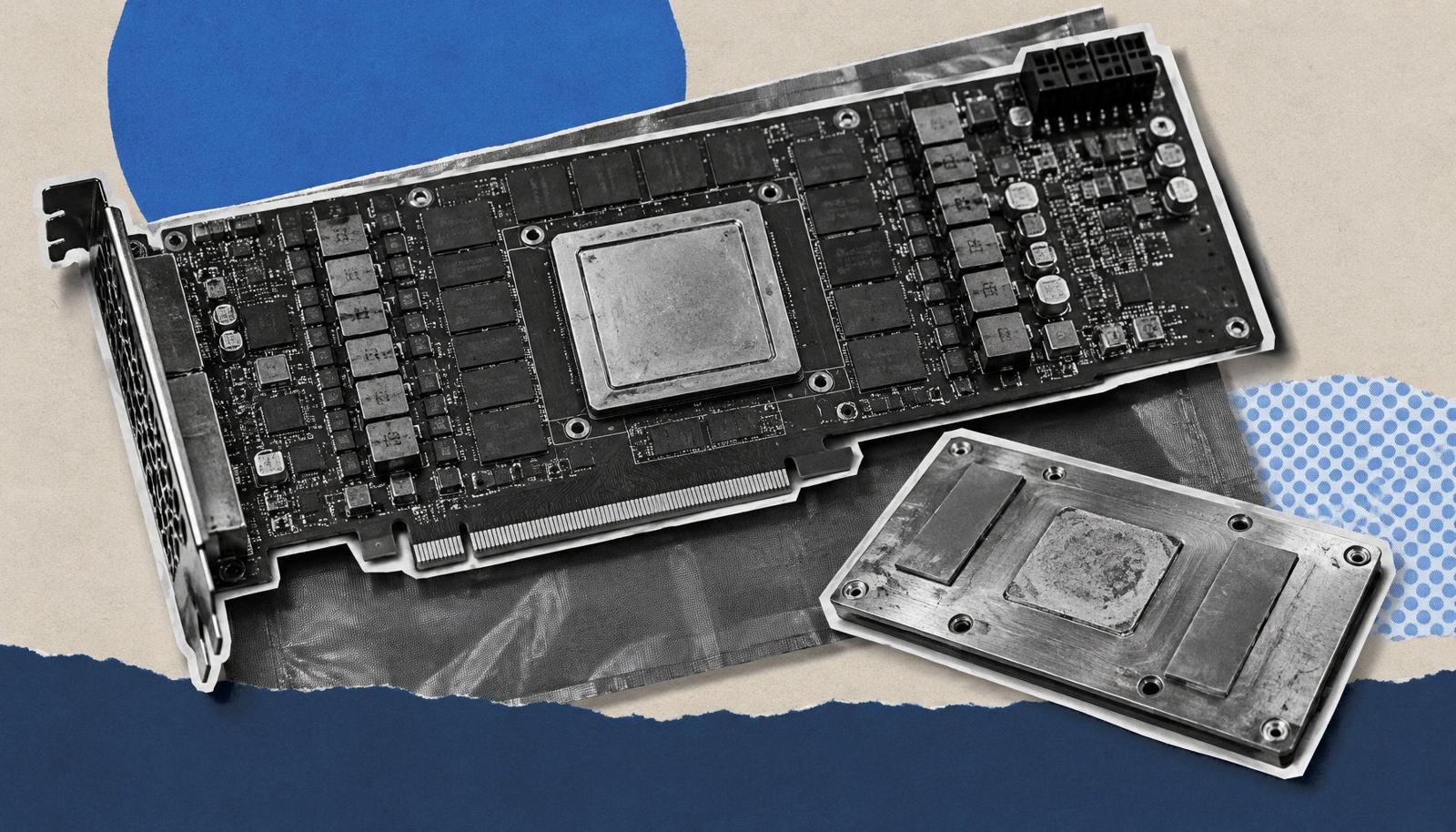
Pre-shuffling activations raised FP4 matrix multiplication throughput by 16.1% in a GEMM-only test with static inputs, AMD reported in a November 23 post explaining its MI455X GPU kernels. The hand-written assembly kernels are shipped in AITER and use hardware features intended to keep data flowing to the GPU’s matrix units.
Source rocm.blogs.amd.com
The result compares a pre-shuffled activation layout with a padded layout for a particular matrix size, rather than measuring an entire application. The post also describes how the kernels share data across workgroups, move tiles into local memory and arrange instructions.
Balancing compute and memory
AMD says the MI455X has four times the peak 4-bit matrix throughput of the MI355X, while high-bandwidth memory bandwidth rises about three times. Its published peak dense MXFP4 rate is 40.3 PFLOPS at a 2.4 GHz peak engine clock.
The difference matters for a general matrix multiplication, or GEMM, kernel because the compute units need enough operand data to sustain their work. The post calculates that a 256 × 256 output tile with a K-tile of 256 demands 128 bytes per cycle per workgroup processor during the main loop, before scale factors, output traffic and padding.
The shipped kernels use a 256 × 256 tile with a 4 × 4 workgroup cluster for large shapes. Workgroups in a cluster can share operand loads through L2 multicast instead of each fetching its own copy.
That cluster size is the largest square shape permitted by the 16-workgroup capacity, but AMD does not claim it is best for every problem size. For small, bandwidth-bound GEMMs such as decode-time projections, clustering makes little difference because high-bandwidth memory is the limit, the post says.
Moving and arranging data
The kernel uses the Tensor Data Mover, an asynchronous engine that transfers tensor tiles between global memory and local data share, or LDS, without staging them through vector registers. AMD compares a single request for a 32 KiB operand tile with 64 buffer-load instructions per wave, plus associated address arithmetic and in-flight registers.
The work is spread across both SIMD pairs in a workgroup processor so that both paths carry the same payload. The design also addresses LDS conflicts: padding can prevent accesses from colliding in memory banks, while buffers read in the same cycle can be placed in different partitions.
Weights and their scale factors are rearranged offline before use. For one instruction, fragments from 16 rows are packed into a contiguous 256-byte block, allowing one Tensor Data Mover request to bring the block into LDS. The weights are shuffled once and reused for each call.
Activation trade-offs
Activations are produced on the fly, so the kernel supports both a pre-shuffled layout and a plain row-major layout with LDS padding. In the latter, each 128-byte logical row is stored with 16 bytes of padding, and requests are 128 bytes.
In the GEMM-only test with M = N = K = 16384, pre-shuffled activations took 395.33 µs with static inputs, compared with 459 µs for the padded layout, according to AMD. The company reports the 16.1% throughput increase for that test; it is not an end-to-end measurement of the cost of producing the activation layout.
The kernel also chooses between matrix instruction shapes. Where the tile permits it, the design favors a 32 × 16 × 128 FP4 instruction: it performs the same arithmetic work as two 16 × 16 × 128 instructions, leaving more room for other work while the instruction is in flight.
Sources
- Original source · Blog post AMD ROCm Blogs rocm.blogs.amd.com
Companies in this story
Related stories
- AMD reports faster inference glue kernels using AITER config pins
- AMD details GPU-initiated DMA transfers for multi-GPU workloads
- OpenAI says its models improved AMD GPU designs by up to 14%
- FlashInfer on ROCm routes AMD GPU kernels automatically
- vLLM details opt-in FlyDSL MonoKernels for faster decode on AMD GPUs