The Pulse
Amazon’s Million-Robot Fleet Puts Human Work in Focus
Amazon says its operations network now has more than one million robots, a milestone it announced in June 2025. A new Ars Technica report examines the growing role of robotic arms and the debate over how automation affects warehouse workers
AI.info Team · Written with AI ·
The million-robot mark came in 2025
Amazon’s operations network now has more than one million robots, but the milestone is not new: the company announced its millionth deployment on June 30, 2025. In a report published October 12, 2026, Ars Technica examines how the fleet is changing, with robotic arms taking on tasks beyond moving shelves and totes.
Amazon said the millionth robot went to a fulfillment center in Japan, bringing its network to more than 300 facilities worldwide. The company also introduced DeepFleet, a generative AI model it said would coordinate robot movements and improve fleet travel time by 10 percent. Those are company claims; the new Ars report focuses on what the expanding fleet does in warehouses and what its growth means for the people working alongside it.
DeepFleet coordinates a mobile majority
Most of the fleet consists of wheeled mobile robots. Hercules and Titan move tall storage units, called pods, to workstations; newer Proteus robots can move around employees in open areas. DeepFleet is intended to help coordinate robots traveling through narrow warehouse lanes, where crowded routes can create delays.
The fleet also includes systems that sort packages and handle inventory. Amazon’s Sequoia system coordinates groups of mobile robots to identify and store items; the company says it can do that up to 75 percent faster at fulfillment centers. But the larger shift is from transporting inventory toward manipulating individual goods, a job that has pushed Amazon to develop more capable robotic arms.
Robotic arms are the next expansion
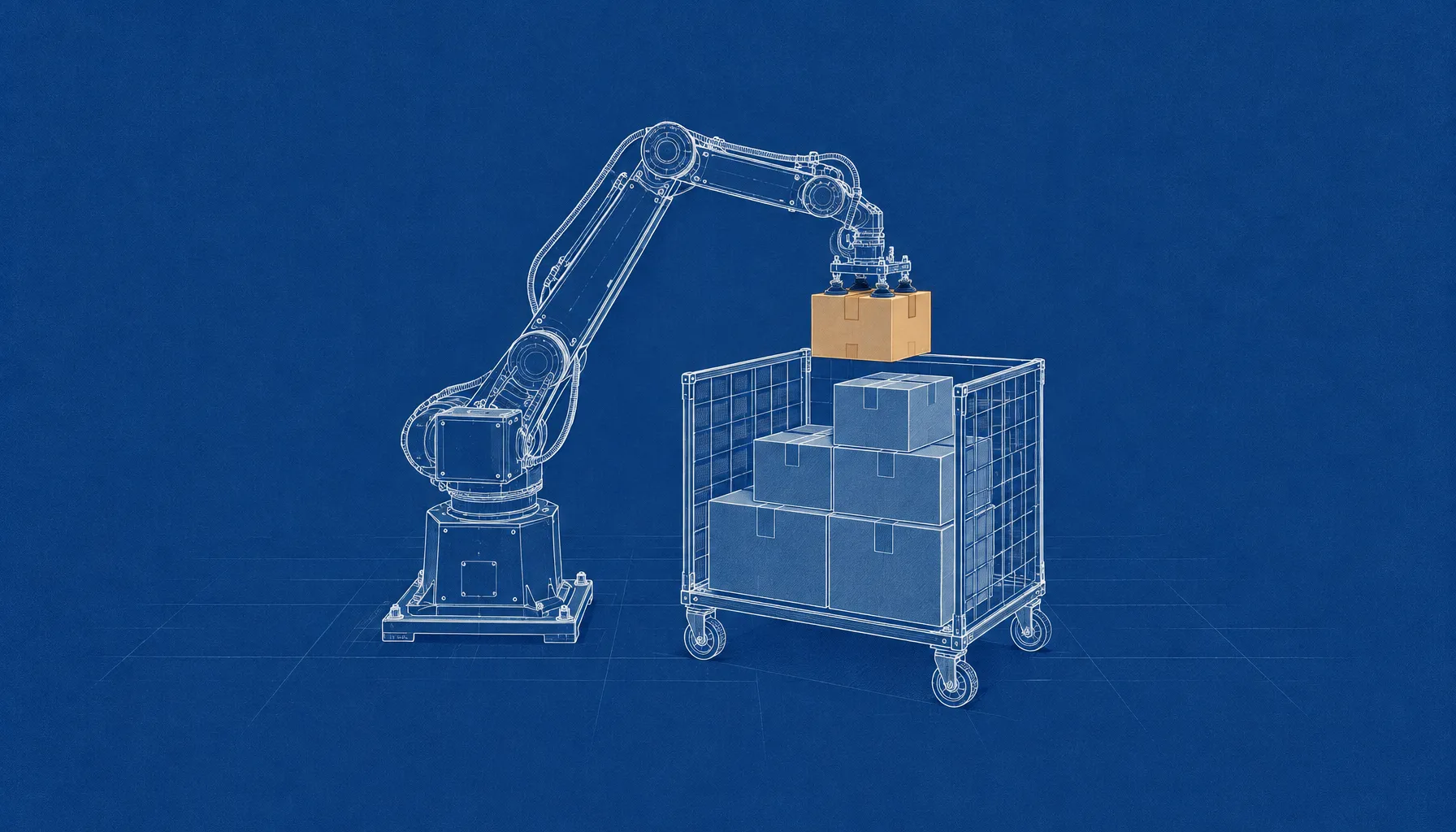
Amazon’s in-house arm Robin sorts individual packages from cluttered piles, while Cardinal places packages into rolling carts. Vulcan adds force-feedback sensors that let it gauge contact as it picks or stows items in storage pods. Amazon began operating Vulcan at sites in Spokane, Washington, and Hamburg, Germany, in 2025, and Scott Dresser, vice president of Amazon Robotics, told Ars the company expects to scale its use in 2027.
Amazon expects to more than double its current robotic-arm fleet in 2026, according to its chief financial officer’s July earnings-call comments cited by Ars. The starting point is small compared with the million-robot total: Dresser described the number of deployed arms as being in the single-digit thousands. He told Ars that Amazon has increased its network of robotic maintenance technicians by more than 30 percent, describing those roles as higher-skilled and higher-paid.
Workers remain part of the calculation
Amazon’s 2025 annual report puts its full- and part-time workforce at approximately 1,576,000 as of December 31, 2025. The company says advanced robotics sites require more employees in reliability, maintenance and engineering roles, and argues that machines can take on heavy lifting and repetitive tasks. That does not settle whether automation improves conditions for all warehouse employees.
Labor advocates and researchers cited by Ars say faster automated operations can increase the pace expected of workers. “At least one of the mechanisms by which this appears to be manifesting is through the pace of work, in that pick rates for the robotic fulfillment centers are off the charts higher,” Brian Greenwood, a professor of business at George Mason University, told Ars. He said the pace can mean “the robot is dictating the pace of work.”
Amazon has described earlier studies of injury rates at robotic sites as relying on older data that predates its newer machines, and has pointed to improvements in overall injury rates without detailing comparisons between robotic and non-robotic warehouses. The company’s public tally establishes the scale of its robot network; the number of robotic arms, the work they take over and the pace they set for employees remain separate measures of what that automation changes.